Private Label, White Label, Wholesale partnerships available - EU, USA and UK - Free shipping from €75
Sterile Bacteriostatic Water: Uses & Safety 2026
A researcher opens a freezer box, lifts out a lyophilized peptide vial, and pauses. The powder is expensive. The study timeline is tight. One wrong choice of diluent can turn a careful protocol into a contamination problem, a stability problem, or a reproducibility problem.
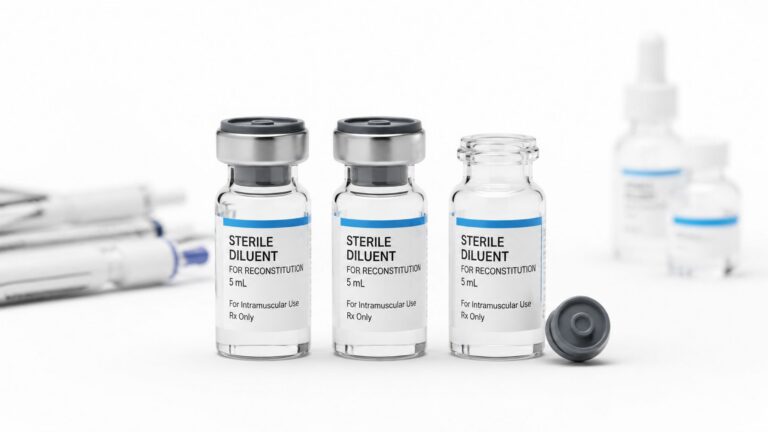
That's where sterile bacteriostatic water stops being “just water” and starts being a critical reagent. In many labs, it's the practical answer when a reconstituted material won't be used all at once and repeated withdrawals are part of the workflow. For buyers, wholesalers, and distribution partners, it also raises a second set of questions that basic guides usually ignore. How is quality verified, how should lots be traced, and what does RUO handling mean in day-to-day operations?
Table of Contents
- The Critical First Step in Reconstitution
- Understanding Bacteriostatic Water Composition
- Bacteriostatic Water vs Sterile Water and Saline
- Primary Applications in Lab and Peptide Research
- Safe Handling Storage and Shelf Life Protocols
- Ensuring Quality from Manufacturing to Lab Bench
- Common Questions About Bacteriostatic Water
The Critical First Step in Reconstitution
The first decision in reconstitution isn't how much liquid to add. It's whether the chosen liquid matches the protocol, the material, and the way the vial will be used after mixing. That decision matters most when a researcher expects to access the same preparation more than once.
A lyophilized peptide is a good example. If the plan is to reconstitute once, withdraw multiple aliquots over time, and avoid discarding the entire preparation after a single entry, the diluent must support that workflow. That's why sterile bacteriostatic water is often discussed alongside multi-dose handling rather than simple one-time mixing.
For teams that need a practical walkthrough of the mixing process itself, this guide to mixing peptides with bacteriostatic water shows the workflow that many research users follow.
Why the first choice affects everything later
A poor diluent choice causes problems in stages. First comes uncertainty during reconstitution. Then comes repeated vial access, which raises contamination risk. Finally, there's the recordkeeping problem. If no one can document what was used, when the vial was first punctured, and how it was stored, the result may be unusable even if the chemistry looked fine at the bench.
Practical rule: The diluent should be chosen based on how the reconstituted material will be used, not just on what's physically available in the lab.
That principle matters for individual researchers, but it matters just as much for supply teams. A wholesaler or distributor who supplies sterile bacteriostatic water isn't only shipping a bottle of diluent. That supplier is supporting a chain of decisions around storage, handling, documentation, and compatibility.
What experienced labs watch for
New researchers often focus on the powder and ignore the liquid. Senior staff usually do the opposite. They check the label, confirm the intended use, look at how often the vial will be punctured, and ask whether the protocol requires preservative-free conditions.
A short bench-side checklist helps:
- Match the protocol: Some materials tolerate preservative-containing diluents, some don't.
- Think beyond first use: A vial that will be accessed repeatedly needs stricter handling discipline.
- Document the opening date: A multi-dose workflow fails fast when no one knows when the clock started.
- Buy with traceability in mind: Procurement choices affect auditability later.
Understanding Bacteriostatic Water Composition
Sterile bacteriostatic water sounds complicated until the name is split into its working parts. One part tells the user about the water itself. The other tells the user why the vial can serve a repeated-access role in the lab.
What the product actually is
Official labeling defines bacteriostatic water for injection as a sterile, nonpyrogenic water-for-injection product containing 0.9% (9 mg/mL) benzyl alcohol as a preservative, with storage at 20 to 25°C (68 to 77°F) and opened vials commonly discarded after about 28 days, according to FDA DailyMed labeling for bacteriostatic water for injection.

The phrase sterile, nonpyrogenic does real work here. Sterile means the product is prepared to avoid viable microbial contamination. Nonpyrogenic means it's prepared to avoid fever-causing contaminants that can interfere with intended use. In practical lab terms, this isn't interchangeable with distilled water, filtered tap water, or generic purified water.
That distinction is where many beginners get confused. “Clean” water and water for injection are not the same thing. A reagent can look clear and still be the wrong choice for reconstitution.
Why benzyl alcohol matters
The second half of the name, bacteriostatic, points to the preservative. Benzyl alcohol at 0.9% acts as a bacterial growth inhibitor. It doesn't mean contamination becomes harmless. It means the formulation is designed to inhibit bacterial multiplication after the vial has been punctured.
A useful way to think about it is a preservative shield. It slows bacterial growth, but it doesn't replace aseptic technique. If a user repeatedly enters the vial with poor handling, contamination risk still accumulates.
Benzyl alcohol changes how the vial can be managed. It doesn't change the need for clean technique.
That's why experienced lab staff treat sterile bacteriostatic water as a controlled convenience, not a free pass. The preservative supports multi-dose workflows. It doesn't rescue sloppy storage, poor stopper hygiene, or unclear labeling on the bench.
A few points keep the science grounded:
- Water base: The product starts as water for injection, prepared for sterility and low contamination burden.
- Preservative action: Benzyl alcohol inhibits bacterial growth rather than serving as a cure-all for contamination.
- Operational impact: The formulation allows repeated access under proper handling.
- Storage discipline: Label conditions matter because formulation performance depends on proper storage.
Bacteriostatic Water vs Sterile Water and Saline
Most errors happen because the three liquids look deceptively similar. Clear vial. Rubber stopper. Label with clinical language. But functionally they're not the same, and swapping one for another without checking the protocol can create avoidable problems.
A practical comparison
The key distinction is straightforward. Bacteriostatic water contains 0.9% benzyl alcohol and is commonly used as a multi-dose diluent over an approximately 28-day period after opening, while sterile water contains no preservatives or additives and is generally treated as single-use after opening, as summarized in this comparison of bacteriostatic water and sterile water handling.
For teams comparing all three options, this table captures the bench-level differences:
Diluent Comparison
| Attribute | Bacteriostatic Water | Sterile Water for Injection | Normal Saline (0.9% NaCl) |
|---|---|---|---|
| Preservative present | Yes | No | Not discussed here as a preservative system |
| Repeated vial access | Commonly used for multi-dose workflows | Generally treated as single-use after opening | Depends on product labeling and protocol |
| Sodium chloride present | No | No | Yes |
| Typical use logic | Reconstitution when repeated withdrawals are expected and compatible | Reconstitution when preservative-free conditions are required | Use when sodium chloride is appropriate for the material or protocol |
| Main handling concern | Preservative is not a substitute for aseptic technique | Higher contamination risk after opening because there's no preservative | Salt content may be unsuitable for some compounds |
For buyers reviewing options, Herbilabs water for injection products are one example of how suppliers separate these categories for different research needs.
Where teams get tripped up
The common mistake with sterile water is treating it like bacteriostatic water after the stopper has already been pierced. That's where contamination risk rises fastest, because the product doesn't contain a preservative system to support repeated access.
The common mistake with saline is assuming it's “close enough” because it's also clear and sterile. But saline contains sodium chloride, and that changes compatibility. Some materials tolerate that environment. Others don't.
A clear liquid isn't a neutral choice. The formulation determines what the reagent can safely do.
A simple decision framework helps:
- Choose bacteriostatic water when the protocol permits a preservative-containing diluent and repeated withdrawals are expected.
- Choose sterile water when the material or procedure requires preservative-free conditions.
- Choose saline only when sodium chloride is appropriate for that reagent system.
Another point matters in supply-constrained settings. Sterile water shortages do happen, and substitution questions follow quickly. As covered in the source material above, bacteriostatic water isn't a blanket replacement for preservative-free sterile water, especially where patient-population exclusions or preservative limitations apply. In research purchasing, that translates into a basic rule. Substitution must follow label logic and protocol compatibility, not inventory pressure.
Primary Applications in Lab and Peptide Research
The reason sterile bacteriostatic water shows up so often in peptide discussions is practical, not mysterious. Peptide workflows often involve a lyophilized vial that gets reconstituted once and then accessed in measured amounts across multiple sessions. That pattern aligns with the multi-dose logic described earlier.
Why peptide workflows favor it
A peptide researcher may receive a dry vial, reconstitute it into a stock solution, and then withdraw only what the experiment requires at each time point. In that setup, throwing away the entire reconstituted vial after one access would be wasteful and operationally awkward. A preservative-containing diluent is often chosen because it supports repeated withdrawals when the protocol allows it.
That convenience has a scientific side. Consistent use of the same reconstituted stock can reduce handling variation compared with preparing a fresh vial every single time. The benefit isn't absolute. It still depends on correct mixing, correct storage, and correct labeling. But from a workflow standpoint, it's easy to see why labs reach for this reagent.
A typical research sequence looks like this:
- Confirm compatibility with the peptide or other lyophilized reagent.
- Reconstitute once using aseptic technique.
- Label the vial clearly with the puncture date and any internal tracking data.
- Withdraw aliquots as needed using sterile equipment each time.
- Discard according to handling rules rather than stretching the vial beyond its safe use window.
Other research uses
Peptides aren't the only category. Labs also use sterile bacteriostatic water for other lyophilized research reagents where repeated access makes operational sense. The details vary by compound, but the logic stays the same. The product is useful when a user needs a sterile reconstitution medium with preservative support for a multi-use vial.
That said, it isn't automatically the right choice for every material. Some workflows require preservative-free handling from start to finish. Others may require a buffered system or a salt-containing medium rather than plain water with a preservative.
A few lab realities deserve emphasis:
- It improves workflow efficiency: One reconstituted vial can support a scheduled series of withdrawals.
- It doesn't settle compatibility questions: The reagent label or protocol still decides whether benzyl alcohol is acceptable.
- It protects expensive materials only if technique is sound: The value is lost fast if the vial is poorly handled.
The right diluent supports the workflow. The wrong diluent forces the workflow to work around the reagent.
For resellers and distributors, that use pattern shapes demand. Customers buying for peptide research often aren't asking for “water.” They're asking for predictable reconstitution behavior, manageable inventory, and fewer losses from single-use waste.
Safe Handling Storage and Shelf Life Protocols
A sterile vial can become a contaminated vial through one careless puncture. That's why handling protocol matters just as much as formulation. In labs that get reliable results, staff treat every withdrawal as a contamination-control event.
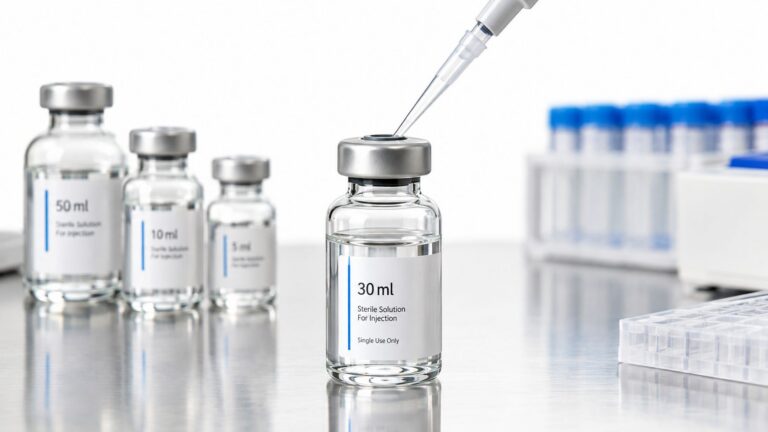
The visual below captures the workflow clearly.

Handling steps that protect the vial
The first step is inspection. If the vial looks compromised, cloudy, or physically damaged, it shouldn't move to the bench. A clear label and intact closure matter before any needle enters the stopper.
Then comes withdrawal technique. Each access should use clean hands, a clean work area, and sterile needles and syringes. The stopper should be disinfected before piercing. That basic sequence is often skipped when teams get rushed, and that's exactly when contamination control fails.
A practical handling checklist:
- Inspect before use: Look for clarity, intact packaging, and any visible particulate matter.
- Swab the stopper: Let the disinfectant dry before puncturing.
- Use fresh sterile equipment: Reused needles and syringes defeat the purpose of sterile handling.
- Limit bench confusion: Label nearby vials clearly so one reagent isn't mistaken for another.
- Record first puncture: This is what makes discard timing traceable.
Later in the workflow, this video gives a useful visual reference for careful vial handling and withdrawal technique.
Storage discipline and discard timing
Storage is often treated as a footnote, but it directly affects usability. Official labeling specifies controlled room temperature at 20 to 25°C (68 to 77°F), as noted earlier in the linked FDA labeling. That means the vial should be stored under room-temperature control, not casually moved between unsuitable environments.
The widely used discard rule also matters. Opened vials are commonly discarded after about 28 days, based on the balance between preservative action and rising contamination risk once the closure has been breached. The key point isn't that the liquid suddenly changes on a specific day. The point is that repeated punctures gradually increase uncertainty, and disciplined labs don't build studies on avoidable uncertainty.
Bench reminder: Multi-dose use only works when each puncture is treated as a controlled event and the opening date is documented.
A few storage habits prevent most avoidable problems:
- Keep the vial in its original container unless the protocol requires otherwise.
- Store under controlled room conditions rather than improvising temperature changes.
- Protect label legibility so lot and puncture records remain readable.
- Discard on schedule instead of stretching a vial because it “still looks fine.”
For new researchers, the hard lesson is simple. Clarity of appearance doesn't prove sterility after repeated handling. Good records and disciplined technique do more to protect results than visual inspection alone.
Ensuring Quality from Manufacturing to Lab Bench
The easiest way to undermine a clean workflow is to buy a poorly documented reagent. For sterile bacteriostatic water, quality doesn't start when the researcher opens the box. It starts with how the batch was made, tested, labeled, stored, and shipped.
What procurement teams should verify
A serious supplier should be able to provide batch-level documentation that supports what's on the label. For labs, that usually means reviewing a Certificate of Analysis, checking lot identifiers, and confirming that the product description aligns with intended research use. For distributors and wholesalers, the same records support downstream customer confidence and complaint resolution.

Teams that want a practical supplier-side discussion can review guidance on maintaining bacteriostatic water quality in the laboratory.
When buyers review documentation, these questions matter:
- Is the lot traceable? If a complaint arises, can the supplier identify the exact batch and distribution path?
- Is the COA readable and specific? Vague paperwork creates problems during audits and internal review.
- Does storage and transit make sense? A sterile reagent still depends on proper handling before arrival.
- Is the intended use stated clearly? RUO products need clean labeling and clean commercial boundaries.
Why RUO and traceability affect business risk
For research suppliers, RUO isn't just a phrase on a product page. It affects how the product is marketed, sold, documented, and supported. Distributors need to keep that boundary clear so the product isn't represented for uses outside its stated designation.
That matters commercially because unclear positioning creates avoidable risk. A buyer may ask substitution questions, request inappropriate use guidance, or assume a reagent can cross over into applications the labeling doesn't support. Good suppliers reduce that confusion through consistent documentation and lot-level transparency.
Traceability protects more than quality control. It protects decisions, accountability, and customer trust when something needs to be checked after delivery.
In practice, procurement teams should prefer suppliers that can answer basic quality questions without hesitation. If the supplier can't provide clear lot information, explain storage expectations, or describe how documentation follows the batch, the burden shifts to the buyer. Most labs and resellers don't want that burden.
Common Questions About Bacteriostatic Water
Quick answers to recurring lab questions
What if the vial gets too warm or freezes?
Temperature excursions create uncertainty. The safest response is to inspect the vial carefully, review storage records, and follow the product's handling rules rather than assuming the contents are unaffected. If there's any sign of compromised integrity, the vial shouldn't stay in use.
Can an opened vial still be used after the usual discard window?
That's a bad practice. Once the accepted post-puncture window has passed, the preservative-based handling assumption no longer supports confident use. A vial may still look normal, but appearance isn't the same as controlled sterility.
Is sterile bacteriostatic water the same as distilled water?
No. Distilled water and other purified waters may be useful in many lab settings, but they aren't interchangeable with a sterile, nonpyrogenic water-for-injection product containing benzyl alcohol as a preservative. Substituting by appearance or name similarity is a common and preventable mistake.
Can it replace sterile water during a shortage?
Not automatically. The source material on shortages makes the important point that bacteriostatic water is not a blanket substitute for preservative-free sterile water, and some populations and uses are excluded. In a research environment, the same logic applies. Substitution should follow protocol compatibility and label limitations.
Why do experienced labs label puncture dates so aggressively?
Because memory is unreliable and staff rotations happen. A clearly marked vial protects the study from guesswork.
Herbilabs supports research teams, resellers, and distribution partners with sterile diluents and related lab supplies for RUO workflows, along with documentation-focused purchasing that helps with lot traceability, quality review, and routine procurement across the EU, UK, and USA. More information is available through Herbilabs.