Private Label, White Label, Wholesale partnerships available - EU, USA and UK - Free shipping from €75
Maintaining Bacteriostatic Water Quality in the Laboratory
A guide for researchers on troubleshooting common quality issues with bacteriostatic water to maintain experimental integrity.
Foundational Principles of Bacteriostatic Water Integrity
The reliability of any scientific experiment rests on the integrity of its components. We can all picture that moment of frustration when a well-designed experiment fails, and the cause traces back to a seemingly minor consumable. Missed opportunities in research often stem from overlooking the quality of basic reagents, and bacteriostatic water is a prime example.
It is not simply sterile water. It is a specialised solution designed for multi-use vials, containing 0.9% benzyl alcohol as a preservative. This alcohol does not kill bacteria outright but instead inhibits their replication, a critical function that makes the solution safe for repeated withdrawals with a sterile needle. This specific composition, as seen in products like our 30ml reconstitution solution, is what sets it apart.
Substituting it with sterile water for injection, deionized water, or saline is a common but critical error. Those alternatives lack the bacteriostatic agent, meaning the first puncture of the vial introduces a contamination risk that grows with every subsequent use. For sensitive compounds like peptides, the chemical environment is everything. Deviations in purity or preservative concentration can directly affect their stability and solubility, leading to inconsistent results or complete experimental failure. Therefore, following strict lab protocols for bacteriostatic water is not just about procedure, it is about protecting the validity of your data. Meticulous handling is a fundamental part of Good Laboratory Practice.
Identifying and Addressing Contamination

The first line of defence against compromised results is your own observation. Relying solely on expiration dates is not enough, as handling and storage conditions play a massive role in the solution’s integrity. Identifying bacteriostatic water contamination before it enters your experiment is a mandatory skill.
Visual Inspection Protocols
Before every single use, hold the vial up to a light source against both a white and a black background. You are looking for three key signs: turbidity (cloudiness), any form of discoloration, or visible particulate matter floating in the solution. A pristine solution should be perfectly clear and colourless. This simple check takes only a few seconds but can save weeks of work.
Microbial vs. Chemical Contamination
Different visual cues can suggest different problems. A general cloudiness or haze often points to microbial growth, meaning the bacteriostatic properties have been overwhelmed. In contrast, a yellow or brownish tint may indicate chemical degradation of the benzyl alcohol itself, which can alter the solution’s pH and reactivity. While you might notice an unusual smell, olfactory clues are highly unreliable and should never be used for assessment. As highlighted in resources from the University of Southern California, visual inspection remains the gold standard for routine checks.
Immediate Actions Upon Suspicion
If you have any doubt about the vial’s integrity, there is no room for hesitation. The risk of using a compromised solution far outweighs the cost of a new vial. Follow these steps immediately:
- Cease use and quarantine the vial to prevent accidental use by others.
- Clearly label it with a warning, such as “SUSPECTED CONTAMINATION – DO NOT USE”.
- Document the lot number, expiration date, and your specific observations. This information is valuable for quality control.
- Dispose of the vial according to your institution’s chemical or biohazard waste protocols.
Adhering to these steps is crucial for maintaining a safe and reliable research environment. You can find more information on general laboratory best practices on our blog.
Managing and Preventing Crystallization
Upon inspecting a vial, you might notice crystalline structures inside. While it is easy to mistake this for contamination, it is often a distinct physical phenomenon with a different cause and solution. Understanding bacteriostatic water crystallization is key to properly managing your supplies and avoiding unnecessary waste.
This issue is almost always caused by improper storage temperature. Benzyl alcohol can precipitate out of the solution if it gets too cold. The question of how to store bacteriostatic water has a clear answer: it should be kept at a controlled room temperature, ideally between 20°C and 25°C (68°F to 77°F). It is a common misconception that refrigeration extends its life. In reality, refrigerating or freezing the solution is what causes crystallization and should be avoided.
If you do find crystals, the remediation is straightforward. Gently warm the vial by holding it between your hands or allowing it to sit at room temperature. Never use aggressive heat sources like a microwave or hot plate, as this can degrade the benzyl alcohol and compromise the solution’s preservative qualities. The critical test comes next: once the vial returns to room temperature, the crystals should completely redissolve. If any solid material remains, it indicates an irreversible concentration imbalance. At that point, the integrity of the vial, such as our standard 10ml reconstitution solution, is compromised, and it must be discarded. Prevention through correct storage is always the most effective strategy.
Assessing and Correcting pH Imbalances
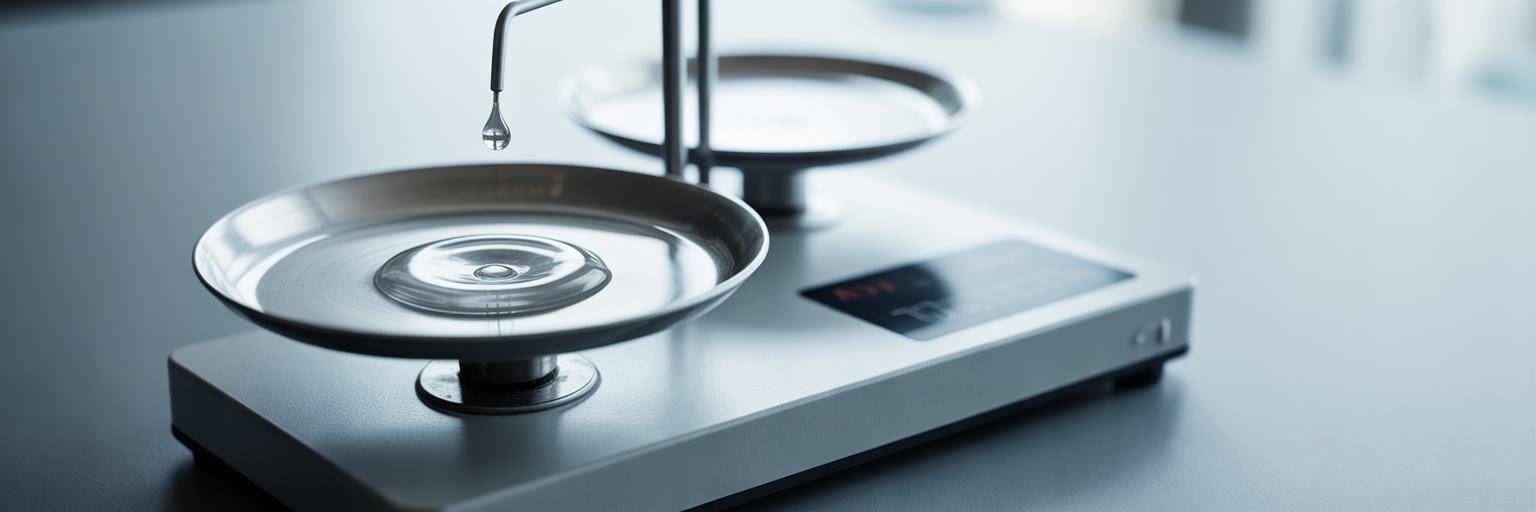
While cloudiness and crystals are visible threats, an invisible issue can be just as damaging to your research: pH imbalance. The stability of bacteriostatic water is highly dependent on its pH, and deviations can silently sabotage experiments by altering the very compounds you are trying to study. Addressing potential bacteriostatic water pH issues is a critical quality control step.
According to the United States Pharmacopeia (USP), the solution should have a pH between 4.5 and 7.0. This range is not arbitrary. It is essential for maintaining the chemical stability of the benzyl alcohol preservative and ensuring the solution is a neutral vehicle for reconstitution. A pH outside this window can cause sensitive peptides or other molecules to degrade or behave unpredictably. As research available through resources like PubMed confirms, pH control is fundamental in pharmaceutical preparations. Deviations can arise from several sources, including gradual chemical degradation over time, leaching of compounds from the vial’s rubber stopper, or even the absorption of atmospheric carbon dioxide after the vial has been opened.
Measuring the pH requires a calibrated pH meter, preferably with a micro-probe designed for small liquid volumes, to be performed under sterile conditions. However, and this is the most important takeaway, if you find the pH is out of range, you should not attempt to correct it. Adding acids or bases introduces new chemical variables and a significant risk of contamination. The only scientifically sound action is to discard the batch. Think of pH testing not as a step before correction, but as a final quality check. If it fails, the batch fails.
Establishing Clear Discard Protocols
Throughout the lifecycle of a vial of bacteriostatic water, there are several points where its integrity can be compromised. Knowing when to discard bac water is not a sign of wastefulness but a mark of a diligent and responsible researcher. The guiding principle should always be: when in doubt, throw it out. The minor cost of a replacement is insignificant compared to the time, resources, and reputation lost to invalid data.
To remove ambiguity, your lab should have a clear and non-negotiable discard protocol. This framework synthesizes all the potential issues into a simple set of actions. If a vial meets any of the criteria for being compromised, the decision is already made.
| Observation | Potential Cause | Action Required |
|---|---|---|
| Cloudiness, discoloration, or visible particles | Microbial or chemical contamination | Immediate discard |
| Crystals that do not redissolve at room temperature | Irreversible precipitation / concentration imbalance | Immediate discard |
| pH is measured outside the 4.5–7.0 range | Chemical degradation or contamination | Immediate discard |
| Vial has been open for more than 28 days (or manufacturer’s limit) | Risk of contamination and preservative degradation | Immediate discard |
| Any doubt about the integrity or handling history | Unknown risk to experimental validity | Immediate discard |
Note: This framework serves as a general guideline. Always adhere to your specific laboratory’s Standard Operating Procedures (SOPs) and the manufacturer’s recommendations.
When a vial is discarded, follow your institution’s guidelines for chemical or biohazard waste. Furthermore, keeping a log of discarded batches, including the lot number and reason for disposal, is an excellent quality assurance practice. It can help you identify recurring problems with a particular supplier or with your lab’s storage protocols. If you find yourself needing to replace a compromised vial, you can source a reliable replacement from our shop to ensure your research continues without delay.