Private Label, White Label, Wholesale partnerships available - EU, USA and UK - Free shipping from €75
Peptide Bacteriostatic Water: The 2026 Guide
A lab manager opens a shipment of lyophilized peptides, checks the labels, and reaches for a diluent. That moment looks simple, but it often decides whether the next week of work runs smoothly or becomes a contamination chase. The peptide may be expensive, the assay timeline may already be tight, and a poor choice at reconstitution can compromise both.
That's why peptide bacteriostatic water deserves more attention than it usually gets. It isn't just “water for mixing.” Its composition, handling window, vial access pattern, documentation, and supplier quality all affect research integrity. For wholesalers and resellers, the same details affect returns, support tickets, and batch confidence.
Many buyers also face a second problem. Reliable supply has become harder to judge at a glance, and two vials that look identical can behave very differently in practice. A useful guide has to cover the full lifecycle, from what's in the vial to how it's stored, verified, and sourced.
Table of Contents
- The Foundation of Reliable Research What Is Bacteriostatic Water
- Choosing Your Diluent Bacteriostatic Water vs Sterile Water and Saline
- A Practical Guide to Peptide Reconstitution
- Decoding Quality Purity and Documentation
- Storage Handling and Vial Best Practices
- Sourcing Guide for Wholesalers and Researchers
- Advanced FAQ and Troubleshooting
The Foundation of Reliable Research What Is Bacteriostatic Water
A peptide vial arrives as a dry cake or powder. The next step is reconstitution, and that's where many users assume all water is basically the same. It isn't. In peptide workflows, the difference between preserved and non-preserved diluent changes how long a vial can be used, how often it can be accessed, and how carefully the operator has to manage contamination risk.
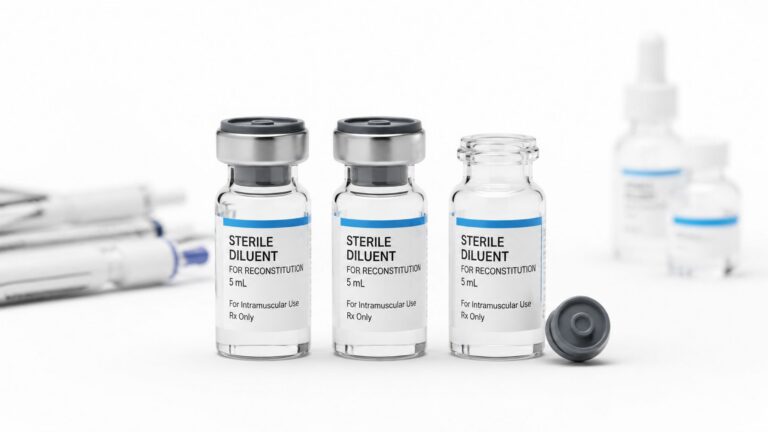
Bacteriostatic water is defined as sterile water for injection with 0.9% benzyl alcohol. In peptide workflows, that preservative supports repeated withdrawals from a multi-use vial for up to 28 days after first puncture when handled properly and refrigerated, as described in Umbrella Labs' explanation of bacteriostatic water for peptide reconstitution.
What the formula actually means
The word that causes the most confusion is bacteriostatic. It doesn't mean the vial can clean itself. It doesn't mean contamination no longer matters. It means the preservative is there to inhibit bacterial growth, not to sterilize contaminated contents.
A simple analogy helps. Sterility is like starting with a clean jar. Bacteriostatic action is like adding a preservative that helps slow spoilage after the jar is opened. If dirty utensils keep going into the jar, the preservative doesn't make careless handling safe. It only adds a layer of control.
Practical rule: Bacteriostatic doesn't replace aseptic technique. It only gives a properly handled vial more usable life after opening.
That distinction matters because peptides are often reconstituted in small volumes and accessed more than once. A lab may need one aliquot today, another tomorrow, and another later in the week. A preserved multi-use diluent fits that pattern far better than non-preserved water opened once and left vulnerable afterward.
Why labs choose it for repeated access
The operational value is straightforward. If a lab reconstitutes peptide stocks in a way that requires repeated withdrawals, peptide bacteriostatic water reduces waste and simplifies workflow. A team doesn't have to open a fresh non-preserved vial for every small access point.
That doesn't make it universal. It makes it useful in a very specific kind of workflow: low-volume reconstitution with repeat access over time. The more often the vial gets punctured, the more important handling discipline becomes.
A few points are worth keeping in view:
- Defined composition: The identity of the product depends on the preservative formula, not just the label saying “sterile.”
- Multi-use purpose: The practical benefit is repeated access after opening when the vial is handled correctly.
- Research integrity impact: A contaminated diluent can compromise the peptide, then compromise the assay, then compromise the conclusions.
A peptide can be high quality at purchase and still produce poor data if the reconstitution step is handled with the wrong diluent or poor technique.
For wholesalers and distributors, the same principle scales upward. If customers buy peptide bacteriostatic water for repeated-use workflows, then consistency in preservative content and documentation isn't a minor product detail. It's the basis of whether the product performs as expected in real bench conditions.
Choosing Your Diluent Bacteriostatic Water vs Sterile Water and Saline
One of the most common purchasing mistakes happens before the box is even opened. A buyer sees “water for injection,” “sterile water,” “bacteriostatic water,” and sometimes saline listed nearby, then treats them as interchangeable. They aren't interchangeable, because they serve different purposes.

A side by side comparison
| Diluent | Key composition | Typical use pattern | After opening | Main consideration |
|---|---|---|---|---|
| Bacteriostatic water | Sterile water with preservative | Repeated withdrawals from a multi-use vial | Used over a limited post-puncture window if handled correctly | Useful for workflows that need multiple accesses |
| Sterile water for injection | Sterile water without preservative | Immediate or single-use preparation | Generally treated as single-use in this context | Better where preservative-free handling is required |
| Sterile saline | Sterile salt solution | Specific formulations or use cases where saline is appropriate | Depends on product format and protocol | Not a default substitute for every peptide |
The simplest way to think about it is this: sterile describes starting condition, while bacteriostatic describes preserved behavior after opening. Saline adds another variable because it isn't just water. It changes the solution environment, which may or may not suit the compound.
When each option fits
Bacteriostatic water fits best when a lab plans to reconstitute a peptide stock and draw from that vial more than once. The preserved format supports that workflow. Sterile water without preservative fits better when the procedure is single-use or when the protocol calls for a preservative-free approach.
Saline belongs in the decision only when the peptide or application specifically supports it. It shouldn't be treated as a general replacement for peptide bacteriostatic water because it's another sterile liquid in a vial.
A quick decision framework helps:
- Repeated vial access expected: Bacteriostatic water usually makes more operational sense.
- Single preparation and immediate use: Sterile water may be the cleaner match.
- Protocol or compound requires a specific ionic environment: Saline may be relevant, but only if the peptide guidance supports it.
- Uncertainty about compound behavior: The peptide's own stability guidance should decide, not habit.
There's also a supply chain angle. The global bacteriostatic water for injection market is projected to rise from USD 905 million in 2024 to USD 1.35 billion by 2030, implying a 5.9% CAGR, according to Strategic Market Research's market projection. That projection matters less as a business headline than as a practical signal: this product now sits inside larger research, hospital, and pharmaceutical supply chains, which raises the stakes for consistency and sourcing discipline.
A cheap vial that forces retesting, replacement, or customer complaints usually isn't cheap at all.
For resellers, the wrong diluent choice creates a support problem. For labs, it creates a bench problem. In both cases, the solution is the same. Match the product to the access pattern and the peptide's requirements, rather than buying by label familiarity alone.
A Practical Guide to Peptide Reconstitution
Reconstitution is where small technique errors start to matter. The peptide may be stable on paper, the label may be correct, and the vial may be perfectly fine. But rough mixing, rushed handling, or casual syringe work can still produce a solution that looks wrong, dissolves slowly, or performs inconsistently.

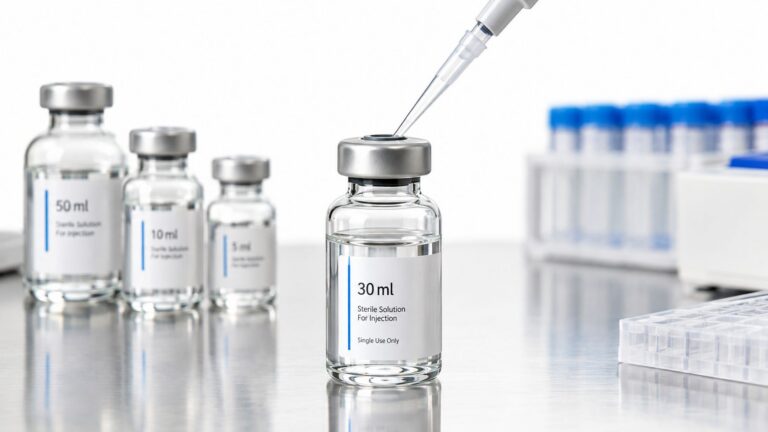
The practical advantage of peptide bacteriostatic water in this setting is multi-dose usability. The preservative supports repeated withdrawals from a vial for up to 28 days after first puncture when stored correctly, and good technique matters during reconstitution because slow delivery and gentle swirling help avoid damage to fragile peptide structures, as noted in Tydes' discussion of bacteriostatic water in peptide research.
Before the first puncture
A careful setup prevents most avoidable failures. The operator should confirm the peptide identity, target concentration, diluent choice, and storage plan before the stopper is pierced. The math should be decided first, not halfway through the process.
A clean workflow usually includes:
- Review the target concentration. The final use case determines how much diluent belongs in the vial.
- Prepare sterile tools. Fresh syringe, fresh needle, clean work surface, and alcohol wipes.
- Check the vial condition. Stopper intact, seal intact, contents visually normal.
- Label in advance. The mixed vial should carry the reconstitution date and any handling note the lab requires.
For teams that want a process reference during setup, this guide to mixing peptides with bacteriostatic water is one example of a workflow checklist.
How to add the diluent without damaging the peptide
The physical act of adding liquid is where many users get impatient. They inject too fast, aim straight at the peptide cake, and then shake the vial hard when it doesn't dissolve immediately. That approach can create foam and unnecessary mechanical stress.
A better method is slower and less dramatic:
- Swab the stopper first: Each vial access should begin with clean technique.
- Draw the planned volume carefully: Precision matters because concentration matters.
- Aim the stream down the vial wall: Let the liquid run gently into the vial instead of blasting directly into the powder.
- Let the peptide hydrate: Some compounds need a moment before they fully dissolve.
- Swirl gently if needed: Avoid vigorous shaking.
If a peptide behaves like a fragile film rather than a tough powder, the mixing technique should reflect that.
That last point gets overlooked. Not every peptide tolerates the same handling style. Some dissolve readily. Others need patience. A vial that isn't instantly clear doesn't always indicate a bad product. It may indicate the need for slower hydration, a different concentration, or peptide-specific guidance.
A short visual reference can help teams standardize technique on the bench:
After mixing and during storage
Once the peptide has gone into solution, the job isn't finished. The lab still has to protect that solution through storage and repeated access. Every later puncture is another opportunity to introduce contamination or concentration error.
A practical post-mix routine often includes the following:
| Step | Why it matters |
|---|---|
| Label the vial clearly | Prevents confusion between similar stocks |
| Refrigerate if protocol calls for it | Supports controlled storage after reconstitution |
| Use a fresh sterile needle and syringe for each draw | Reduces contamination risk |
| Inspect before each use | Helps catch visible changes early |
A stable workflow depends on repetition. Teams that treat every draw as a fresh sterile event usually get more reliable outcomes than teams that assume the preservative will compensate for sloppy handling. It won't.
Decoding Quality Purity and Documentation
A vial can look clean and still be a poor product. Clear liquid, intact seal, and professional packaging don't prove that the contents match the claim. For peptide bacteriostatic water, quality starts with composition and then moves into documentation.

High-quality bacteriostatic water for injection is described as a sterile, nonpyrogenic diluent containing 0.9% (9 mg/mL) benzyl alcohol, with a labeled pH of 5.7 and an acceptable range of 4.5 to 7.0. The preservative suppresses growth rather than sterilizing contaminated contents, which is why repeated vial access still requires aseptic handling, according to the DailyMed labeling information.
What quality looks like on paper
The terms that matter most are often the ones buyers skim past.
Sterile means the product starts clean. Nonpyrogenic means it's intended to avoid fever-causing contaminants such as endotoxin. Benzyl alcohol content tells the buyer whether the vial really matches the preserved formulation expected of bacteriostatic water. pH range matters because solution environment can affect compatibility and handling expectations.
A Certificate of Analysis matters because it turns those claims into batch-level evidence. A reseller shouldn't have to rely on packaging language alone, and a lab shouldn't have to guess whether one lot matches the next.
Documentation isn't paperwork for its own sake. It's the trail that lets a buyer connect a vial on the shelf to a tested batch.
For buyers evaluating options, Herbilabs water for injection products are one example of the type of category where documentation, labeling, and batch transparency should be reviewed before use or resale.
What to check before buying or accepting stock
A receiving checklist works better than visual trust. Before a vial enters inventory, buyers can review a small set of quality signals:
- Batch traceability: Lot number, expiration date, and product identity should be easy to find.
- COA availability: The supplier should be able to provide batch-specific documentation.
- Formula clarity: The label should state the preserved formulation clearly, not vaguely.
- Handling suitability: Packaging and closure should support sterile access without obvious weaknesses.
It also helps to separate visible defects from invisible risks. Chips, damaged seals, and unclear labels are visible. Wrong benzyl alcohol content, unsuitable pH, and contamination aren't. That's why documentation should carry as much weight as physical inspection.
For wholesale partners, this is where trust is either built or lost. A supplier who can't support the product with clear batch records creates downstream risk for every distributor and every end user touching that stock.
Storage Handling and Vial Best Practices
A good vial can still fail in bad hands. Storage and handling sit in the middle of that problem because they look routine, but routine is where most contamination stories begin. Someone leaves a vial out too long, skips stopper cleaning, reuses hardware, or forgets when the vial was first opened.

The safest approach is to treat the vial like a clean shared resource that becomes more vulnerable every time it's accessed. The preservative helps, but the operator still controls the outcome through technique and record-keeping.
From delivery bench to refrigerator
The vial's lifecycle starts before opening. Receiving staff should inspect the seal, confirm labeling, and place stock into the correct storage environment without delay. Once the vial is opened, the storage plan should already be known.
A disciplined routine often looks like this:
- Store unopened stock properly: Keep vials in the conditions specified by the supplier or protocol.
- Record first puncture date immediately: The date should go on the vial or inventory log at once.
- Move opened stock to the correct post-opening storage condition: Don't rely on memory later.
- Separate opened from unopened inventory: That prevents accidental use of an older vial as if it were new.
Labs that handle many similar vials benefit from simple visual systems. Colored date dots, shelf segregation, and logged first-use dates reduce avoidable mix-ups.
Small handling mistakes that create big problems
The most damaging mistakes are often boring ones. Touching a stopper after swabbing it. Setting a cap down on a dirty surface. Returning partly used supplies to the wrong tray. None of those mistakes look dramatic, but each increases risk.
A practical handling standard includes:
- Clean hands and clean surface
- Alcohol wipe on the stopper before access
- Fresh sterile needle and syringe for each draw
- No casual “one more use” past the allowed post-opening window
- Discard immediately if appearance or handling history becomes questionable
The preservative slows bacterial growth. It doesn't give permission to stretch a doubtful vial beyond safe practice.
For teams that need a written SOP reference, these storage practices for bacteriostatic water show the kind of handling topics worth standardizing across staff.
The larger point is reliability. A peptide study can fail because of assay design, instrument issues, or unstable compound behavior. It shouldn't fail because someone treated vial management as an afterthought.
Sourcing Guide for Wholesalers and Researchers
Procurement has become harder because product appearance no longer tells the full story. Recent coverage has highlighted sourcing problems in 2025-2026, including reports that some gray-market vials carried incorrect benzyl alcohol levels or contaminants, which raises the importance of documentation, batch testing, and transparent manufacturing standards, as discussed in this coverage of sourcing and quality concerns.
What reliable procurement looks like
Wholesalers and researchers usually feel the same pain from different angles. The wholesaler faces returns, complaints, and damaged trust. The researcher faces failed reconstitution, uncertain storage life, and unreliable bench outcomes. Both problems start upstream with supplier selection.
Reliable procurement tends to include a few essential requirements:
- Transparent batch records: Buyers should be able to verify what was produced and when.
- Clear manufacturing standards: The vendor should explain how the product is made and controlled.
- Consistent packaging and labeling: This reduces warehouse mistakes and customer confusion.
- Responsive support: Questions about lots, documents, or handling shouldn't sit unanswered.
The lowest listed price often hides the highest total cost. If one bad lot creates customer replacements, troubleshooting time, and damaged studies, the purchasing savings disappear quickly. For resellers and labs alike, the better question isn't “What's the cheapest vial?” It's “Which supplier reduces uncertainty across the whole workflow?”
Advanced FAQ and Troubleshooting
Some peptide guides stop at a simple rule like “use bacteriostatic water for peptides.” That's too broad. Peptide stability is compound-specific, and a neutral sterile diluent may be a common default while some peptides require acidic or specially formulated solutions for better solubility or stability, as explained in this discussion of what type of water should be used for peptides.
Is peptide bacteriostatic water always the right choice
No. It's often a practical choice, but not a universal one.
A useful decision framework is:
- Will the vial be accessed multiple times? If yes, a preserved diluent may fit the workflow better.
- Does the peptide have compound-specific guidance? If yes, that guidance overrides habit.
- Is the peptide known to need a different solution environment? If yes, a specialized diluent may be the better match.
- Is the team choosing based on convenience alone? If yes, that's a warning sign.
What cloudiness or poor dissolution usually means
Cloudiness doesn't always mean contamination, and slow dissolution doesn't always mean the peptide is bad. Several causes are possible.
One is technique. Fast injection, direct blasting of the powder, or aggressive shaking can create a poor-looking result. Another is concentration. A peptide may resist dissolving cleanly at the chosen strength. A third is diluent mismatch. Some compounds do not behave optimally in the same neutral preserved solution used for others.
A practical troubleshooting order works well:
- Review the peptide-specific guidance.
- Check whether the correct diluent was chosen.
- Reconstruct the mixing method used.
- Inspect handling history, storage, and vial access discipline.
- Review the supplier documentation if the product itself is in question.
That order matters because it prevents premature blame. Sometimes the problem is the product. Sometimes it's the procedure. Good troubleshooting separates those two before the next vial gets wasted.
Herbilabs provides laboratory-use bacteriostatic water, reconstitution solutions, and related supplies for research workflows in the EU, UK, and USA. Buyers who need batch documentation, sterile diluent options, or wholesale support can review the available catalog and contact details at Herbilabs.