Private Label, White Label, Wholesale partnerships available - EU, USA and UK - Free shipping from €75

Where to Get Sterile Water: A Guide for Labs & Users
A reader looking up where to get sterile water is usually already under pressure. A lab has a reconstitution step due that afternoon. A reseller needs packaging that won't raise questions from buyers. An individual user is staring at a peptide vial and trying to avoid a basic but expensive mistake.
The problem is that sterile water sounds simple when it isn't. The label may say sterile, but the type, packaging, regulatory status, and intended use decide whether that bottle or vial belongs in a research workflow, a medical setting, or nowhere near a sensitive application at all.
Procurement is where many avoidable failures begin. A poor fit at the sourcing stage can distort media preparation, undermine reproducibility, create documentation gaps for resale, or push someone toward a retail substitute that was never designed for the task. Sterile water should be treated like a controlled input, not a convenience item.
Table of Contents
- The Critical First Step Sourcing Sterile Water
- The Sterile Water Spectrum Demystified
- Choosing the Right Procurement Channel
- Ensuring Quality and Regulatory Compliance
- Proper Storage and Handling for Maximum Integrity
- Sourcing Sterile Water with Confidence
The Critical First Step Sourcing Sterile Water
A lab manager is reviewing a failed run. The peptide lot is correct. The instrument passed checks. Handling stayed within SOP. The weak point turns out to be the water, bought as a generic sterile product without confirming intended use, packaging format, or supplier documentation.
That is usually where the procurement journey starts. The buyer realizes that sterile water is not one market with one buying path. Labs, resellers, and individual peptide users are solving different problems, and they should not buy from the same channel by default.
Sterile water now sits inside regulated commercial supply chains rather than older habits of improvised preparation. Buyers who need verified sterility, controlled packaging, and traceable product information generally source through laboratory suppliers, medical distributors, or pharmacy channels, depending on the application. The first purchasing decision is not brand. It is fit for use.
The reason is straightforward. “Sterile” does not describe a single purchasing category. It covers multiple product types tied to different workflows, container formats, and regulatory expectations. Buyers comparing sterile water and bacteriostatic water often miss that distinction at the start, which is why this guide on choosing bacteriostatic or sterile water for research use is a useful companion before placing an order.
Practical rule: If the workflow depends on contamination control, reproducibility, or resale credibility, the source of the water is part of the quality system.
For a lab manager, the process usually begins with application, required volume, and paperwork. Can the supplier provide the right format for routine purchasing, along with clear product identification and batch traceability? For a reseller, the order starts with consistency. Packaging must arrive intact, present well to customers, and remain available across repeated purchase cycles. For an individual peptide user, the starting point is often convenience, but the correct endpoint is product match. Single-use vial, correct sterile water type, and a seller that states intended use clearly.
Those are different procurement paths.
A research lab ordering by the case for media prep or controlled reconstitution should evaluate suppliers very differently from someone looking for a few small vials. A reseller needs repeatable stock and presentable packaging. An individual buyer needs clarity and restraint, not a broad retail search that mixes irrigation products, inhalation products, and lab-use water under one vague label.
Why the source changes the outcome
The source affects more than price or delivery speed. It determines whether the purchase supports the work you are doing:
- Application fit: Sterile water for injection, irrigation, inhalation, and technical laboratory use are not interchangeable products.
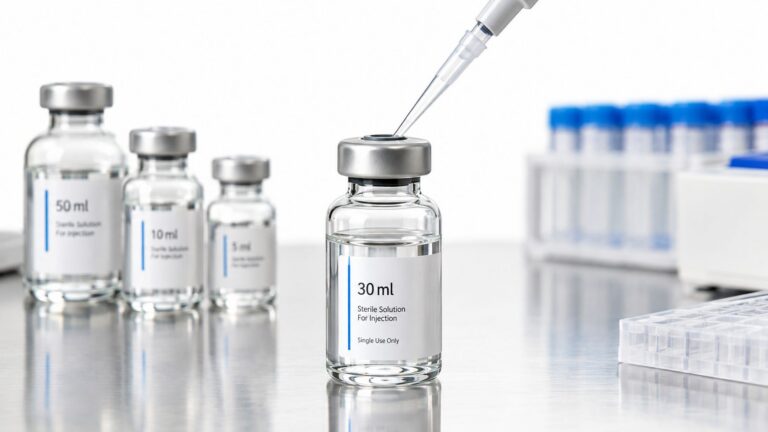
- Packaging fit: Single-use vials, larger bottles, and case quantities each suit a different handling pattern and contamination risk.
- Documentation fit: Serious suppliers state intended use, pack size, product identity, and other basic purchasing details clearly.
- Supply fit: One-off retail availability is different from maintaining dependable stock for a lab, clinic, or resale operation.
The safest buying method is simple. Start with the end use, match it to the right water type, then choose the supplier channel that can support the packaging, documentation, and reorder pattern that use case requires.
The Sterile Water Spectrum Demystified
The most common sourcing errors come from buying by label instead of by specification. “Sterile water” feels precise, but it still leaves open the most important question. Sterile for what use?

Why sterile is not a complete specification
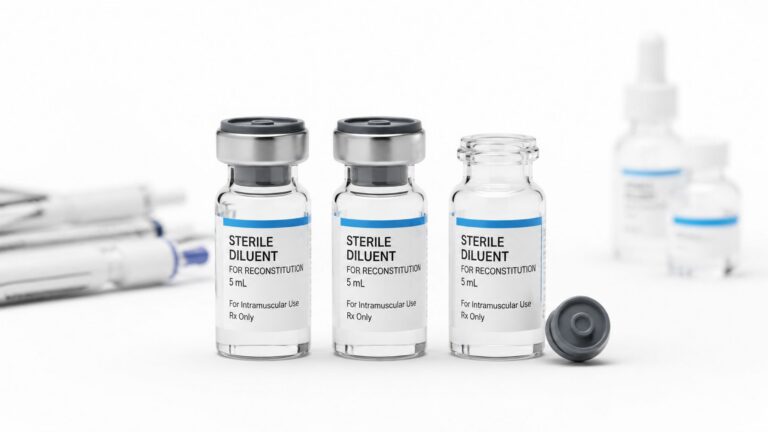
For regulated medical workflows, the relevant product is often Sterile Water for Injection, commonly shortened to SWFI. The official product description states that SWFI is a sterile, nonpyrogenic, solute-free distilled-water preparation intended only as a sterile solvent or diluent for parenteral products, according to the DailyMed listing for Sterile Water for Injection.
That wording does real work. “Sterile” alone addresses microorganisms. “Nonpyrogenic” matters when the water is involved in parenteral preparation. “Solute-free” matters when dissolved material could interfere with the formulation.
Other sterile water products serve different purposes. Sterile water for irrigation is used for rinsing and flushing workflows, not parenteral preparation. Sterile water for inhalation is designed around nebulizer or humidification use. Technical sterile water for laboratory work may meet a cleanliness standard relevant to media preparation or rinsing equipment, but that doesn't automatically make it appropriate for injectable workflows.
A related category often discussed by peptide users is bacteriostatic water. The key distinction is that it includes a preservative, unlike plain sterile water. For buyers comparing the two in a research setting, this breakdown of bacteriostatic or sterile water for research use is useful because it frames the choice around repeated access and application fit.
Sterile water types at a glance
| Water Type | Composition | Primary Use | Best For |
|---|---|---|---|
| Sterile Water for Injection | Sterile, nonpyrogenic, solute-free distilled water | Sterile solvent or diluent for parenteral products | Regulated medical workflows and applications that require SWFI |
| Sterile Water for Irrigation | Sterile water packaged for irrigation use | Rinsing wounds or body cavities | Clinical irrigation tasks, not parenteral preparation |
| Sterile Water for Inhalation | Sterile water packaged for inhalation workflows | Nebulizers or humidification | Respiratory equipment use, not injection |
| Sterile purified water for technical use | Sterile purified water selected by technical grade | Media preparation and rinsing laboratory equipment | Lab workflows where technical specification drives the choice |
| Bacteriostatic water | Sterile water with a preservative | Reconstitution where repeated vial access is part of the workflow | Multi-use research handling where the specific product is appropriate |
Sterility is one criterion. End use is the deciding criterion.
One common mistake buyers keep making
A buyer sees “sterile,” ignores the rest of the label, and substitutes across categories. That's how someone ends up using irrigation water where SWFI is expected, or trying to solve repeated vial access with a preservative-free product that wasn't selected for that pattern of use.
A cleaner decision model works better:
- Match the workflow first. Is the task parenteral preparation, irrigation, inhalation, or technical lab work?
- Then match the packaging. Single-use vials, larger bottles, and bulk cases each support different handling realities.
- Then match the channel. Pharmaceutical suppliers, medical distributors, and laboratory suppliers don't sell interchangeable products under interchangeable standards.
That's the point where “where to get sterile water” becomes answerable in a useful way.
Choosing the Right Procurement Channel
A lab manager trying to secure a validated media-prep supply, a reseller building a repeatable catalog, and an individual looking for a single reconstitution vial may all type the same search query. They do not need the same product, the same pack size, or the same seller.

Procurement starts with the buyer profile. In practice, the right channel is determined by four things: intended use, packaging, documentation, and reorder reliability. Product name alone is not enough.
For the lab manager
Lab purchasing is usually driven by method consistency, throughput, and audit readiness. The strongest channel is typically a laboratory supplier or technical manufacturer that states the grade, intended use, and pack format in plain terms.
For research teams ordering sterile water for injection in controlled pack formats, the useful question is not just "is it sterile?" The better question is whether the listing supports the actual workflow. A lab buyer should be able to confirm what the water is for, how it is packaged, and whether the same item can be reordered without quiet substitutions.
A practical screening checklist helps:
- Use statement matches the workflow: Media prep, equipment rinsing, or reconstitution should be named clearly.
- Pack format stays consistent: Changes in bottle size, vial count, or closure type can disrupt validated handling steps.
- Documentation is visible before purchase: Grade, intended application, and product identity should not be buried or implied.
- Supply continuity is realistic: A supplier should be able to support repeat orders, not just one-off availability.
In lab procurement, convenience is secondary. Repeatability is the standard.
For the reseller or distribution partner
Resellers buy more than inventory. They buy labeling discipline, stable SKUs, and fewer downstream complaints.
That changes the procurement channel. The best fit is usually a supplier with predictable carton quantities, consistent packaging, and product pages that clearly separate injection, irrigation, inhalation, and technical-use water. If those categories are blended together under vague wording, customer confusion follows quickly.
Resellers should screen suppliers on a different set of risks:
- Packaging uniformity: Buyers expect the same vial or bottle format across repeat orders.
- Category clarity: Listings should identify the intended use without catch-all phrasing.
- Case logic: Wholesale planning depends on carton counts, lead times, and reorder cadence.
- Channel discipline: Products intended for medical or pharmaceutical distribution should come from sellers that operate with that level of control.
A reseller can tolerate a slightly higher unit price more easily than inconsistent labeling. Returns, disputes, and damaged trust cost more.
For the individual peptide user
Individual buyers usually start with search convenience. That is also where category mistakes happen most often.
The safest purchasing path is simple. Identify the exact water type first. Then choose the smallest practical format, usually single-use packaging for reconstitution work. After that, read the listing closely. If the seller is unclear about intended use, pack size, or product identity, move on.
For this buyer profile, the procurement order should look like this:
- Choose the exact category first: Searching only for "sterile water" is too broad.
- Prefer single-use packaging where appropriate: It reduces handling ambiguity and storage mistakes after opening.
- Buy from sellers who write clearly: Product identity and intended use should be explicit.
- Do not assume a local retail outlet will stock the right format: Some channels cover common OTC needs, but not every research-related use case or vial configuration.
The recurring mistake is treating availability as proof of suitability. It is only proof that a seller has stock.
Ensuring Quality and Regulatory Compliance
A lab manager approves a rush order, a reseller adds a new SKU, and an individual buyer clicks the first listing that says "sterile water." All three can receive a sealed product. Only one may receive the right product, in the right format, with the documentation needed for the intended use.
That kind of ambiguity usually creates downstream risk. The error rarely starts at the bench. It starts at the product page, where the category is blurred, the use case is implied, and traceability is missing.

What legitimate sourcing should include
A legitimate sterile water listing should answer four procurement questions before checkout. What is the exact water type? Who is it intended for? How is it packaged? What evidence supports the claim?
For technical laboratory use, good listings state the standard or grade and connect it to an actual workflow, such as media preparation or rinsing laboratory equipment. That specificity matters because "sterile" alone does not tell a buyer whether the product fits analytical work, reconstitution, irrigation, or inhalation.
The review standard changes slightly by buyer profile. A lab manager needs batch traceability and clear fit for SOP-driven work. A reseller needs stable labeling, repeatable catalog data, and fewer customer disputes. An individual peptide user needs a small format, a clear category, and no confusion between research-use and general consumer language.
A credible supplier should make several things visible before payment:
- Product identity: SWFI, irrigation water, inhalation water, or technical sterile water.
- Intended use statement: The application should be explicit, not implied.
- Packaging description: Single-use vial, bottle, foil packet, or case format should be obvious.
- Lot-level transparency: Buyers should be able to confirm there is a batch trail.
- Documentation cues: Label images, specifications, or compliance references should be easy to review.
For research procurement, the product page should also keep RUO, clinical, and household uses clearly separated. Buyers comparing specialized listings can review water for injection research-use options as an example of category-specific presentation that helps match product fit to the actual use case.
How to read the product description like a buyer, not a browser
A strong product page is specific. It names the water type, states the intended application, shows the presentation, and gives the buyer enough detail to clear internal review or personal safety checks.
A weak page usually fails in predictable ways:
- Vague terminology: "Pure sterile water" without the actual category.
- Overbroad claims: The same product appears suitable for every use.
- Missing format details: No vial size, bottle volume, closure type, or single-use statement.
- No traceability signals: Nothing indicates lot control, batch identity, or supporting documentation.
The same review method applies across channels. Marketplace listings, distributor catalogs, and direct supplier pages should all survive the same basic test. Could this listing support a clean procurement record if someone audits the purchase later?
A short visual primer helps buyers think through those checks before ordering.
Buyers do not need exhaustive paperwork for every order. They do need product descriptions that are specific enough to prevent the wrong use, the wrong format, or the wrong channel.
What to reject immediately
Some listings should be excluded on first review.
| Red flag | Why it matters |
|---|---|
| Product type isn't named clearly | The buyer cannot verify intended use |
| Use case is overly broad | Category control is probably weak |
| Packaging is unclear | Handling decisions and contamination control become harder |
| Seller language sounds improvised | Sensitive workflows need cleaner sourcing discipline |
| No batch or documentation cues | Traceability breaks down if a problem appears later |
Quality review is part of procurement, not paperwork after the fact. If the listing cannot support the decision before purchase, it should not enter the workflow at all.
Proper Storage and Handling for Maximum Integrity
Good sourcing can still be undone by poor handling. Once sterile water reaches the bench, cabinet, pharmacy shelf, or shipping area, the next risk is introduced by the user.

Supply conditions also affect handling decisions. Product access varies by price, shortages, and packaging format. GoodRx reports sterile water pricing as low as $3.87 with savings of up to 80% off the average retail price for the most common version, while ASHP maintains an active shortage FAQ for Sterile Water for Injection. Availability also spans 100 mL bottles, foil packets, and 5 mL single-use vials, which means storage plans should match the format being purchased, as summarized by GoodRx's sterile water pricing and market overview.
What protects sterility after purchase
Most failures after delivery come from unnecessary exposure. The buyer opens too many units at once, stores mixed formats together without control, or treats a single-use presentation as if it were built for repeated access.
A better handling routine is simple:
- Keep sealed units organized by format: Don't mix loose vials, opened bottles, and reserve stock in one bin.
- Check expiry before the workflow starts: This avoids opening backup units mid-process.
- Use the smallest practical presentation: If the workflow only needs a small volume, smaller packaging usually lowers exposure risk.
- Separate procurement stock from active-use stock: Day-to-day access shouldn't involve the entire reserve inventory.
Storage discipline matters just as much in research environments. Teams maintaining sterile consumables, vials, and reconstitution supplies can apply the same controls used for other sensitive materials. This guide to sterile laboratory storage practices is useful for building that routine into everyday handling.
Simple handling rules that prevent avoidable loss
The sterile barrier is easiest to preserve when the operator limits unnecessary contact points.
Benchside habit: Open later, touch less, label immediately.
A practical do-and-don't list helps:
- Do swab vial stoppers and access points according to site practice. Clean entry technique lowers avoidable contamination risk.
- Do stage tools before opening the container. Searching for supplies after opening increases exposure time.
- Do treat single-use packaging as single-use. If the format is designed for one access cycle, don't improvise a reuse plan.
- Don't transfer water into secondary containers unless the workflow requires it. Every transfer adds risk.
- Don't assume a clear liquid is still suitable just because it looks normal. Use packaging status and handling history, not appearance alone.
For clinics, labs, and resellers alike, post-purchase discipline protects value. It also prevents the false conclusion that the supplier failed when the actual failure happened at the point of use.
Sourcing Sterile Water with Confidence
The question isn't only where to get sterile water, but which type, format, and channel fit the workflow without introducing preventable risk.
For labs, the strongest decision is usually the most specific one. Buy technical sterile water through laboratory channels when the work depends on a stated grade and a defined application. For regulated medical workflows, source the correct pharmaceutical product through licensed channels. For resellers, prioritize suppliers whose labeling and packaging stay consistent enough to support downstream trust. For individual users, narrow the use case before searching for a seller.
That approach prevents the most common failure pattern. Buyers stop treating sterile water as a generic accessory and start treating it as a controlled input.
Three habits separate confident sourcing from guesswork:
- Match the product to the exact use.
- Match the packaging to the handling reality.
- Match the supplier to the level of documentation and consistency required.
That's what protects research integrity. It also protects procurement teams from the quiet problems that appear later as failed prep, inconsistent results, customer complaints, or unnecessary reorders.
Reliable sourcing isn't about buying the most expensive option or the most convenient one. It's about buying the right sterile water from the right channel, in the right format, with the right level of clarity.
Herbilabs supports that kind of disciplined sourcing with research-focused sterile diluents, clear product categorization, dependable fulfillment, and documentation designed for serious buyers across the EU, UK, and USA. Buyers who need a dependable partner for research-use sterile water, reconstitution solutions, or wholesale supply can explore Herbilabs for product options and distribution support.