Private Label, White Label, Wholesale partnerships available - EU, USA and UK - Free shipping from €75
Bacteriostatic or Sterile Water: Which Is Right for Your Research?
This guide explains how to select the right type of water for your specific laboratory needs.
In any laboratory setting, the reproducibility of an experiment often hinges on the purity of its simplest reagent: water. The choice between bacteriostatic and sterile water is a fundamental decision in protocol design, yet it is one that can have significant consequences for your results, budget, and workflow. Understanding the distinct properties of each is essential for maintaining experimental integrity.
Core Compositional Differences
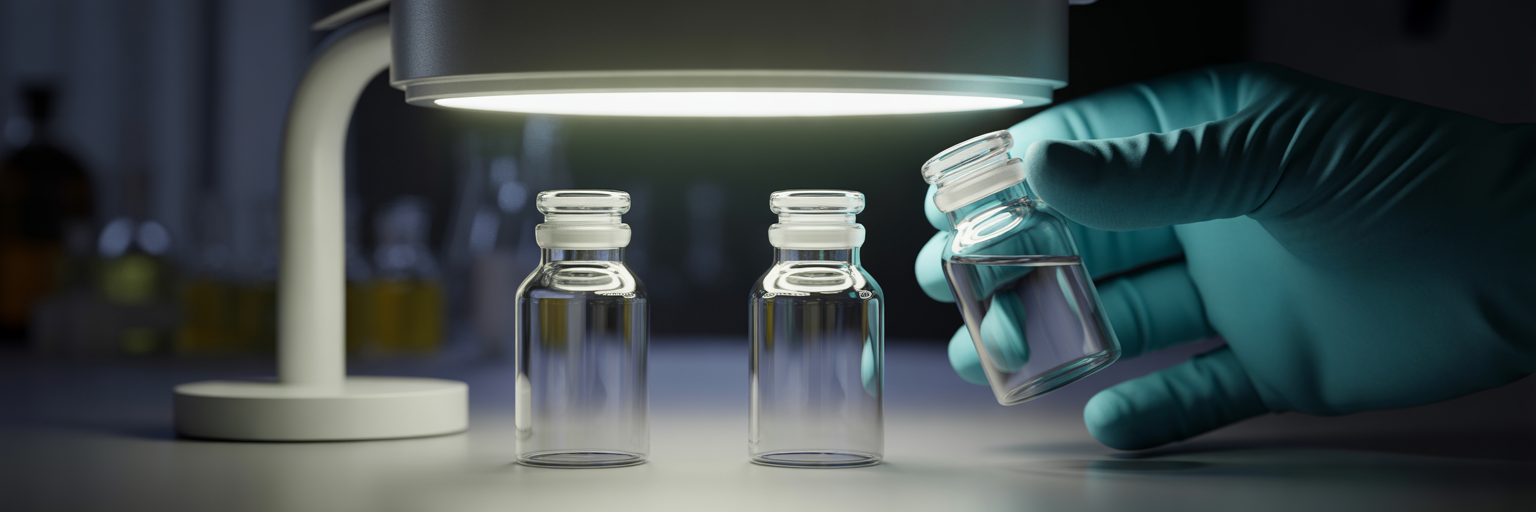
At first glance, both liquids appear identical, but their chemical makeup dictates their use. The core distinction in the bacteriostatic vs sterile water debate comes down to a single ingredient. Bacteriostatic water for injection is sterile, non-pyrogenic water that contains a preservative. Specifically, it includes 0.9% benzyl alcohol, an agent that inhibits the growth of most potential contaminants after the vial is opened.
This preservative does not kill microbes outright but prevents them from reproducing, a critical feature for multi-dose applications. As documented in resources like the GLP1 Journal’s guide, this property allows for repeated use from the same vial. In direct contrast, sterile water for injection is simply purified water that has been sterilized and packaged for single use. It contains no antibacterial or antimicrobial agents.
The absolute purity of sterile water is its greatest strength and its most significant weakness. Once opened, it is highly susceptible to contamination. The defining difference is the presence of the benzyl alcohol preservative. This additive is the sole reason for bacteriostatic water’s extended usability. While both liquids are typically slightly acidic, the addition of benzyl alcohol can also influence the pH and stability of certain reconstituted compounds, a factor that becomes critical when designing sensitive experiments.
Protocols for Peptide Reconstitution
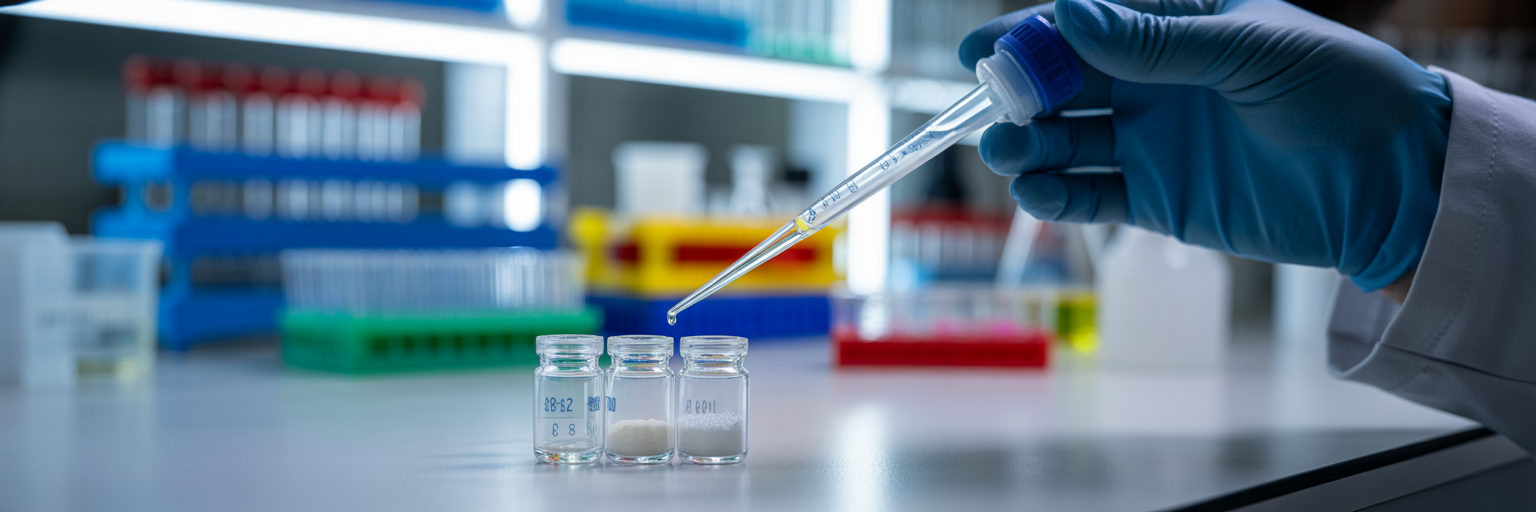
Moving from composition to application, one of the most common uses for these diluents is in peptide reconstitution. Lyophilized, or freeze-dried, peptides are delivered as a powder and must be dissolved in a liquid before use. The choice of that liquid is fundamental to the peptide’s stability and, ultimately, the validity of your experiment. This process serves as a practical peptide reconstitution guide where the wrong choice can compromise weeks of work.
For multi-dose protocols, particularly with peptides used in ongoing research like GLP-1 agonists, bacteriostatic water is often the default. The benzyl alcohol maintains sterility across multiple punctures of the vial’s septum with a syringe, allowing a researcher to draw small, repeated doses over days or weeks. This is where the preservative becomes the hero of the protocol, protecting the peptide solution from contamination.
However, there are clear scenarios where sterile water is mandatory. If you plan to use the entire reconstituted volume immediately, there is no need to introduce a preservative. More importantly, some peptides are sensitive to benzyl alcohol, which can cause them to degrade or aggregate. Researchers must always verify that the preservative will not interfere with their specific peptide’s structure or any downstream assays. As many research resources from sources like Peptides Explorer highlight, this due diligence is non-negotiable. The process of dissolving lyophilized peptides with a product like our reconstitution solution requires careful execution. These meticulous handling techniques, valued in fields from lab work to the detailed craftsmanship seen in mother of pearl iPhone cases, are crucial for reliable outcomes.
Multi-Dose Convenience vs. Single-Use Purity
The compositional difference between these two water types creates a cascade of practical and economic consequences for any lab. The primary benefit of bacteriostatic water is its suitability for multi-dose vials. After the first use, it can be refrigerated and safely used for up to 28 days. This dramatically reduces preparation time and waste in long-term experiments where small, regular doses are required.
This stands in sharp contrast to the strict single-use protocol for sterile water. Once a vial of sterile water is opened, any unused portion must be discarded immediately to prevent microbial contamination. Using it for a multi-dose protocol would be like leaving a petri dish open on the lab bench; contamination is not a risk, but an inevitability. This reality directly impacts laboratory workflow, budget, and waste management.
The decision becomes a strategic trade-off. Bacteriostatic water lowers costs and streamlines protocols for long-term experiments, but it introduces a chemical preservative that could potentially interfere with results. Sterile water guarantees absolute purity for each use, but it can be significantly more wasteful and expensive for multi-dose needs. This choice influences how you manage your lab supplies, which you can explore in our shop. Ultimately, it is a risk management decision that every researcher must make based on their experimental priorities.
| Factor | Bacteriostatic Water | Sterile Water for Injection |
|---|---|---|
| Primary Use Case | Multi-dose protocols | Single-dose, immediate use |
| Storage After Opening | Refrigerate; use within 28 days | Discard immediately |
| Cost-Effectiveness | High for repeated, small-dose use | Low for multi-dose needs (high waste) |
| Primary Risk Managed | Post-opening microbial contamination | Interference from chemical additives |
| Ideal For | Long-term experiments, cost-saving | Sensitive assays, single-use applications |
Note: This table summarizes the key operational trade-offs. The choice depends on experimental design, budget constraints, and the sensitivity of the biological system.
Safety Profiles and Sensitive Applications
Beyond convenience and cost, the most critical consideration is safety. The benzyl alcohol preservative in bacteriostatic water, while beneficial for preventing contamination, has known contraindications. Its most serious limitation is in neonatal applications. Benzyl alcohol can be toxic to newborns and has been associated with a fatal condition known as “gasping syndrome.” For this reason, only sterile water should ever be used in research involving neonates, whether in vivo or in vitro.
This concern extends to other sensitive biological systems. In cell culture experiments, benzyl alcohol can be cytotoxic, meaning it can kill the very cells you are trying to study. This introduces a confounding variable that can invalidate results. The same caution applies to in vivo animal studies, where repeated dosing with bacteriostatic water could lead to systemic accumulation of the preservative, with unknown effects on the animal’s physiology. As research guides from sources like Where to Find Peptides emphasize, single-use protocols demand diluents free of additives.
Therefore, sterile water for research becomes the non-negotiable gold standard in specific situations. Its use is mandatory for any application where absolute chemical purity is paramount. This ensures that your results are clean and that your experimental subjects are not exposed to unnecessary risks. Verifying this purity with documentation like our Certificate of Analysis is a standard part of good laboratory practice.
- Neonatal research (in vivo or in vitro)
- Sensitive cell culture experiments where cytotoxicity is a concern
- High-performance liquid chromatography (HPLC) and other sensitive analytical chemistry techniques
- Any single-use protocol where the entire volume is used immediately
- Reconstitution of compounds known to be reactive with benzyl alcohol
Guidelines for Storage and Handling
Proper storage and handling are just as important as selecting the right diluent. While sealed, both bacteriostatic and sterile water have a similar shelf life when stored at room temperature away from direct sunlight. The critical differences emerge the moment the vial is opened. This is where clear, instructional protocols prevent costly lab errors.
For bacteriostatic water, a strict post-opening procedure must be followed. The vial must be refrigerated at 2°C to 8°C. Crucially, the date of first use should be written directly on the vial’s label, and the vial must be discarded after 28 days, regardless of how much remains. This 28-day rule is not a suggestion; it is the established limit for ensuring the preservative’s effectiveness.
In contrast, sterile water has no post-opening storage protocol because it is not designed for it. It is intended for immediate and complete use. Any remaining water must be disposed of to prevent the risk of introducing a contaminated solution into a future experiment. To maintain an organized lab and avoid mix-ups, especially when stocking supplies like our multi-pack reconstitution solutions, a clear system is essential.
- Store bacteriostatic and sterile water in physically separate, clearly marked locations in the lab or storage room.
- Implement a strict labeling system for all reconstituted vials. The label must include the peptide name, concentration, date of reconstitution, diluent used (e.g., ‘BW’ or ‘SW’), and the 28-day expiry date if bacteriostatic water was used.
- When opening a new multi-dose vial of bacteriostatic water, write the date of first use directly on the label.
- Conduct regular checks of refrigerated storage to dispose of expired reconstituted solutions and bacteriostatic water vials.
A Framework for Selecting the Right Diluent
Choosing between bacteriostatic and sterile water does not have to be complicated. By synthesizing the information, we can create a simple decision-making framework. Before you reach for a vial, ask yourself three direct questions to guide your choice and ensure your experimental protocol is sound, safe, and efficient. This checklist acts as a final takeaway to help you select the right diluent every time.
- Is the protocol single-dose or multi-dose? If multi-dose, bacteriostatic water is the more convenient and economical choice, provided it is compatible with your experiment.
- Is the biological system sensitive to preservatives? If working with neonates, sensitive cell lines, or if the effect of benzyl alcohol is unknown, sterile water is the only safe choice to ensure data integrity.
- Will the entire reconstituted volume be used immediately? If yes, sterile water is perfectly suitable and avoids introducing an unnecessary chemical (benzyl alcohol) into your system.
Answering these questions will lead you to the correct choice for your specific needs. For more insights and research guides, feel free to explore our blog.