Private Label, White Label, Wholesale partnerships available - EU, USA and UK - Free shipping from €75
Mastering Reconstitution Solution for Peptides: 2026 Guide
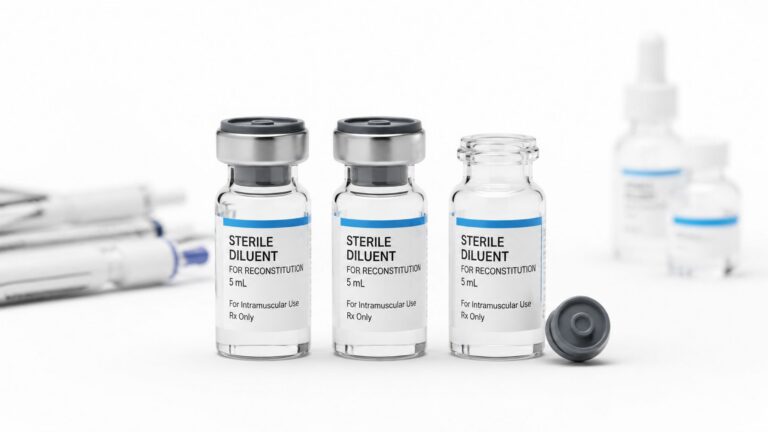
A reconstitution solution for peptides is the sterile liquid used to dissolve a freeze-dried (lyophilized) peptide powder, transforming it into a usable liquid form for research. Think of the lyophilized peptide as a high-performance engine concentrate—incredibly stable and easy to ship, but completely useless on its own. The reconstitution solution is the specific base oil you mix it with to unlock its full potential.
This initial mixing step is the bedrock of your entire project, setting the stage for accurate, stable, and effective results.
Table of Contents
- Why Proper Peptide Reconstitution Is Your Most Critical Step
- Choosing the Right Reconstitution Solution for Your Peptides
- Mastering the Math for Accurate Peptide Dosing
- Sterile Technique for Storage and Handling
- How to Identify a High-Quality Solution Supplier
- Troubleshooting Common Reconstitution Problems
Why Proper Peptide Reconstitution Is Your Most Critical Step

The process of adding a reconstitution solution for peptides isn't just about turning a powder into a liquid. It's a precise chemical procedure designed to "awaken" the peptide without shattering its delicate amino acid structure.
The primary goals here are threefold, and each is non-negotiable:
- Complete Solubility: The peptide must fully dissolve to create a homogenous solution. Any undissolved particles mean your concentration is wrong from the start.
- Structural Stability: The complex, folded chains of amino acids must remain intact and biologically active. If they break or clump, they become useless.
- Accurate Dosing: A perfectly mixed solution is the only way to ensure you can draw precise, consistent, and reproducible measurements for your work.
The Risk of Getting It Wrong
Choosing the wrong solvent or using a poor technique is like mixing that engine concentrate with water instead of the specified oil. The outcome is equally disastrous and, more importantly, irreversible.
An incompatible solution can cause the peptide to aggregate, or clump together, rendering it biologically inactive. Shaking the vial vigorously can physically shear the fragile peptide bonds, permanently destroying them.
Key Takeaway: Improper reconstitution doesn't just reduce a peptide's effectiveness—it can permanently destroy the entire vial. This leads directly to wasted materials, significant financial loss, and completely invalid research data.
Ultimately, every subsequent step in your research hinges on getting this first one right. Mastering the art of selecting and using the correct reconstitution solution for peptides is the moment that separates success from failure. It’s the foundation upon which all reliable scientific outcomes are built.
Choosing the Right Reconstitution Solution for Your Peptides
Selecting the correct reconstitution solution for peptides is one of the most critical decisions you'll make before an experiment even begins. Think of the lyophilized peptide as being in a state of suspended animation; the solution you choose is the environment it will wake up in. The wrong choice can damage the peptide's structure, limit its stability, or compromise your results entirely.
Let's break down the common solutions to ensure you’re making an informed choice based on the peptide's needs and your experimental protocol.
Bacteriostatic Water (BAC)
For most applications, especially for vials that will be accessed multiple times, Bacteriostatic Water is the undisputed gold standard. Often called BAC water, it is simply sterile water containing a small but vital addition: 0.9% benzyl alcohol.
This benzyl alcohol acts as a preservative, inhibiting the growth of any potential microbes that could be introduced when puncturing the vial's stopper. This is a game-changer for stability.
According to established laboratory protocols across the EU, UK, and USA, peptides reconstituted with bacteriostatic water can be stored at 2–8°C for approximately 21 to 28 days while maintaining over 95% structural integrity. This makes it the ideal choice for any protocol requiring multiple small doses over several weeks, as it minimizes waste and ensures consistency from the first draw to the last. For a more detailed walkthrough, Emirates Peptides' beginner guide offers excellent practical advice.
Sterile Water for Injection
Sterile Water for Injection is the definition of purity. It's just that—sterile water with absolutely no preservatives, buffers, or additives. This extreme purity makes it suitable for highly sensitive in-vitro work where even the trace amount of benzyl alcohol in BAC water might interfere with cellular processes.
However, this purity comes with a significant trade-off.
Crucial Distinction: Because it completely lacks a preservative, a vial reconstituted with sterile water is extremely vulnerable to bacterial contamination the moment it's opened. It must be treated as a single-use solution. The entire contents should be used immediately after preparation, with any remainder discarded to prevent compromising future experiments.
Saline Solution (0.9% NaCl)
Sterile 0.9% NaCl, often called normal saline, is another option. It's an isotonic solution, which means it shares the same salt concentration as human blood and tissues. This characteristic can be very useful for specific applications where maintaining the correct osmotic balance is critical to the experimental model.
Despite this benefit, its use is quite limited. Just like sterile water, it contains no preservatives, leaving it wide open to rapid microbial growth. For that reason, saline should only be considered for immediate, single-dose applications.
Specialized Acidic Solvents
Some peptides are notoriously "stubborn." Due to their unique sequence of amino acids, they can be highly hydrophobic and refuse to dissolve properly in neutral solutions like water or saline. Trying to force them into solution is futile.
For these challenging compounds, a weak acidic solvent is often the only answer. The most common choice is a dilute Acetic Acid solution (often 0.1% to 1%). The acidic environment protonates the peptide, altering its charge and breaking the intermolecular bonds that are preventing it from dissolving.
Using an acidic solvent should always be a secondary choice, guided strictly by the peptide’s Certificate of Analysis (CoA) or datasheet. It will alter the final pH of your preparation, which can have downstream effects, and choosing the wrong solvent can cause irreversible damage.
Comparison of Common Peptide Reconstitution Solutions
To help you visualize the trade-offs, this table summarizes the key characteristics of each common solvent. It’s a quick-reference guide to match the right solution to your specific peptide and protocol needs.
| Solution Type | Key Component | Primary Use Case | Post-Reconstitution Stability | Best For |
|---|---|---|---|---|
| Bacteriostatic Water | Sterile water + 0.9% Benzyl Alcohol | Multi-dose vials, general use | High (up to 28 days refrigerated) | Protocols requiring multiple withdrawals over several weeks |
| Sterile Water | Pure, sterile H₂O | Single-dose use, sensitive assays | Very Low (use immediately) | Sensitive in-vitro work where preservatives may interfere |
| Saline Solution | Sterile water + 0.9% NaCl | Isotonic requirements, single use | Very Low (use immediately) | Applications where maintaining osmotic balance is critical |
| Acidic Solvents | Dilute Acetic Acid (e.g., 0.1%) | Dissolving hydrophobic peptides | Varies by peptide; datasheet is key | "Stubborn" peptides that won't dissolve in neutral solutions |
Ultimately, the goal is to dissolve the peptide completely without compromising its structure or introducing contaminants. By understanding these options, you can ensure your reconstituted peptide is stable, potent, and ready for your research.
Choosing the right reconstitution solution for peptides is far from a one-size-fits-all decision. The ideal solvent is dictated entirely by the peptide’s unique chemical makeup, which all comes down to its specific sequence of amino acids.
Think of it like dissolving substances in your kitchen. Salt dissolves easily in water, but oil clumps up and refuses to mix. Peptides behave in a surprisingly similar way, and understanding their chemical personality is the key to preventing clumping, waste, and inaccurate results.
To get it right, we can sort most peptides into three main camps based on their overall electrical charge. Knowing which group your peptide falls into will tell you exactly how to handle it.
Basic (Positively Charged) Peptides
Peptides that are rich in basic amino acids like Lysine (Lys), Arginine (Arg), and Histidine (His) carry a net positive charge. This can make them stubborn when you try to dissolve them in neutral water. The positively charged chains repel each other, preventing them from mixing properly.
The trick here is to change the environment. Using a slightly acidic solution, like a 1% dilute acetic acid, works wonders. The acid helps to neutralize those positive charges, allowing the peptide chains to separate and dissolve much more easily. This is an excellent troubleshooting step if you find a peptide clumping in standard bacteriostatic water.
Acidic (Negetrively Charged) Peptides
On the other end of the spectrum, you have peptides with a high proportion of acidic amino acids like Aspartic Acid (Asp) and Glutamic Acid (Glu). These carry a net negative charge and, just like their basic counterparts, can sometimes resist dissolving in neutral water.
In this situation, a slightly basic solution, such as ammonium bicarbonate, can help. However, this is a much less common requirement and should only be attempted if it’s specifically recommended by the manufacturer’s data sheet. For the vast majority of acidic peptides, standard Bacteriostatic Water is still the best place to start.
Neutral (Hydrophobic) Peptides
The third and often most challenging group are the hydrophobic peptides. These chains are packed with nonpolar amino acids and essentially "dislike" water. They are the "oil" in our earlier analogy and will aggressively clump together to avoid any contact with an aqueous solution.
For these highly resistant peptides, organic solvents may be the only answer. Solvents like DMSO or Acetonitrile are sometimes required, but they should only be used as a last resort and with extreme caution. They can interfere with many biological assays and require very careful handling.
The infographic below compares the most common starting solvents you’ll encounter for general-purpose reconstitution.

This visual guide shows why bacteriostatic water is so often the preferred starting point due to its stability, while sterile water and saline are typically reserved for immediate-use scenarios.
No matter the peptide, your first step should always be to consult its Certificate of Analysis (CoA) for specific guidance from the manufacturer. Once you understand the chemistry, you can follow a standard procedure, which we detail in our guide on how to mix peptides with bacteriostatic water. This knowledge will equip you to handle even the most stubborn peptides with confidence.
Mastering the Math for Accurate Peptide Dosing

Reliable research is built on a foundation of solid math. Before a single drop of a reconstitution solution for peptides even touches the powder, your calculations will determine the success of the entire process. This is the moment you translate your protocol from paper into a precise, repeatable action plan.
Without getting the numbers right, the final concentration of your solution is nothing more than a guess. This immediately calls the validity of your work into question, as inaccurate dosing can easily lead to inconsistent or misleading results. Mastering this math isn't just about following a formula; it's about ensuring your research is sound from the very first measurement.
Calculating Your Solvent Volume
Your first task is to figure out exactly how much of your chosen reconstitution solution to add to the lyophilized peptide. The objective is to create a stock solution with a concentration that is convenient and easy to work with. Thankfully, the formula is straightforward.
The volume you need is determined by a simple equation: Volume (mL) = Peptide Mass (mg) ÷ Target Concentration (mg/mL). For instance, to get a 1 mg/mL solution from a 5 mg vial of peptide, you would need exactly 5 mL of solvent. Simple errors at this stage, like over- or under-diluting, are a common source of failed reconstitutions. If you want to double-check your work, you can explore the Verified Peptides' peptide reconstitution calculator guide to help avoid these common pitfalls.
Example Calculation 1: Finding Your Solvent Volume
- Peptide Mass in Vial: 5 mg (taken from the Certificate of Analysis)
- Desired Concentration: 2 mg/mL (a common and manageable concentration)
- Calculation: 5 mg ÷ 2 mg/mL = 2.5 mL
- Action: You will add precisely 2.5 mL of your reconstitution solution for peptides to the vial.
Calculating Your Dose Volume
With your peptide reconstituted, you now have a stock solution with a known concentration. The next step is calculating how much of this liquid to draw into a syringe for a specific dose. This second calculation is just as crucial for ensuring accuracy in your experiments.
The formula for this step is: Volume to Draw (mL) = Desired Dose (mg) ÷ Solution Concentration (mg/mL)
Let's stick with our previous example. We have a stock solution with a concentration of 2 mg/mL, and our protocol calls for a 500 mcg (which is 0.5 mg) dose.
Example Calculation 2: Finding Your Dose Volume
- Desired Dose: 0.5 mg (or 500 mcg)
- Solution Concentration: 2 mg/mL
- Calculation: 0.5 mg ÷ 2 mg/mL = 0.25 mL
- Action: You need to draw 0.25 mL of the reconstituted solution into your syringe for the correct dose.
Common Math Mistakes to Avoid
Even with simple formulas, mistakes can happen in a busy lab. Being aware of the most common errors is the best way to prevent them.
- Ignoring the COA: Never just assume a vial contains the "5 mg" printed on the label. Always use the precise fill weight listed on the Certificate of Analysis for your calculations to ensure accuracy.
- Unit Confusion: This is a classic mistake. Mixing up milligrams (mg) and micrograms (mcg) will throw off your results completely. Always convert everything to the same unit before you start calculating. Remember, 1 mg = 1000 mcg.
- Simple Arithmetic Errors: It’s surprisingly easy to make a small math error when you're focused on the larger task. Always double-check your calculations, ideally with a calculator, before drawing any liquids.
Sterile Technique for Storage and Handling

The quality of your reconstitution solution for peptides is critical, but it’s only one part of the equation. Your handling technique is what ultimately determines success or failure. Even with the perfect solvent, a single clumsy move can introduce contaminants or physically damage the peptide, rendering your expensive materials useless.
Following strict sterile protocols isn't just a suggestion—it's the only way to guarantee the integrity and safety of your research materials from start to finish.
Before you even think about mixing, pull the lyophilized peptide vial from cold storage and let it acclimate to room temperature for 10-20 minutes. This small act of patience is vital. It prevents atmospheric moisture from condensing inside the cold vial when you open it, which can compromise the delicate powder and kickstart degradation.
The Aseptic Reconstitution Process
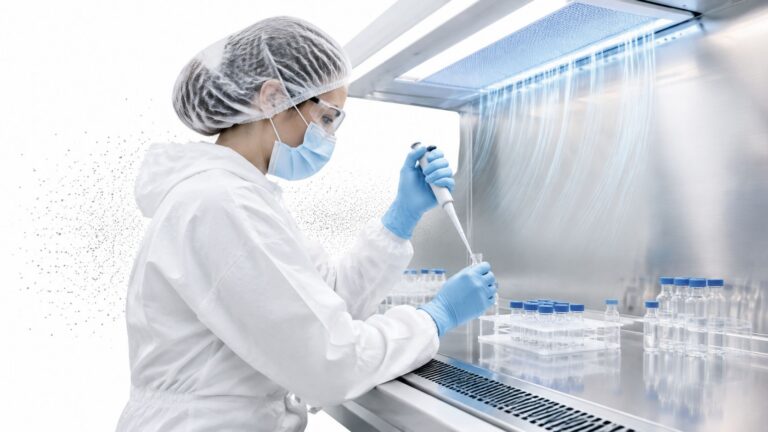
Aseptic technique is the practice of creating a sterile field to prevent contamination. Every surface and tool that comes near your peptide must be sterile. Think of it as building a temporary cleanroom on your workbench, where your peptide is protected from the outside world.
Here’s a step-by-step breakdown of the physical process:
- Prepare Your Workspace: If you don't have access to a laminar flow hood, thoroughly wipe down your designated area with 70% isopropyl alcohol and let it air dry completely. Don't rush this.
- Sanitize the Vials: Use a fresh alcohol swab for each vial. Vigorously wipe the rubber stopper on your peptide vial and on the vial of your reconstitution solution. Again, allow the alcohol to evaporate fully before proceeding.
- Draw Your Solvent: Carefully uncap a sterile syringe and draw your calculated volume of the reconstitution solution for peptides.
- Inject with Care: Puncture the peptide vial's stopper and angle the needle so the solvent runs gently down the inside wall of the vial. Never spray it directly onto the lyophilized powder, as the force can damage the fragile peptide structure.
Crucial Technique: Never shake the vial. Vigorous agitation creates mechanical shearing forces that can literally tear apart the peptide chains, destroying their biological activity. Instead, gently swirl the vial in a slow, circular motion or roll it between your palms until the powder is fully dissolved.
Post-Reconstitution Storage Rules
The moment a peptide is dissolved, a stability clock starts ticking. A reconstituted peptide is far more fragile than its freeze-dried counterpart and demands specific conditions to preserve its potency.
- Refrigeration is Mandatory: Immediately store the reconstituted vial in a refrigerator between 2-8°C (36-46°F). This temperature range is crucial for slowing down chemical degradation.
- Protect from Light: Certain amino acids are sensitive to light, especially UV light. Keep the vial shielded in its original box or another dark container.
- Adhere to Shelf Life: When using bacteriostatic water, your solution should remain stable for up to 28 days. If you used sterile water without a preservative, it must be treated as a single-use solution and used immediately. To learn more about sterile diluents, you can explore the specifics of water for injection and its applications.
By mastering these sterile handling and storage practices, you ensure that every dose you draw from the vial is as pure and potent as the very first.
How to Identify a High-Quality Solution Supplier
When sourcing a reconstitution solution for peptides, it's easy to focus on the solution itself. But the supplier you choose is just as crucial. Not all solutions are created equal, and the integrity of your research hinges on using a product that’s pure, sterile, and reliable from a source you can trust.
The first sign of a quality partner is their control over the manufacturing process. Look for suppliers who run their own in-house production facilities. This kind of vertical integration isn't just a buzzword; it means they have direct oversight at every stage. This is the only way to genuinely guarantee a final product that meets high purity benchmarks, like 99%+ purity for solvents like bacteriostatic water.
What to Demand from Your Supplier
Beyond their production setup, a top-tier supplier needs to provide verifiable proof of their quality claims. For any serious research, this kind of transparency is completely non-negotiable.
- Batch Testing and COAs: Never work with a supplier who can’t provide a clear, current Certificate of Analysis (COA) for every single batch. This document is your only real proof of purity, identity, and the absence of contaminants.
- Temperature-Controlled Shipping: The stability of sterile solutions can be ruined by extreme temperatures during transit. Reputable vendors use temperature-controlled storage and shipping to make sure the product that arrives at your lab is in perfect condition, not degraded.
- A Strict RUO Policy: A clearly stated "Research Use Only" (RUO) policy shows that the supplier understands and follows important regulatory guidelines. It’s a key indicator of their professionalism and legal compliance. For more on what this means, our guide on the Research Use Only definition offers a complete breakdown.
Ultimately, a high-quality supplier doesn't just sell you a product; they provide a foundation of trust. By prioritizing vendors who openly share their COAs, control their production, and follow strict handling protocols, you protect your investment and the validity of your work.
Choosing a partner who meets these standards ensures your reconstitution solution is a point of strength in your experiments, not a hidden variable of risk.
Troubleshooting Common Reconstitution Problems
Even with the most careful plan, questions can pop up during reconstitution. Let's walk through some of the most common hurdles you might face and how to clear them, reinforcing the core principles of safe and effective peptide handling. Think of this as your rapid-fire troubleshooting guide.
One of the first lessons every researcher learns is about handling the vial. What happens if you get impatient and give it a good shake? Vigorous shaking introduces mechanical shear stress, a force that can physically tear apart the fragile, folded chains of amino acids.
This process, known as aggregation or denaturation, is irreversible. Once the peptide’s structure is broken, it’s permanently inactivated and useless for your research. Always swirl gently.
Common Pitfalls and Quick Fixes
Another frequent question is about the liquid itself. Why can't you just use tap water as a reconstitution solution for peptides? The answer comes down to two things: purity and sterility.
Tap water is far from pure. It contains a whole cocktail of minerals, trace chemicals, and microorganisms. Introducing these contaminants will not only degrade your peptide but also creates a non-sterile solution that is completely unsuitable for any research application. Always, without exception, use a sterile, lab-grade diluent like bacteriostatic water.
Pro Tip: Never assume a peptide is "bad" just because it dissolves slowly. Some high-molecular-weight or hydrophobic peptides are notoriously stubborn and naturally take longer to go into solution. Patience is a critical tool in the lab.
So, what should you do if a peptide stubbornly refuses to dissolve even after gentle swirling?
- Let it Sit: Give the vial a break. Let it rest at room temperature for 10-15 minutes. Often, all it needs is a little time for the powder to fully hydrate and dissolve on its own.
- Check Your Math: Go back and double-check your calculations. Did you add enough solvent? Trying to create a super-concentrated solution can sometimes overwhelm the peptide's ability to dissolve.
- Gentle Inversion: If it’s still not dissolving, try very gently inverting the vial a few times. The key is smooth, slow movements. Avoid any sharp or jerky motions that could cause damage.
- Consult the CoA: If the problem persists, the Certificate of Analysis (CoA) is your best friend. The manufacturer may recommend a specific alternative solvent, like a dilute acidic solution, for that particular peptide sequence.
By keeping these quick fixes in mind, you can confidently navigate the most common hurdles in peptide reconstitution and protect the integrity of your research materials.
For high-purity, lab-tested solvents and reagents that provide a reliable foundation for your research, explore the full range of products at Herbilabs. Ensure every experiment starts with quality you can trust by visiting https://herbilabs.eu.