Private Label, White Label, Wholesale partnerships available - EU, USA and UK - Free shipping from €75

Guide to Bacteriostatic Water Hospira for Wholesalers
A buyer is often staring at the same choice right now. A customer wants bacteriostatic water fast, the familiar Hospira name looks safe, and the assumption is that the decision ends there.
It doesn't.
For wholesalers, peptide resellers, and research labs, Bacteriostatic Water Hospira sits at the intersection of clinical standards, research workflows, and supply chain risk. The label matters. The preservative matters. The intended use matters even more. A product that's appropriate for clinical drug dilution isn't automatically the cleanest fit for every peptide protocol or every research distribution model.
That's where mistakes happen. Teams buy by brand recognition, then discover later that they didn't ask the important questions: Is this product matched to clinical administration or research handling? Does multi-dose protection help the workflow, or does the preservative create a stability trade-off for sensitive peptides? If a trusted manufacturer has a sterility event, what documentation should a distributor demand before placing the next order?
Table of Contents
- Introduction Why Hospira Dominates the Conversation
- Deconstructing Hospira Bacteriostatic Water
- Clinical Grade vs Research Use Only A Critical Distinction
- Common Applications in Research and Reconstitution
- Navigating Safety Risks and Peptide Stability
- Sourcing Guidance for Wholesalers and Resellers
- High-Purity RUO Alternatives Meeting Researcher Needs
Introduction Why Hospira Dominates the Conversation
Hospira dominates the discussion because it's familiar, specified, and regulated for a defined medical use. Buyers see a known pharmaceutical manufacturer, a standard injectable diluent format, and a product that has long served as the benchmark for multi-dose reconstitution workflows.
That reputation is earned, but it's also incomplete if the buyer stops at the label.
A clinical buyer and a research buyer aren't solving the same problem. One is trying to dilute approved drugs within a tightly regulated medical framework. The other may be trying to support peptide handling, batch consistency, resale documentation, or laboratory traceability under a Research Use Only model. Those are different operational realities, even when both are looking at a vial of bacteriostatic water.
The question behind the brand
The practical issue isn't whether Hospira is legitimate. It is. The useful question is whether the specific grade, packaging logic, and preservative system match the application.
A wholesaler usually cares about:
- Traceability: Can lot history and supporting documents be retrieved quickly?
- Use case alignment: Is the product intended for human drug dilution, or for research workflows?
- Risk transfer: If a reseller supplies the wrong grade into the wrong market, liability doesn't stay theoretical.
- Stock confidence: Can the supply chain absorb disruptions without scrambling for substitutes?
Practical rule: Buy the grade that matches the legal and scientific use case, not the grade that merely sounds more premium.
Hospira remains central because it defines what many buyers think pharmaceutical-grade bacteriostatic water should look like. But serious procurement goes beyond recognition. It looks at composition, intended use, peptide compatibility over time, and the reliability of the supplier standing behind the lot.
Deconstructing Hospira Bacteriostatic Water
A buyer opens a case labeled Hospira and assumes the hard part is over. In practice, the brand name is only the starting point. What matters is the product configuration inside the carton, the preservative system in the vial, and how those details affect reconstitution, storage, resale risk, and documentation.

What is in the vial
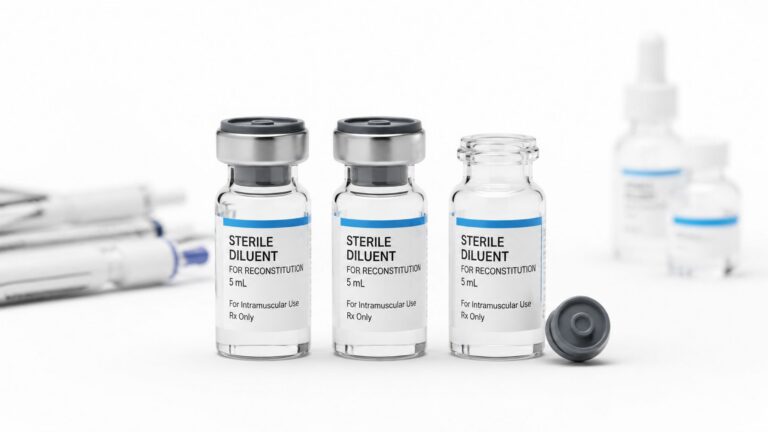
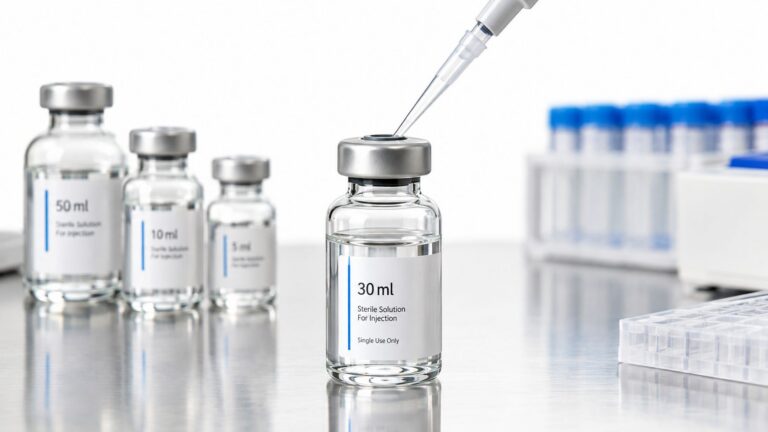
Hospira's Bacteriostatic Water for Injection, USP is a sterile, multi-dose diluent formulated with benzyl alcohol as a preservative. Labeling for this product line identifies a standard presentation with 0.9% benzyl alcohol, or 9 mg/mL, and also references an alternative formulation containing 1.1% benzyl alcohol, or 11 mg/mL. The same labeling describes it as sterile, nonpyrogenic, compliant with USP standards, and maintained within a pH range of 4.5 to 7.0. It is commonly supplied in 30 mL plastic Fliptop multiple-dose vials with NDC 00409-3977-03.
Those details define the product more than the brand does.
Benzyl alcohol is the functional center of the formulation. It helps suppress bacterial growth after repeated vial entry, which is why bacteriostatic water is handled differently from plain sterile water. That does not excuse poor aseptic technique, and it does not guarantee compatibility with every reconstituted compound over time.
Hospira also positions the product as an Rx-labeled diluent for drug preparation in clinical settings. That intended use matters because it explains the packaging logic, preservative choice, and multi-dose format that made the brand so widely recognized in the first place.
Why those specifications matter in practice
Each specification affects workflow decisions, and experienced buyers read them as operating constraints, not marketing language.
- Sterile and nonpyrogenic: This is the baseline for parenteral dilution products. It separates pharmaceutical-grade diluents from general lab water and supports use where endotoxin control matters.
- Benzyl alcohol preserved: The preservative supports repeated withdrawals from the same vial, which helps in settings where one container is used across several reconstitution events.
- Defined pH range: A controlled pH window reduces one source of variability during reconstitution. It does not eliminate compound-specific stability issues.
- Multiple-dose packaging: This format improves inventory efficiency, but repeated entry also increases the importance of handling discipline, dating, and lot traceability.
For wholesalers, these specifications have business implications as well as technical ones. A recognized clinical brand can move faster through familiar channels, but it can also be misunderstood by buyers who assume pharmaceutical-grade status makes it suitable for every peptide or every research storage plan. It does not.
For researchers, the hidden trade-off is simple. A preservative that makes a multi-dose vial practical can also become part of the stability question. That is why serious procurement does not stop at “Hospira” on the label. It examines the full formulation, the intended use, and whether the supply chain behind that lot is strong enough to support the application without shortcuts.
Clinical Grade vs Research Use Only A Critical Distinction
A buyer asks for “Hospira bacteriostatic water” for peptide work, and the order looks straightforward until compliance reviews the destination account. If that account is a research lab rather than a clinical channel, the grade designation changes the legal, operational, and resale picture.

Where clinical grade fits
Hospira's bacteriostatic water belongs in a pharmaceutical distribution framework. The product is manufactured, labeled, and controlled for drug dilution in regulated medical settings. That matters to hospitals, pharmacies, and licensed clinical buyers because the paperwork, storage expectations, and traceability all align with healthcare use.
For wholesalers, the common mistake is assuming clinical-grade status automatically makes the product the safest choice for every customer. It does not solve a research labeling problem. It does not answer whether the preserved formulation is appropriate for a specific peptide protocol. It does not reduce the risk created by poor downstream handling.
Clinical grade answers one set of questions well. Is the product suitable for approved medical channels, formal purchasing controls, and parenteral supply expectations? Yes. A research lab asking for a diluent under an RUO workflow is asking a different question.
Where RUO fits
RUO products are sold for laboratory use and investigational work, with no claim for human administration. That classification affects how a product is marketed, how it can be resold, and what supporting documents a research customer expects to see. It also affects internal controls. A distributor that mixes clinical inventory into an RUO catalog without clear separation creates avoidable compliance exposure.
Teams selling into research accounts should understand the Research Use Only classification and labeling requirements before listing any bacteriostatic diluent beside peptide materials or assay reagents.
The brand name often masks the actual decision. Buyers recognize Hospira and assume lower risk. In practice, risk depends on fit. For research procurement, that means matching grade, labeling, and documentation to the actual use case rather than relying on pharmaceutical branding to carry the decision.
A practical comparison
| Decision point | Clinical grade product | RUO product |
|---|---|---|
| Primary intended use | Drug dilution in regulated medical settings | Laboratory research workflows |
| Label logic | Prescription and parenteral context | Not for human use |
| Documentation priority | Healthcare channel traceability and controlled distribution | Research labeling, lot records, and investigational use clarity |
| Business risk if misapplied | Resale and channel compliance issues | Misuse outside research scope and labeling exposure |
In day-to-day operations, this distinction protects both the customer and the seller. Clinical buyers need products that fit medical distribution controls. Researchers and resellers need products that fit non-clinical use, clear RUO communication, and realistic expectations about formulation limits, especially when long-term peptide stability is part of the purchasing decision.
Common Applications in Research and Reconstitution
In research settings, the practical reason buyers seek bacteriostatic water is straightforward. They need to take a lyophilized compound and bring it back into solution without introducing avoidable contamination during repeated handling.
Peptides are the common example. A vial arrives as a dry cake or powder. The operator adds a diluent, lets the material dissolve, and then withdraws measured amounts over time. That's why bacteriostatic water keeps showing up in peptide discussions. Multi-use handling is built into the workflow.
How peptide reconstitution usually works
The protocol isn't complicated, but small errors cause big problems.
A careful workflow usually includes:
- Inspecting the vial first. If the lyophilized cake looks compromised, clumped oddly, or wet, the operator should pause before adding anything.
- Using aseptic handling. The stopper gets cleaned, the syringe is sterile, and the workspace is controlled.
- Adding the diluent gently. The stream should be directed against the vial wall rather than blasted directly into the powder mass.
- Letting the material dissolve. Swirling lightly can help. Shaking often does more harm than good.
For teams that need a procedural reference, Herbilabs' peptide mixing guide for bacteriostatic water workflows outlines the basic handling sequence in a research context.
What helps and what damages the sample
The biggest handling mistake is rough agitation. Operators often assume they need to “mix harder” to dissolve faster. Sensitive peptides don't reward that mindset.
Better practice usually looks like this:
- Slow addition: Reduces foam and localized stress.
- Time to settle: Many peptides dissolve with patience.
- Limited punctures: Multi-dose convenience doesn't remove the need for clean technique.
- Clear labeling: Once reconstituted, the vial should be identified immediately so it isn't confused with stock or another concentration.
Handling advice: If the peptide is delicate, speed is rarely the goal. Controlled reconstitution is.
Research buyers also need to separate two different reasons for choosing a diluent. One reason is contamination control during repeated withdrawals. The other is long-term preservation of the analyte itself. Bacteriostatic water helps with the first question. It doesn't always solve the second.
That distinction becomes important with peptides such as semaglutide or tirzepatide, where storage behavior after reconstitution can matter just as much as the initial mix.
Navigating Safety Risks and Peptide Stability
A common failure point shows up after the vial has already been mixed, labeled, and placed in cold storage. The solution stays clear, the handling log looks clean, and the operator assumes the sample is still fit for use days later. In peptide work, that assumption can cost a study batch.
Microbial control and analyte stability are separate quality questions. Bacteriostatic water addresses the first one. It does not automatically protect the second.
Earlier in the article, the product labeling established the practical storage window for the preserved vial itself. That point is often overextended. A preservative can support multi-dose use and still create an unfavorable environment for a sensitive peptide during storage, especially in projects where repeatability across time points matters more than simple reconstitution convenience.
The contamination question and the integrity question
In QC terms, sterility protection and molecular stability should be evaluated independently. A peptide can remain free from obvious contamination while still losing potency, changing conformation, or forming aggregates slowly enough that the problem is missed until assay results start drifting.
That distinction matters for wholesalers as much as bench researchers. If a customer buys a multi-dose format and assumes it supports long holding times for every compound, the complaint usually arrives later as inconsistent performance, not as a visible handling error. By that stage, tracing the root cause is harder, and the business risk shifts to returns, replacement orders, and credibility.
When preservative protection becomes a trade-off
Benzyl alcohol is useful for controlling microbial growth during repeated withdrawals. It is not chemically neutral for every peptide system. Some compounds tolerate it well for short working periods. Others show better recovery and more predictable behavior when reconstituted for prompt use rather than stored in a preserved solution.
This is the operational trade-off buyers need to understand. “Bacteriostatic” describes the diluent's antimicrobial function. It does not certify long-term compatibility with the dissolved analyte.
A sound purchasing and handling decision usually starts with a few direct questions:
- Is the peptide known to be stable after reconstitution, or is it handling-sensitive?
- Will the vial be used within a short session, or reopened across multiple days?
- Is the main priority contamination control during repeated access, or maximum stability of the dissolved compound?
- Would preservative-free water for injection for short-use research work be a better fit for high-sensitivity protocols?
For routine reconstitution, bacteriostatic water can be a practical tool. For expensive peptides, long assay schedules, or methods where small stability losses distort the readout, the better question is not whether the water is safe in general. The better question is whether the diluent matches the compound, the storage period, and the cost of getting the result wrong.
Sourcing Guidance for Wholesalers and Resellers
Procurement teams often overvalue familiarity and undervalue verification. That works until a lot issue appears, a customer asks for documentation, or a distributor has to explain why a trusted label wasn't enough.
Why brand recognition is not enough
A 2025 voluntary recall of one lot of Hospira Bacteriostatic Water due to a “Potential Lack of Sterility Assurance” changed the conversation for many distributors and resellers. The event significantly affected supply-chain trust, increased demand for sterility assurance certificates, and pushed more buyers toward suppliers with clearer quality-control visibility (FirstWord Pharma report on the 2025 Hospira recall and sterility assurance concerns).
That doesn't mean every Hospira lot is suspect. It means professional buyers should stop acting as if any brand name removes the need for lot-level scrutiny.

A vetting checklist that actually helps
A serious sourcing process should include at least the following:
- Supplier legitimacy: Confirm the distributor is authorized and can document where inventory originated.
- Lot visibility: Every incoming batch should be tied to a lot number that can be tracked through receiving, storage, and fulfillment.
- Certificate review: COAs and related quality documents should be reviewed before inventory goes live, not after a complaint.
- Storage control: Teams should know the stated storage conditions and verify that warehousing and transit don't compromise them.
- Recall readiness: If a lot is flagged, the distributor should be able to identify affected downstream shipments quickly.
- Price sanity checks: Significantly discounted injectable diluents deserve extra scrutiny, not applause.
A buyer who can't trace a lot quickly usually can't contain a quality issue quickly either.
For peptide resellers, this isn't just a QA exercise. It's part of customer retention. Experienced buyers increasingly ask for documentation before they ask for volume pricing. The distributor that can answer with organized records looks credible. The one that answers with “it's a known brand” looks exposed.
High-Purity RUO Alternatives Meeting Researcher Needs
A recurring purchasing mistake is assuming a familiar clinical brand automatically fits a research workflow. It often does not. Research buyers usually need something narrower and more controlled: sterile diluents labeled strictly for laboratory use, batch documentation that stands up to audit, and a supplier that is not mixing clinical positioning with RUO sales.
That distinction matters most when peptide handling is the primary use case. Preserved water can be practical for short-term reconstitution, but benzyl alcohol is not neutral in every formulation or storage condition. For wholesalers and research groups, the better question is not which brand dominates discussion. The better question is which grade, preservative system, and documentation set fit the study design and the buyer's risk tolerance.
Why specialized RUO supply has a role
A specialized RUO supplier is built for those constraints. Clear RUO labeling reduces misuse risk. Batch records and contaminant testing support repeatability. Product positioning stays aligned with laboratory purchasing instead of drifting into clinical assumptions that create confusion downstream.
Herbilabs is one example in that category. The company presents itself as a supplier of high-purity laboratory reagents and sterile diluents for research workflows, with batch documentation and a defined research-use-only framework.

For resellers, this separation solves a practical business problem. It reduces category mix-ups, gives research customers an option designed for non-clinical use, and lowers the chance that a branded injectable diluent gets treated as a universal answer. In my experience, that clarity prevents more trouble than aggressive price shopping ever saves.
The broader point goes beyond any single supplier. Buyers who are concerned about long-term peptide stability, preservative compatibility, and traceable sourcing should evaluate high-purity RUO alternatives on their own merits, not as second-choice substitutes for a hospital brand. In many research channels, they are the cleaner fit.