Private Label, White Label, Wholesale partnerships available - EU, USA and UK - Free shipping from €75

Bacteriostatic Water Storage: A Complete 2026 Guide
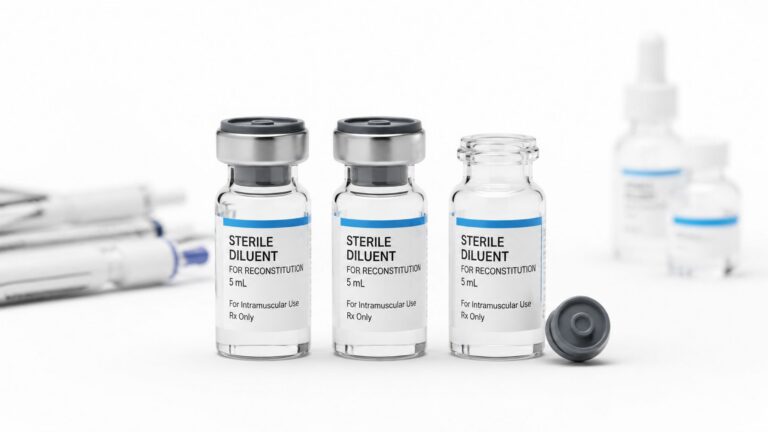
A shipment of bacteriostatic water arrives, the outer carton looks fine, and the vials are still sealed. That's the point where a lot of handling errors begin. Teams often focus on what happens at the bench after reconstitution starts, but bacteriostatic water storage becomes a quality issue the moment product is received, logged, shelved, moved, opened, and finally discarded.
For a lab user, one bad vial can compromise a batch of prepared material and raise hard questions about whether the problem came from the compound, the technique, or the diluent. For a wholesaler or distribution partner, the same mistake turns into a chain-of-custody problem. If storage conditions were poorly controlled in the warehouse or during transit, the end user inherits the risk without seeing it.
The practical challenge is that datasheets usually give basic instructions, while real operations involve receiving delays, mixed inventory, seasonal shipping conditions, intermittent vial use, and staff turnover. A workable protocol has to cover the full lifecycle. It has to tell a bench user where the vial belongs after opening, and it has to tell a distributor what to document before the box ever leaves the shelf.
Table of Contents
- Why Proper Bacteriostatic Water Storage is Non-Negotiable
- The Science Behind Bacteriostatic Water Stability
- Protocol for Storing Unopened Vials
- Handling and Storing Opened Vials The 28-Day Countdown
- Guidelines for Transport and Distribution
- Troubleshooting and Safe Disposal Procedures
Why Proper Bacteriostatic Water Storage is Non-Negotiable
Bacteriostatic water is easy to underestimate because it looks simple. Clear liquid, sealed vial, straightforward label. In practice, storage is one of the first controls that determines whether the material remains suitable for repeated use or becomes a contamination risk.
A receiving technician has to answer basic operational questions immediately. Was the shipment exposed to obvious heat or cold stress. Are the vials intact. Are they going into a controlled room-temperature area, temporary staging, or a refrigerator used for unrelated materials. Those decisions matter because a sterile product only stays dependable when handling stays disciplined from the start.
For bench users, the trade-off is convenience versus control. Keeping vials wherever there's open space saves time for a day or two, but it creates avoidable variability. For wholesalers, the trade-off is throughput versus traceability. Fast picking and packing means little if stock rotation, temperature discipline, and storage records are weak.
The hidden cost of casual handling
Most problems don't begin with dramatic failure. They begin with small lapses. A carton sits too long in an uncontrolled receiving area. Opened stock and unopened stock get mixed. A vial is still clear, so someone assumes it's still acceptable. None of those decisions look serious in isolation. Together, they erode confidence in the material.
Practical rule: Treat bacteriostatic water as a controlled sterile input, not as a generic accessory kept beside other consumables.
That's also why teams that use multiple water types need clear separation between bacteriostatic water and alternatives such as water for injection products used in sterile workflows. Confusion at the storage stage often leads to confusion at the point of use.
The Science Behind Bacteriostatic Water Stability
The storage rules make more sense once the formulation is understood. Bacteriostatic water isn't just sterile water in a different vial. Its defining feature is the preservative system, and that system drives both its usefulness and its limits.
Published guidance identifies 0.9% benzyl alcohol as the preservative that distinguishes bacteriostatic water from plain sterile water, with commonly cited handling expectations of up to 2 years for unopened product stored at 20–25°C and a 28-day discard rule after first puncture (historical storage benchmark for bacteriostatic water).
Why bacteriostatic water is different from sterile water
The key operational difference is simple. Bacteriostatic water is intended for repeated withdrawals from a multi-dose vial because the benzyl alcohol inhibits bacterial growth after access. That does not mean the vial becomes contamination-proof. It means the formulation provides a limited protection window when users follow proper handling.
This distinction matters in routine lab practice. A team that treats bacteriostatic water like single-use sterile water may discard usable inventory too early. A team that treats it like indefinitely reusable stock creates the opposite problem and takes on unnecessary risk.
A practical way to think about it is this:
- Sterility at release comes from manufacturing and container closure integrity.
- Usability after opening depends on the preservative plus aseptic technique.
- Safe reuse over time depends on disciplined storage and dating, not on appearance alone.
The preservative supports reuse. It doesn't remove the need for sterile handling.
That's why formulation knowledge belongs in SOP training, not just in supplier paperwork. Teams that understand the role of benzyl alcohol usually make better decisions about dating, segregation, and discard.
For labs working with sensitive reconstitution workflows, the formulation side is discussed in more detail in this overview of how benzyl alcohol concentration shapes research validity.
Why time, temperature, and light matter
Storage conditions matter because the product is only reliable when the vial, stopper, solution, and preservative remain within expected handling conditions. Time is one variable. Temperature and light exposure are others. Once the seal has been punctured, repeated access adds another layer of risk because every entry is an opportunity to introduce contamination.
The practical mistake many teams make is reducing storage to a temperature number alone. Temperature matters, but so do light exposure, closure condition, and whether the vial is being entered repeatedly over days or weeks.
Three points usually separate sound handling from weak handling:
- Stable conditions beat frequent movement. Constant relocation between bench, cabinet, and transport tray creates more opportunity for damage and contamination.
- Light protection is part of storage, not an afterthought. A vial left in direct light during normal bench activity isn't being stored properly.
- Post-opening time control is a contamination-management rule. Once the stopper is punctured, the issue is no longer only chemical stability. It's the increasing uncertainty created by repeated access.
Protocol for Storing Unopened Vials
Unopened vials are the easiest stage to manage well, and the easiest stage to mismanage through complacency. Factory-sealed product should move through a simple release process before it reaches storage. That applies whether the vial is going into a warehouse rack, a picking shelf, or a small lab cabinet.

Guidance commonly cites 20–25°C (68–77°F) as the controlled room-temperature target for unopened bacteriostatic water, and handling guides consistently state that the solution should not be frozen because freezing can compromise vial integrity and solution stability, a standard reflected in the EU, UK, and USA (unopened vial storage guidance across major markets).
Receiving and release checks
A strong protocol starts before shelving.
- Inspect outer packaging: Look for crushed cartons, water exposure, broken seals, or loose glass fragments.
- Check vial condition: Reject units with cracked glass, displaced closures, illegible labels, or visible particulate matter.
- Review dating: Don't just confirm that product is in date. Separate shorter-dated stock so it's used or distributed in the right order.
- Assign storage location immediately: Don't leave cartons in staging areas longer than necessary.
For individual users, this process can be very light but still structured. A simple receiving log with product name, lot, date received, and expiry status is often enough. For wholesalers, that same step should link to bin location, pallet or case identification, and release status.
Warehouse and lab shelf protocol
Once accepted, unopened vials should be stored in a controlled room-temperature environment, protected from direct sunlight, moisture, and unnecessary handling. Teams sometimes overcomplicate this by moving stock into cold storage without a clear product-specific reason. That often creates more variability, not less.
A workable shelf protocol looks like this:
| Storage point | What works | What doesn't |
|---|---|---|
| Primary location | Controlled room-temperature shelf or cabinet | Window ledge, bench edge, heat-adjacent shelving |
| Packaging | Original carton or light-protective secondary packaging | Loose single vials spread across multiple areas |
| Positioning | Upright, stable, protected from impact | Mixed orientation in overfilled bins |
| Stock rotation | FIFO with clear date visibility | New stock placed in front of old stock |
Receiving rule: An unopened vial is only low-risk if the storage environment is stable and the stock system is organized enough to prove it.
For distributors, this is also where internal segregation matters. Don't store opened returns, damaged goods, and saleable sealed stock together. Don't let picking teams break down outer cartons and leave single vials exposed if those units won't move quickly. Physical organization is part of quality control.
One practical option for labs and resellers that need packaged sterile diluents in glass vials is Herbilabs, which supplies bacteriostatic water for research workflows and wholesale distribution. The useful point isn't branding. It's that consistent packaging format and batch traceability make receiving and stock rotation easier to manage.
Handling and Storing Opened Vials The 28-Day Countdown
The moment the stopper is punctured, the protocol changes. Teams that handle unopened stock well sometimes become inconsistent here because the vial still appears intact. It isn't being managed under the same risk profile anymore.
For opened bacteriostatic water, the most defensible operating rule is a 28-day discard window after first puncture, with storage at about 15°C–30°C (59°F–86°F), protected from direct light and kept upright (opened vial handling guidance and storage range).
What changes after first puncture
Once opened, the vial enters a controlled reuse period. The preservative is still present, but repeated access introduces uncertainty. Every needle entry, every stopper contact event, and every lapse in labeling increases the chance that the vial will no longer be appropriate for use before anything visibly changes.
That's why the date of first puncture has to be recorded immediately. Not later in the shift. Not when someone remembers. At the time of opening.
A good opened-vial label includes:
- Date first punctured
- Discard date based on the 28-day limit
- Initials or operator identifier
- Any local storage designation if multiple work areas share stock
This demonstration is useful for teams training new staff on sterile withdrawal habits:
Aseptic withdrawal workflow
The preservative supports safe repeated access only when staff treat each withdrawal as a sterile operation.
- Prepare the workspace. Use a clean area, not a cluttered bench with open packaging, used wipes, and unrelated tubes.
- Use fresh sterile equipment. Every entry should use a new sterile syringe and needle.
- Disinfect the stopper. Swab the closure and let it dry before puncture.
- Minimize handling time. Withdraw the required volume and return the vial promptly to its designated storage location.
- Store upright and protected from light. Don't leave the vial lying on the bench between tasks.
A common failure point is cross-use behavior. One operator handles the vial correctly, then another returns to it later without checking the label, without disinfecting the stopper properly, or while using equipment that has already contacted other materials. Labs that need a tighter SOP around this issue usually benefit from formal guidance on how to prevent cross-contamination in shared research workflows.
A vial can stay clear and still fall outside acceptable handling control.
Storage Protocol Unopened vs Opened Vials
| Parameter | Unopened Vial | Opened Vial |
|---|---|---|
| Primary condition | Controlled room-temperature storage | Controlled room-temperature storage after puncture |
| Light exposure | Protect from direct sunlight | Protect from direct light during the reuse window |
| Container status | Factory sealed | Punctured multi-dose vial |
| Risk focus | Shelf stability and package integrity | Contamination control and dating discipline |
| Use limit | Use before manufacturer expiry if stored correctly | Discard after the 28-day post-puncture window |
| Handling expectation | Minimal disturbance, FIFO rotation | Aseptic entry every time, upright storage, clear labeling |
The practical difference is that unopened storage is mostly an inventory control issue. Opened storage is an aseptic handling and traceability issue. Teams that don't separate those two mindsets usually get into trouble.
Guidelines for Transport and Distribution
Transport is where a sound storage protocol often breaks down. A vial that was handled correctly in the warehouse can still arrive stressed, delayed, physically damaged, or undocumented. For wholesalers and resellers, transport controls have to preserve the same conditions established at receipt and shelf storage.
Packaging for movement not just storage
Distribution packaging should do more than hold product in place. It should protect the vial from light, shock, and avoidable environmental swings during normal transit. That usually means secondary containment, cushioning that prevents glass-to-glass contact, and shipping configurations that keep labels legible and cartons upright where possible.
For internal transfers between warehouse zones or between a receiving area and stock room, the same principles apply. Staff shouldn't carry loose vials by hand or move mixed items in open trays where closures can be damaged.
A practical shipping review should ask:
- Will the package shield vials from direct light during transit
- Is there enough internal protection to prevent impact damage
- Could route or season expose stock to temperature extremes
- Will the recipient know immediately how the product should be stored on arrival
The shipment isn't complete when the box leaves. It's complete when the receiver can verify that the product remained within acceptable handling conditions.
What wholesalers should document
Documentation is where distributors separate controlled supply from casual resale. The goal is simple. If a receiving customer raises a storage question, the sender should be able to show what was packed, when it moved, and what instructions were provided.
Useful records include order-level packing details, lot traceability, dispatch timing, and receiving instructions included inside or attached to the shipment. Some routes and seasons also justify adding temperature-monitoring practices or additional transit protection, especially when stock may sit in depots or vehicles.
For customer-facing communication, keep the message short and specific. Store sealed stock in the designated controlled environment upon receipt. Keep vials protected from direct sunlight. Don't freeze. Separate opened stock from sealed inventory. A concise insert usually prevents more errors than a long generic leaflet.
Troubleshooting and Safe Disposal Procedures
The hardest disposal decisions usually involve a vial that still looks normal. It's clear, there's no visible debris, and the closure seems intact. That visual check is useful, but it isn't enough to justify continued use.
A key challenge in bacteriostatic water handling is deciding what to do when a vial appears clear but is near expiry or beyond its post-opening limit. The issue becomes one of active risk management, because sterility assurance or preservative performance may be compromised before visual changes appear (disposal decisions when appearance is still normal).
When a clear vial still should not be used
A vial should be removed from service immediately if any of the following apply:
- It is past the assigned post-opening discard date
- It is beyond the manufacturer expiry date
- The vial history is uncertain
- The stopper, seal, or glass has been compromised
- The solution shows cloudiness, discoloration, or particulate matter
The phrase “looks fine” causes a lot of preventable waste downstream. A questionable vial may not fail obviously. Instead, it introduces doubt into everything prepared with it. Once that happens, the user has to question the compound, the procedure, and the data generated afterward.
A practical decision framework is:
| Situation | Action |
|---|---|
| Opened vial with a known puncture date and still within assigned use window | Use only if storage and handling history are acceptable |
| Opened vial with missing or unreadable dating | Discard |
| Clear vial stored under uncertain conditions | Discard |
| Unopened vial near printed expiry | Prioritize controlled use if all storage records are intact, otherwise remove from active stock |
| Any vial with visible change | Discard immediately |
Quality decision: If chain of handling can't be verified, the vial shouldn't stay in circulation.
Disposal workflow that reduces avoidable risk
Disposal procedures should be written and routine, not improvised. In most facilities, that means separating liquid waste decisions from sharps and glass disposal decisions.
A simple workflow works well:
- Quarantine first. Move suspect, expired, or out-of-window vials to a designated non-usable area so they don't return to active stock.
- Document removal. Record lot, reason for disposal, and date removed. This helps identify recurring storage or handling failures.
- Dispose according to local lab and waste rules. Empty or partially used vials, broken containers, and associated sharps often follow different waste streams.
- Review the cause. If multiple vials are being discarded for missing dates, poor storage segregation, or handling uncertainty, the problem is procedural, not accidental.
For wholesalers, disposal control matters just as much as active storage. Returned goods with unclear handling history shouldn't be merged back into saleable inventory. For labs, disposal records often reveal underlying problem areas. Not product quality, but labeling gaps, poor bench discipline, or weak stock rotation.
Herbilabs provides laboratory supplies and sterile research diluents for EU, UK, and USA workflows, including support for wholesale and distribution partners. Teams that need bacteriostatic water in controlled packaging formats can use that as one supply option while building internal SOPs for receiving, storage, transport, opened-vial handling, and disposal.