Private Label, White Label, Wholesale partnerships available - EU, USA and UK - Free shipping from €75

The Definitive Guide to Reconstituting Peptides Safely
Follow this detailed protocol for correctly preparing and storing lyophilized peptides to maintain their integrity and effectiveness.
Foundational Principles of Peptide Handling
The process of lyophilization, or freeze-drying, has been a cornerstone of preserving fragile biological materials since its development for preserving blood plasma during World War II. This technique places peptides into a state of suspended animation, protecting their complex structures from degradation. However, this stable, powdered form is unusable until it is correctly returned to a liquid state. This is where the science of reconstitution begins, and understanding its principles is not just best practice; it is fundamental to ensuring the peptide’s viability.
The entire process rests on three pillars. First is the lyophilized peptide itself, a delicate chain of amino acids that is highly susceptible to damage from physical shock or improper pH. Second is the diluent, the liquid used for reconstitution. The choice of diluent is critical. While sterile water can be used for immediate single-use applications, bacteriostatic water for peptides is the standard for multi-dose use. It contains a small amount of benzyl alcohol, which acts as a preservative to inhibit bacterial growth after the vial has been opened multiple times.
This leads to the third pillar: the objectives of the process. The primary goals are to achieve complete dissolution without damaging the peptide, ensure the final solution is sterile, and maintain its potency for the intended duration of use. Missed steps or incorrect materials compromise these objectives entirely. Using a high-quality diluent is therefore non-negotiable, and sourcing a reliable product like our HerbiLabs Reconstitution Solution ensures you are starting with the correct foundation. Before you ever draw a single millilitre of fluid, understanding this scientific rationale is what separates a successful reconstitution from a failed one.
Assembling Your Sterile Reconstitution Toolkit
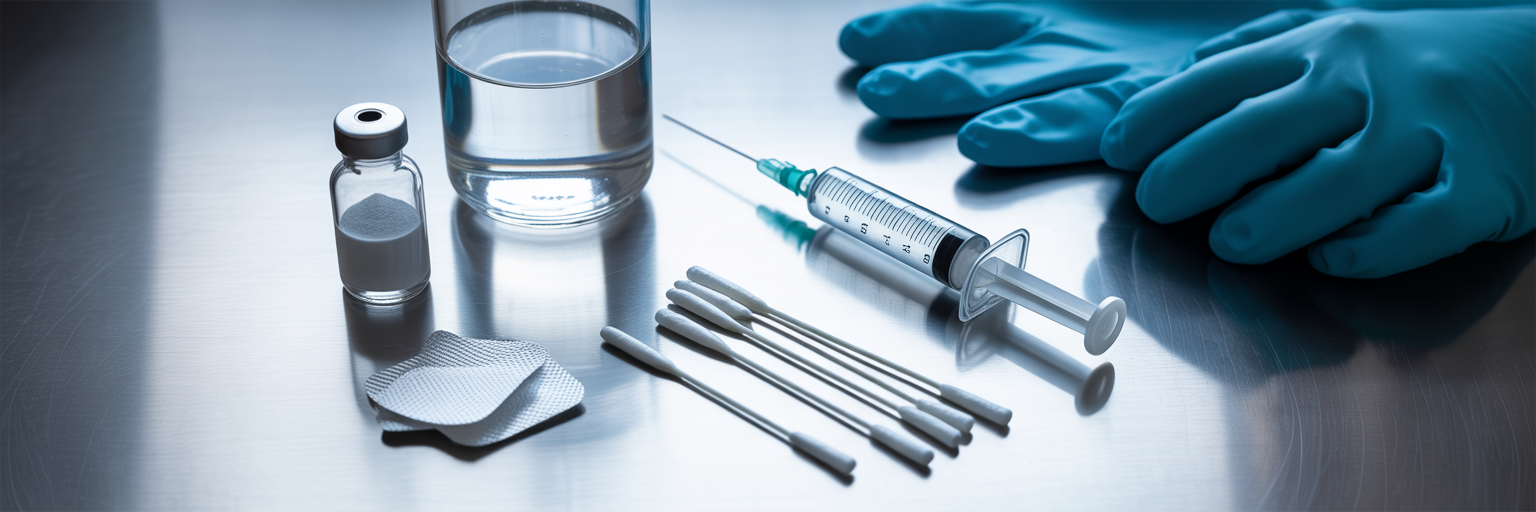
The success of your reconstitution is often decided before you even touch a vial. Meticulous preparation is not just about being organised; it is your first line of defence against contamination. Think of your workspace as a temporary cleanroom. Every item introduced must be sterile and handled with intention. This commitment to safe peptide handling prevents the introduction of bacteria that could compromise your research and render the peptide solution unsafe.
Before you begin, gather everything you need. Scrambling for a forgotten alcohol wipe mid-process is a recipe for contamination. Here is your essential checklist:
- The lyophilized peptide vial
- A vial of bacteriostatic water
- Sterile alcohol prep pads
- A new, sterile syringe of the appropriate size (e.g., 3ml)
- A sterile sharps container for disposal
Once you have assembled your supplies, which can be found in our dedicated shop, you must verify their integrity. Check that the peptide vial is intact and under vacuum. A gentle ‘psst’ sound when the cap is first punctured is a good indicator. Inspect the bacteriostatic water for clarity; any cloudiness or particles means it should be discarded. Finally, create an aseptic workspace. Wipe down a flat, stable surface with an alcohol pad and let it air dry. Avoid areas with drafts from open windows or fans, as these can carry airborne contaminants onto your sterile field. This deliberate, methodical setup is the hallmark of professional handling.
Calculating the Correct Dilution Ratio
The mathematics of peptide dilution can feel intimidating, but precision here is non-negotiable. An error in calculation can lead to incorrect dosing, wasting valuable material and compromising the integrity of your results. It is essential to understand the relationship between the peptide mass, the diluent volume, and the final concentration.
Understanding the Variables in Dilution Math
Before calculating, let’s define the terms. The total peptide amount is the mass of the lyophilized powder in the vial, usually measured in milligrams (mg). The diluent volume is the amount of bacteriostatic water you will add, measured in millilitres (mL). The final concentration is the amount of peptide per unit of volume, often expressed as micrograms per millilitre (mcg/mL). Remember that 1 mg is equal to 1000 mcg.
A Practical Calculation Walkthrough
Let’s walk through a common scenario. Suppose you have a vial containing 5 mg of peptide and you decide to add 2 mL of bacteriostatic water.
First, convert the peptide mass to micrograms: 5 mg * 1000 mcg/mg = 5000 mcg.
Next, divide the total peptide amount by the diluent volume: 5000 mcg / 2 mL = 2500 mcg/mL.
This means every 1 mL of your reconstituted solution contains 2500 mcg of the peptide. If your target dose is 500 mcg, you would divide the desired dose by the concentration per mL: 500 mcg / 2500 mcg/mL = 0.2 mL. This volume would be drawn into an insulin syringe for accurate measurement.
Using Digital Tools for Precision
While understanding the manual calculation is crucial, human error is always a possibility. Have you ever double-checked your math only to find a simple mistake? In a process this sensitive, verification is key. Using a digital peptide dilution calculator can provide an essential layer of confidence. As highlighted in their ‘Complete Guide to Peptide Reconstitution & Dosing’, resources like CalcMyPeptide offer tools that allow you to input your variables and instantly confirm your calculations. This balanced approach of manual understanding and digital verification ensures the highest degree of accuracy.
The Reconstitution Process Step-by-Step
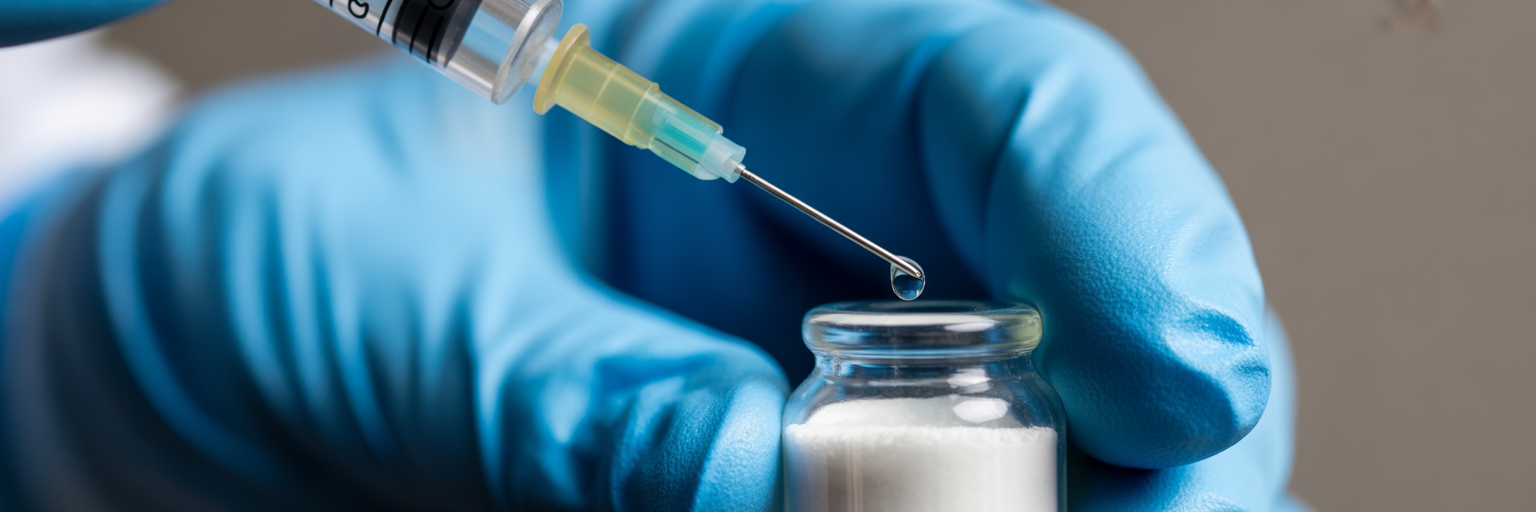
With your workspace prepared and calculations confirmed, you are ready to begin. This section serves as your standard operating procedure, a detailed peptide mixing guide that outlines exactly how to reconstitute peptides safely and effectively. Follow these steps precisely to ensure the integrity of the final solution.
- Prepare the Vials: Remove the plastic caps from both the peptide vial and the bacteriostatic water vial. Use a fresh alcohol pad to vigorously swab the rubber stoppers on both vials. Let them air dry for about 30 seconds. Do not wave or blow on them, as this can reintroduce contaminants.
- Draw the Diluent: Uncap your sterile syringe. Pull the plunger back to the mark corresponding to your calculated volume of water (e.g., 2 mL). This pre-fills the syringe with air. Insert the needle through the centre of the bacteriostatic water stopper and inject the air into the vial. This equalises the pressure and makes drawing the liquid easier. Invert the vial and draw your required volume of water. Having a sufficient supply on hand, such as our multi-pack reconstitution solution, is useful for multiple projects.
- Introduce the Diluent Gently: Insert the needle of the filled syringe into the lyophilized peptide vial, angling it so the needle tip rests against the inner glass wall. Slowly depress the plunger, allowing the water to run down the side of the vial. Think of it like pouring a carbonated beverage to prevent it from fizzing over. Do not inject the water directly onto the peptide powder. This gentle introduction is crucial for preserving the peptide’s structure.
- Dissolve with Care: Once all the water is added, remove the syringe and dispose of it in a sharps container. Now, gently swirl the vial in a slow, circular motion or roll it between your palms. Under no circumstances should you shake the vial. Shaking creates mechanical stress that can shear the fragile amino acid bonds, a process called denaturation, which renders the peptide inert and useless. As noted in visual guides from sources like PeptideFox, this slow, deliberate motion is universally recommended.
- Inspect for Clarity: The peptide should dissolve completely, leaving a clear solution. If you see any cloudiness or floating particles, the solution may be contaminated or the peptide may not have dissolved properly. Do not use it if the solution is not perfectly clear.
Post-Reconstitution Storage and Handling
The moment your peptide is dissolved, a stability clock starts ticking. The reconstituted solution is far more fragile than its lyophilized form and is now susceptible to both bacterial contamination and thermal degradation. Proper peptide storage after reconstitution is not an afterthought; it is a critical step in preserving potency.
The solution must be refrigerated immediately. The ideal storage temperature is between 2°C and 8°C. A standard kitchen refrigerator is perfectly suitable, but avoid placing the vial in the door, where temperatures fluctuate the most. Instead, store it towards the back of a shelf. Never freeze a reconstituted peptide unless explicitly instructed by the manufacturer. The formation of ice crystals can physically damage the peptide’s structure, much like vigorous shaking.
Thanks to the benzyl alcohol in bacteriostatic water, a properly stored, multi-dose vial remains sterile and potent for a defined period. As confirmed by comprehensive guides from sources like Pure Peptide Clinic, this shelf-life is generally accepted to be 28 to 30 days. Beyond this point, the preservative’s effectiveness diminishes, and the risk of contamination increases. Finally, make labeling a mandatory protocol. Use a marker to write the date of reconstitution and the final concentration (e.g., 2500 mcg/mL) directly on the vial. This simple act prevents dosage errors and ensures you are always working with a viable product. For more advanced handling tips, you can always explore the topics on our blog.
Common Mistakes and How to Avoid Them
Even with the best intentions, simple errors can compromise your efforts, wasting time and valuable materials. This quick-reference guide highlights the most frequent mistakes made during reconstitution. By understanding these pitfalls, you can ensure your protocol remains precise and effective from start to finish. Review this table before each reconstitution to reinforce correct technique and safeguard the integrity of your peptide.
| Common Mistake | Consequence | Correct Protocol |
|---|---|---|
| Using the Wrong Water (e.g., tap, sterile) | Bacterial contamination or limited single-use viability. | Always use bacteriostatic water for multi-dose vials. |
| Shaking the Vial Vigorously | Denaturation (destruction) of peptide structure, rendering it useless. | Gently swirl the vial or roll it between palms until dissolved. |
| Ignoring Sterile Technique | Introduction of bacteria, leading to a contaminated, unsafe solution. | Wear gloves, swab vial stoppers, and use new sterile supplies each time. |
| Improper Storage (Room Temp or Freezing) | Rapid degradation of the peptide at room temp; structural damage from freezing. | Store immediately in a refrigerator at 2°C to 8°C. Do not freeze. |