Private Label, White Label, Wholesale partnerships available - EU, USA and UK - Free shipping from €75

Mastering Pharmaceutical Reconstitution with Bacteriostatic Water
This guide details the correct procedures for using bacteriostatic water to ensure the safety and efficacy of reconstituted drugs.
The Foundation of Stable Reconstitution
Many advanced pharmaceuticals, particularly sensitive peptides and proteins, are distributed in a lyophilized or freeze-dried state. This process removes water to grant them a long shelf life, but it also means they are unusable until they are properly reconstituted into a liquid form. This is where the choice of a diluent becomes a critical first step in ensuring the compound’s stability and efficacy.
The standard for this process is often bacteriostatic water for injection. It is a sterile, non-pyrogenic water solution specifically prepared for parenteral use. What sets it apart is the inclusion of a preservative agent. The most common preservative used is 0.9% benzyl alcohol, a compound that gives the water its defining characteristic.
It is important to understand the mechanism of benzyl alcohol in pharmaceuticals. Its action is bacteriostatic, meaning it inhibits the growth and reproduction of bacteria. This is distinct from a bactericidal agent, which actively kills bacteria. This preservative function is what makes bacteriostatic water suitable for multi-dose vials. After the initial reconstitution, the vial’s rubber septum can be punctured multiple times over a period of up to 28 days with a significantly reduced risk of microbial contamination introducing itself into the solution.
This multi-dose capability translates directly into practical advantages in both research and clinical environments. For expensive compounds administered in small, frequent doses, it dramatically reduces waste and lowers costs. Instead of discarding a partially used vial after a single use, researchers can confidently draw from the same source for weeks. For a comprehensive overview of other laboratory essentials, our blog offers further insights into best practices that support reliable scientific work.
Choosing the Right Diluent for Sensitive Compounds
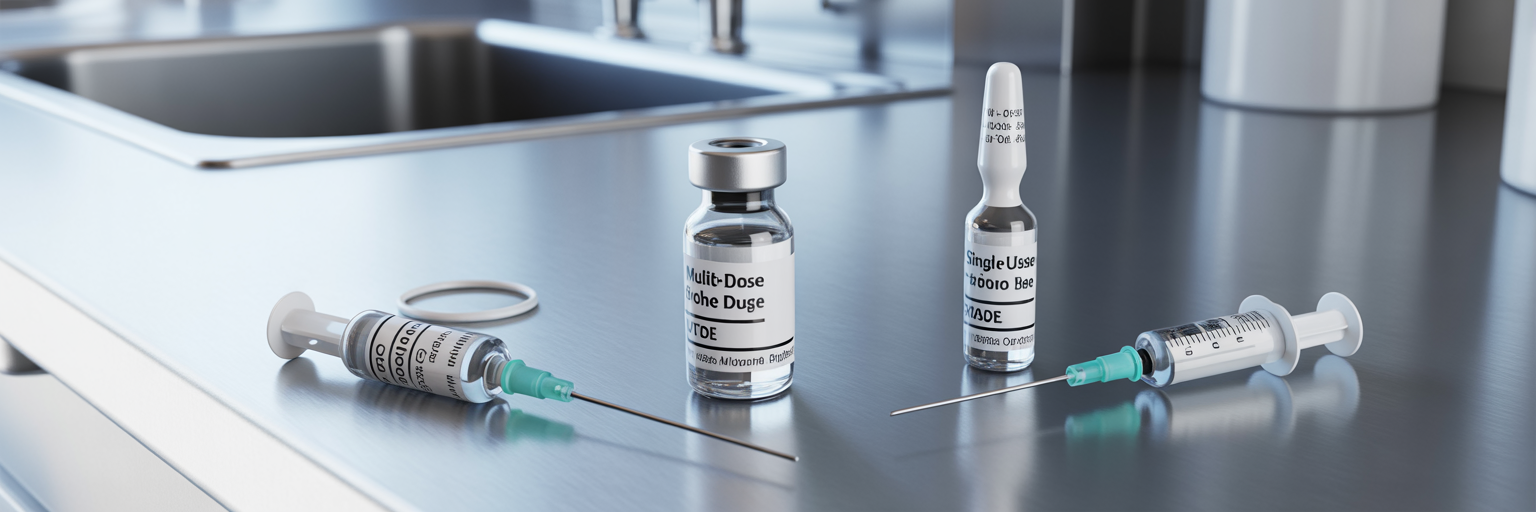
With the foundational role of a diluent established, the next decision is choosing the correct one for your specific compound. This choice directly influences the safety, efficacy, and cost-effectiveness of your work. The most common comparison researchers make is between sterile water vs bacteriostatic water, and the differences are significant.
Sterile water for injection is simply that: sterile water with no preservatives. Once a vial reconstituted with sterile water is punctured, it lacks any defence against microbial contamination. This means it must be used immediately, and any remaining solution must be discarded. Attempting to reuse it introduces a high risk of contamination that could compromise research results or patient safety.
This is where bacteriostatic water demonstrates its primary advantage. According to information provided to the FDA and available on DailyMed, bacteriostatic water for injection, USP is a sterile preparation containing 0.9% benzyl alcohol, intended for multiple withdrawals from a single vial. The preservative allows for a multi-use window of up to 28 days. For researchers requiring a reliable source for their work, a high-purity reconstitution solution is essential for achieving consistent and repeatable results.
However, this does not mean bacteriostatic water is universally applicable. There are important exceptions. Official drug monographs for certain compounds or specific patient populations, most notably neonates, explicitly forbid the use of diluents containing benzyl alcohol due to potential toxicity. In these mandatory single-dose protocols, sterile water is the only appropriate choice. This balanced understanding ensures that the right diluent is selected for every unique application.
| Attribute | Bacteriostatic Water | Sterile Water for Injection |
|---|---|---|
| Composition | Sterile water + 0.9% Benzyl Alcohol | Sterile water only |
| Primary Use Case | Multi-dose vials requiring repeated withdrawals | Single-dose vials or when benzyl alcohol is contraindicated |
| Shelf-Life After Opening | Up to 28 days | Use immediately; discard remainder |
| Contamination Risk (if reused) | Low, due to preservative action | High, no preservative to inhibit microbial growth |
| Best For | Lyophilized peptides, hormones in multi-dose format | Neonatal patients, specific drug formulations, single-use applications |
Note: The 28-day usage period for bacteriostatic water is a standard guideline based on the preservative’s efficacy. Always consult the specific pharmaceutical’s monograph for definitive instructions.
Precise Volume Selection and Dosing Calculations
Once you have selected the appropriate diluent, the next critical phase involves mathematics. The volume of bacteriostatic water added to a vial of lyophilized powder is not an arbitrary decision. It directly determines the final concentration of the reconstituted drug, which in turn dictates dosing accuracy. Getting this step right is fundamental to any successful research protocol that seeks to understand how to reconstitute peptides correctly.
Let’s walk through a clear example. Imagine you have a vial containing 10 mg of a lyophilized peptide. If you add 2 mL of bacteriostatic water, the resulting concentration is 5 mg per mL (10 mg ÷ 2 mL = 5 mg/mL). This concentration is the key to calculating your dose. Depending on the total amount of peptide and desired concentration, researchers can select from various sizes, such as a convenient 10ml reconstitution solution, to match their specific needs.
The most common tool for administering these doses is a U-100 insulin syringe, which is marked in units. It is essential to understand the conversion: a full 100-unit syringe holds 1 mL of liquid. Therefore, each single unit mark on the syringe represents 0.01 mL. Continuing our example, if you need to administer a 1 mg dose from your 5 mg/mL solution, you first calculate the required volume: 1 mg ÷ 5 mg/mL = 0.2 mL. To draw this volume, you would pull the plunger back to the 20-unit mark on the syringe (0.2 mL ÷ 0.01 mL/unit = 20 units).
Precision here is non-negotiable. Just as robust materials are essential for protecting sensitive modern electronics, like those found in a high-end phone case, meticulous measurement is critical for protecting the integrity of sensitive pharmaceutical compounds. Over-diluting the powder makes measuring small doses incredibly difficult and inaccurate. Conversely, under-diluting creates a highly concentrated solution where even a tiny measurement error can lead to a significant dosing inaccuracy. Both scenarios compromise the integrity of the research. For more examples, detailed protocols for peptide reconstitution are available from research suppliers, such as the guide provided by FormBlends, which reinforces the importance of precise measurements.
A Protocol for Contamination-Free Reconstitution
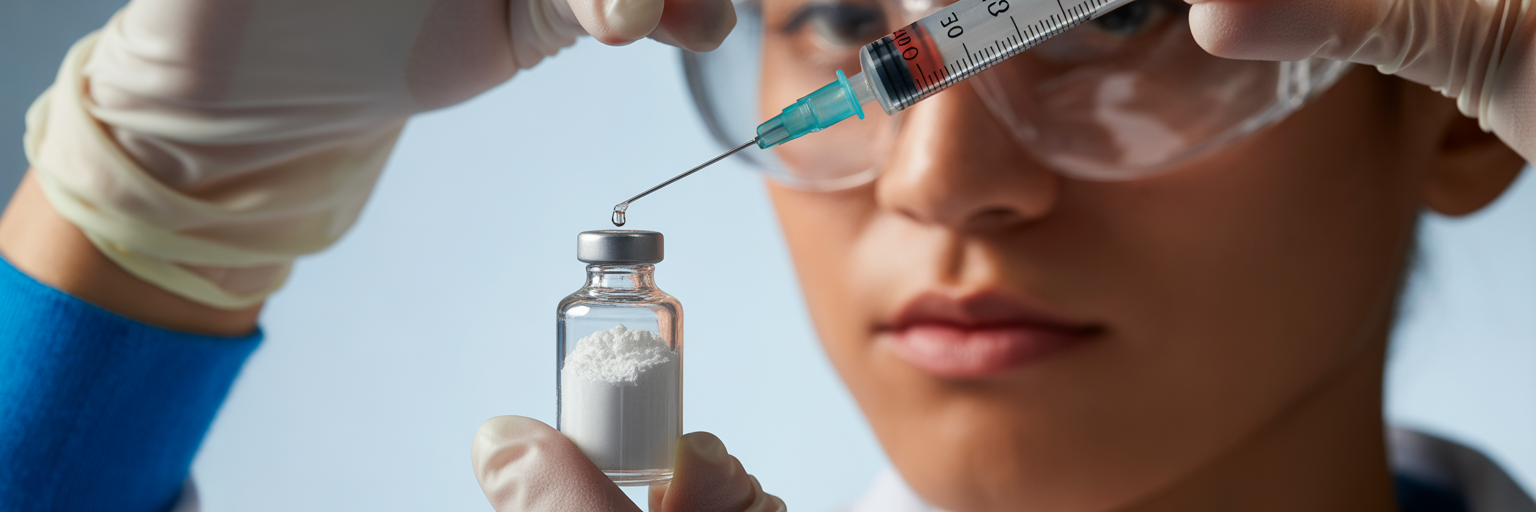
With the calculations complete, the focus shifts to the physical technique. A flawless reconstitution process is about more than just math; it requires a methodical approach to prevent both microbial contamination and damage to the fragile drug molecules. This peptide reconstitution guide outlines the essential steps for a clean and effective procedure.
The foundation of this process is a commitment to aseptic technique. This means starting with a thoroughly disinfected work surface and clean hands. Before every puncture, the vial’s rubber septum must be wiped with a fresh alcohol pad to eliminate surface contaminants. This simple habit is a primary defence in avoiding contamination in injectables. Ensuring you have all the necessary high-quality materials, from sterile syringes to the reconstitution solution itself, is the first step. You can browse a full range of laboratory supplies in our shop to prepare.
Follow these steps for a successful reconstitution:
- Prepare the Diluent: Using a new, sterile syringe, carefully draw up the exact volume of bacteriostatic water that you previously calculated. Ensure there are no large air bubbles in the syringe, as this will affect the volume accuracy.
- Inject Gently: Insert the needle through the center of the swabbed rubber septum. Angle the needle so that the stream of bacteriostatic water runs down the inside glass wall of the vial. Do not spray the diluent directly onto the lyophilized powder. This forceful stream can cause foaming and may denature the delicate peptide or protein structure.
- Mix Correctly: Once the diluent is added, the most common mistake is to shake the vial vigorously. This must be avoided. Peptides and other complex proteins have specific three-dimensional structures that are essential for their biological activity. Aggressive agitation can break these structures, rendering the compound ineffective.
- Ensure Homogeneity: The proper mixing technique is gentle. Either swirl the vial slowly or roll it between your palms. Continue this motion until the powder is completely dissolved and the solution appears perfectly clear. This gentle mixing, as emphasized in guides from sources like Remy Peptides, ensures the drug is evenly distributed without being damaged.
Post-Reconstitution Storage and Stability Management
The work is not finished once the powder is dissolved. Proper storage after reconstitution is just as critical as the reconstitution process itself. How you handle the vial from this point forward determines whether the compound remains safe and potent for its intended duration of use.
First, it is vital to adhere to the 28-day rule for multi-dose vials reconstituted with bacteriostatic water. This guideline is not arbitrary; it is based on the proven efficacy of the benzyl alcohol preservative in inhibiting microbial growth. After 28 days from the date of reconstitution, the vial must be discarded, regardless of how much solution remains. For long-term projects or laboratories with high throughput, purchasing reconstitution solution in multi-packs can ensure a consistent supply is always on hand for new vials.
To maintain the chemical stability of the reconstituted compound, follow these storage conditions:
- Refrigeration: The vial should be stored in a refrigerator at a temperature between 2°C and 8°C (36°F and 46°F). Do not freeze the reconstituted solution unless specified by the manufacturer, as the freeze-thaw cycle can damage many peptides.
- Light Protection: Many pharmaceutical compounds are sensitive to light. Store the vial in its original box or another dark container to protect it from light-induced degradation.
- Labeling: Immediately after reconstitution, label the vial with the date it was mixed and the final concentration (e.g., “Reconstituted on 26 Oct, 5 mg/mL”). This simple step prevents confusion and critical dosing errors.
Finally, make visual inspection a mandatory habit before every withdrawal. Look at the solution closely. If you observe any cloudiness, discoloration, or visible particles, the vial’s integrity has been compromised. It must be discarded immediately to ensure safety and data validity. This stark contrast in handling, as highlighted by resources like PeptidesExplorer, underscores the safety advantages of using a preserved diluent for multi-dose applications.