Private Label, White Label, Wholesale partnerships available - EU, USA and UK - Free shipping from €75
Achieving Experimental Integrity with Bacteriostatic Water
Learn how this specific sterile liquid maintains experimental integrity and precision in advanced scientific applications.
Core Properties of a Critical Research Reagent
In pharmaceutical research, the line between a breakthrough and a invalidated experiment can be microscopically thin. We can all recall that sinking feeling when weeks of work are jeopardised by an unforeseen variable. Often, the culprit is not the complex compound being studied but the simple solvent used to prepare it. Missed opportunities in data analysis frequently stem from underutilised or misunderstood reagents. This is where bacteriostatic water enters the picture, not as just another solvent, but as a specialised tool designed to mitigate these exact risks.
Its primary distinction from other types of pharmaceutical research sterile water is the inclusion of a preservative. This simple addition is what enables its use across multiple applications from a single vial, a critical feature in busy lab environments. The standard composition is sterile, nonpyrogenic water containing 0.9% benzyl alcohol. The term nonpyrogenic is crucial; it means the water is free from bacterial endotoxins, which are substances that can induce fever if introduced into a biological system. This property is non-negotiable for any in-vivo studies, where purity directly impacts subject safety and data validity.
To understand its role, it helps to see how it compares to other common laboratory solvents. Each is designed for a specific purpose, and using the wrong one can introduce unintended variables into an experiment.
| Solvent Type | Composition | Primary Use | Vial Type |
|---|---|---|---|
| Bacteriostatic Water | Sterile Water + 0.9% Benzyl Alcohol | Reconstitution for multi-dose use | Multi-dose |
| Sterile Water for Injection (WFI) | Sterile, nonpyrogenic water | Diluent for single-dose injections | Single-dose |
| Sterile Saline | Sterile Water + 0.9% Sodium Chloride | Isotonic solution for injections/infusions | Single-dose |
As the table illustrates, Sterile Water for Injection and sterile saline are intended for single-use applications. Once opened, they lack any defence against microbial contamination. In contrast, the benzyl alcohol in bacteriostatic water provides a continuous safeguard. By using a stable, contamination-resistant solvent like our reconstitution solution, researchers can effectively eliminate solvent-borne contamination as a variable, ensuring that experimental results are attributable solely to the compound under investigation.
The Mechanism of Microbial Inhibition
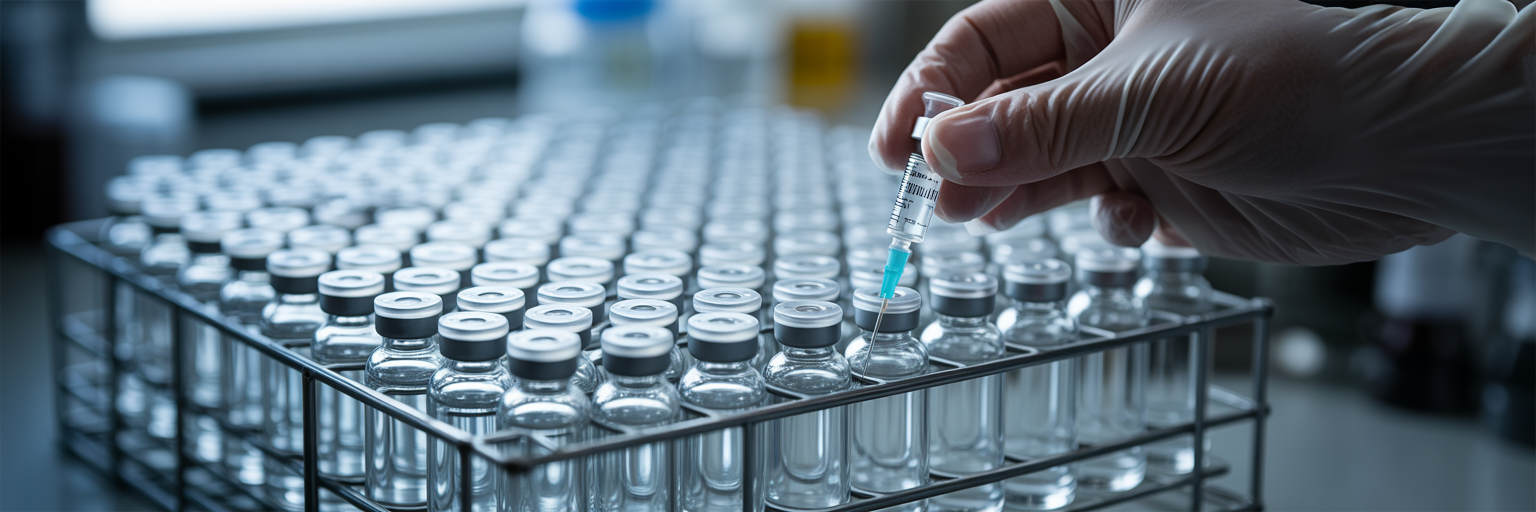
While its composition provides a stable foundation, the true value for multi-dose applications lies in how bacteriostatic water actively prevents contamination. This protective quality is entirely due to the benzyl alcohol preservative function. It is important to distinguish its action from that of a bactericidal agent. A bactericidal agent kills microbes directly, whereas a bacteriostatic agent, like benzyl alcohol, merely inhibits their ability to reproduce. Think of it as a security system that prevents intruders from multiplying rather than eliminating them on entry. This distinction is key to its role in maintaining solution integrity over time.
The chemical mechanism behind this is targeted disruption. Benzyl alcohol interferes with essential bacterial processes, such as protein synthesis and cell membrane integrity, effectively halting the population growth of any microbes that might be introduced. This becomes particularly relevant during a multi-dose vial reconstitution. Every time a researcher punctures the vial’s rubber septum with a syringe, there is a small but real risk of introducing airborne or surface contaminants. Without a preservative, a single contamination event could turn the vial into a microbial culture within hours. The benzyl alcohol acts as a constant guard, preventing microbial contamination in labs where repeated access to a solution is necessary.
Undetected microbial growth can silently sabotage research data in several ways:
- Altered Solution Chemistry: Bacteria can change the pH of the solution, potentially degrading the active compound.
- Enzymatic Degradation: Microbes may produce enzymes that break down sensitive molecules like peptides or proteins.
- Introduction of Confounding Variables: Microbial metabolic byproducts can interfere with assays or produce unintended biological effects in cell cultures or in-vivo models.
However, it is important to maintain a balanced perspective. As research available through PubMed highlights, while antimicrobial agents are effective, they are not infallible. Benzyl alcohol’s efficacy is primarily against bacteria and can diminish over time, especially with improper storage. This is why opened vials have a recommended 28-day use period. It reinforces that even with a preservative, strict aseptic technique is not optional; it is a required partner in ensuring experimental integrity. For those interested in exploring more scientific topics, we regularly share insights on our blog.
Ensuring Chemical Stability During Reconstitution
Beyond preventing microbial growth, the solvent’s chemical properties play an equally critical role in preserving the integrity of the reconstituted compound. This is where the pH of bacteriostatic water becomes a central feature. With a typical pH range of 4.5 to 7.0, it provides a slightly acidic to neutral environment. This is not an arbitrary characteristic; it is vital for maintaining the delicate three-dimensional structure of sensitive molecules like peptides and proteins.
Imagine a researcher carefully handling a small vial of lyophilized (freeze-dried) peptide, a substance that may have taken weeks to synthesize. The goal of a peptide reconstitution protocol is to gently dissolve this powder without causing any chemical stress. Using a solvent with an inappropriate pH can lead to disastrous outcomes. For instance, a highly acidic or alkaline environment can cause denaturation, where a protein unfolds and loses its biological activity. It can also lead to aggregation, causing molecules to clump together into useless precipitates, or hydrolysis, where the molecule is chemically broken down by water. In every case, the result is the same: a loss of the compound’s intended function, rendering the experiment invalid before it even begins.
The controlled pH of a reliable solvent, such as our 10ml reconstitution solution, is designed to avoid these pitfalls. It provides a gentle environment that facilitates dissolution while preserving the compound’s native structure. However, it is crucial to challenge the assumption that this pH range is a universal solution. While broadly compatible with many compounds, some molecules have very specific stability profiles. A researcher must always verify the requirements of their particular peptide or protein. Some may require a custom-buffered solution at a very precise pH to remain stable. Acknowledging this limitation is a mark of careful science and prevents costly errors. For those navigating these complexities, resources like the peptide reconstitution guide from Formblends can offer detailed best practices for handling these sensitive compounds.
Best Practices for Handling and Storage
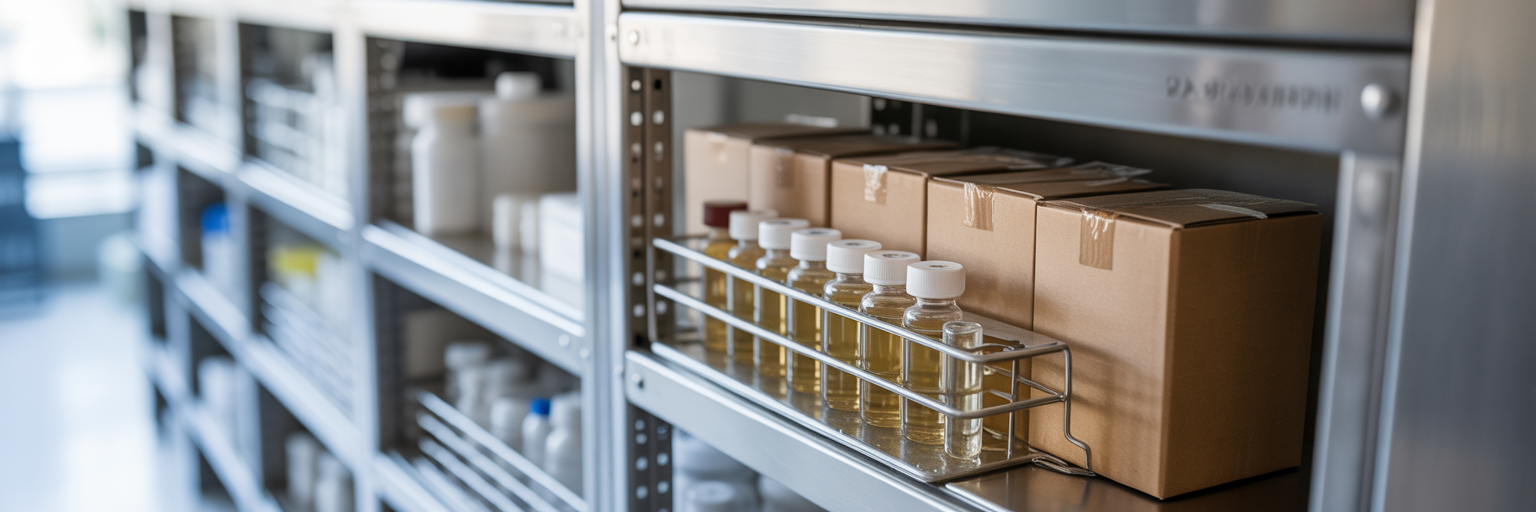
Theoretical knowledge is valuable, but in the lab, consistent results depend on disciplined execution. Handling bacteriostatic water correctly is just as important as choosing it in the first place. Following a strict protocol for reconstitution and storage is essential for maintaining both sterility and chemical stability. These steps are not just suggestions; they are foundational components of Good Laboratory Practice (GLP).
Here is a clear, step-by-step protocol for reconstituting a compound with bacteriostatic water for injection:
- Disinfect the Vial Septum: Before any puncture, thoroughly wipe the rubber septum of both the bacteriostatic water vial and the compound vial with a 70% alcohol pad. This simple action significantly reduces the risk of introducing surface contaminants.
- Use a Sterile Syringe: Always use a new, sterile syringe and needle for each reconstitution. Reusing syringes is a primary vector for cross-contamination between different solutions.
- Inject Slowly and Indirectly: After drawing the required volume of bacteriostatic water, insert the needle into the compound vial. Angle the needle so the stream of water runs down the inside wall of the vial rather than directly onto the lyophilized powder. This gentle introduction helps prevent foaming, which can denature proteins.
- Gently Swirl to Dissolve: Do not shake the vial vigorously. Instead, gently swirl it or roll it between your palms until the compound is fully dissolved. Shaking can cause mechanical stress and aggregation of sensitive molecules.
Once the compound is reconstituted, proper storage is paramount. As outlined in resources from USC Scalar, both unopened and opened vials of bacteriostatic water should typically be stored at controlled room temperature, between 20°C to 25°C (68°F to 77°F), and protected from light. These conditions are optimal for maintaining the efficacy of the benzyl alcohol preservative and preventing photo-degradation of the solution. For every subsequent withdrawal from a multi-dose vial, the aseptic technique must be repeated: wipe the septum with an alcohol pad every single time.
Finally, adhere strictly to the 28-day expiration period for an opened vial. This is not an arbitrary date. It is based on validated data regarding the preservative’s effectiveness. After this period, the ability of the benzyl alcohol to inhibit microbial growth can no longer be guaranteed, and the vial must be discarded to ensure data integrity and safety. Ensuring you have the right supplies on hand is part of this discipline, and you can browse a full range of solutions in our shop.
Future of Sterile Solvents in Research
As we look ahead, the evolution of sterile solvents will continue to parallel the advancements in pharmaceutical science. The reagents we use today are effective, but the drive for greater precision, safety, and efficiency will undoubtedly lead to new innovations. We can anticipate developments in several key areas that will further refine research protocols.
First, the development of novel preservative agents is a likely frontier. Future preservatives might offer a broader antimicrobial spectrum, providing protection against viruses and fungi in addition to bacteria, or exhibit even greater stability over longer periods and wider temperature ranges. Second, we may see the emergence of pre-buffered bacteriostatic solutions. These would be tailored for specific, highly sensitive compound classes, such as monoclonal antibodies or complex oligonucleotides, eliminating the need for researchers to prepare custom buffers and thereby simplifying workflows and reducing the potential for human error.
Third, advancements in packaging technology will play a significant role. Imagine vials with improved self-sealing septa that are more resilient to coring and contamination after multiple punctures, or vials with integrated micro-filters that provide a final layer of purification as the solution is drawn. As pharmaceutical science moves toward increasingly complex and sensitive biologics, the demand for high-purity, functionally superior reagents will only intensify. The continuous improvement of sterile solvents is therefore essential for supporting the next generation of scientific discovery. At Herbilabs, we are committed to being part of that progress, providing the foundational tools researchers need to push the boundaries of science.