Private Label, White Label, Wholesale partnerships available - EU, USA and UK - Free shipping from €75
Safe Handling of Bacteriostatic Water in Clinical Settings
Master the essential techniques for managing bacteriostatic water to maintain sterility and procedural integrity.
The Foundation of Sterile Preparations
The principle of asepsis, which dates back to the 19th-century work of figures like Joseph Lister, is the bedrock of modern medicine. Every injection and sterile preparation relies on maintaining a contaminant-free environment. Bacteriostatic water is a key component in this process, yet misunderstandings about its specific properties can lead to critical errors.
Defining Bacteriostatic Water and Its Purpose
Bacteriostatic water is a sterile, nonpyrogenic solution prepared with water for injection that contains 0.9% benzyl alcohol as a preservative. Its primary function is to serve as a diluent for multi-dose medications. For instance, when reconstituting peptides with bacteriostatic water, the solution allows for repeated withdrawals from the same vial while maintaining sterility. This reconstitution solution is specifically designed for this purpose, ensuring medications are prepared safely and effectively for administration.
The Critical Role of Benzyl Alcohol
The term “bacteriostatic” itself offers a crucial clue to its function. The benzyl alcohol in the solution does not kill microorganisms. Instead, it inhibits their growth and reproduction. This distinction is vital. It means the water must be sterile from the outset, as the preservative cannot eliminate existing contamination. A failure to maintain this initial sterility can introduce pathogens, leading to severe patient infections or invalidating months of research data.
Differentiating Between Sterile Diluents
In a busy clinical or lab setting, it is easy to mistake one clear liquid for another. However, using the wrong diluent can have dangerous consequences. Each solution is formulated for a specific application, and confusing them can compromise medication stability or patient safety. The following table clarifies these differences to prevent mix-ups.
| Diluent Type | Composition | Primary Use Case | Vial Type |
|---|---|---|---|
| Bacteriostatic Water | Sterile Water + 0.9% Benzyl Alcohol | Multi-dose medication reconstitution | Multi-dose |
| Sterile Water for Injection | Sterile Water (no preservatives) | Single-dose medication reconstitution | Single-dose |
| Normal Saline (0.9% NaCl) | Sterile Water + 0.9% Sodium Chloride | IV infusions, wound irrigation, dilutions | Single or multi-dose |
Note: This table clarifies the distinct compositions and intended applications of common sterile diluents to help professionals select the correct solution and prevent critical errors in clinical and research settings.
Pre-Use Inspection and Vial Integrity

Before a vial of bacteriostatic water is ever opened, a meticulous inspection protocol is the first line of defence against contamination. This habit is not about procedure for procedure’s sake; it is a critical checkpoint that ensures patient safety and data integrity. What you see, or fail to see, can make all the difference.
Assessing Outer Packaging and Seals
Your inspection begins with the outer packaging. Look for any signs of compromise such as tears, water damage, or evidence of tampering. Once the vial is in hand, focus on its seals. The protective plastic cap should be firmly in place, and the rubber stopper beneath it must be pristine and fully seated. A loose, punctured, or otherwise compromised seal means the vial’s sterility is questionable, and it must be discarded without hesitation. There is no safe way to salvage it.
Visual Inspection of the Solution
With the seal confirmed, the next step is to scrutinize the liquid itself. Hold the vial up to a light source, then against a dark background. The solution should be perfectly clear and free of any visible particles, fibres, or cloudiness. Any deviation from this standard suggests potential contamination or chemical degradation. As outlined in best practices in research labs, a solution that is anything but crystal clear is unfit for use.
Confirming the Expiration Date
Finally, locate and verify the expiration date printed on the vial label. This is not just a regulatory formality. The bacteriostatic water shelf life is determined by the stability of the benzyl alcohol preservative. Over time, its efficacy degrades, leaving the solution vulnerable to microbial growth after the first use. Using an expired product exposes the patient to an unnecessary risk of infection, rendering the “bacteriostatic” property unreliable.
Aseptic Techniques for Safe Withdrawal
Once a vial has passed inspection, the focus shifts to withdrawing its contents without introducing contaminants. Every touch and movement matters. The process of how to use bacteriostatic water correctly relies on a disciplined adherence to aseptic technique, transforming a simple action into a controlled, sterile procedure. The following steps provide a clear path for safe handling.
First, prepare a sterile field. This involves disinfecting a clean, non-porous surface with a suitable agent and allowing it to dry completely. Arrange all your necessary sterile supplies, including a new, sealed syringe and needle, within easy reach to avoid turning away or reaching across non-sterile areas.
Next, disinfect the vial stopper. Using a sterile 70% isopropyl alcohol swab, wipe the rubber stopper with firm friction. The correct motion is a concentric circle, starting from the centre and moving outward. Do not wave or blow on it; allow the alcohol to air dry completely. This waiting period is essential for the alcohol to perform its disinfectant function.
Maintaining the sterility of your syringe and needle is non-negotiable. These items are strictly single-use. Even if you are re-entering the same multi-dose vial, a used needle has already been exposed to the environment and is no longer sterile. Reusing it is a direct route for introducing bacteria into the vial.
Finally, execute the withdrawal using the proper sterile technique for injections. To avoid creating a vacuum, you must equalize the pressure inside the vial. Draw a volume of air into the syringe equal to the dose of liquid you intend to withdraw. Pierce the stopper and inject the air into the headspace above the liquid, not into the solution itself. Then, invert the vial and pull the plunger back slowly to draw out the desired amount of bacteriostatic water. After the first puncture, the vial must be discarded within 28 days. As noted in U.S. National Library of Medicine documentation, this 28-day limit is a standard safety protocol.
Optimal Storage for Preserving Stability
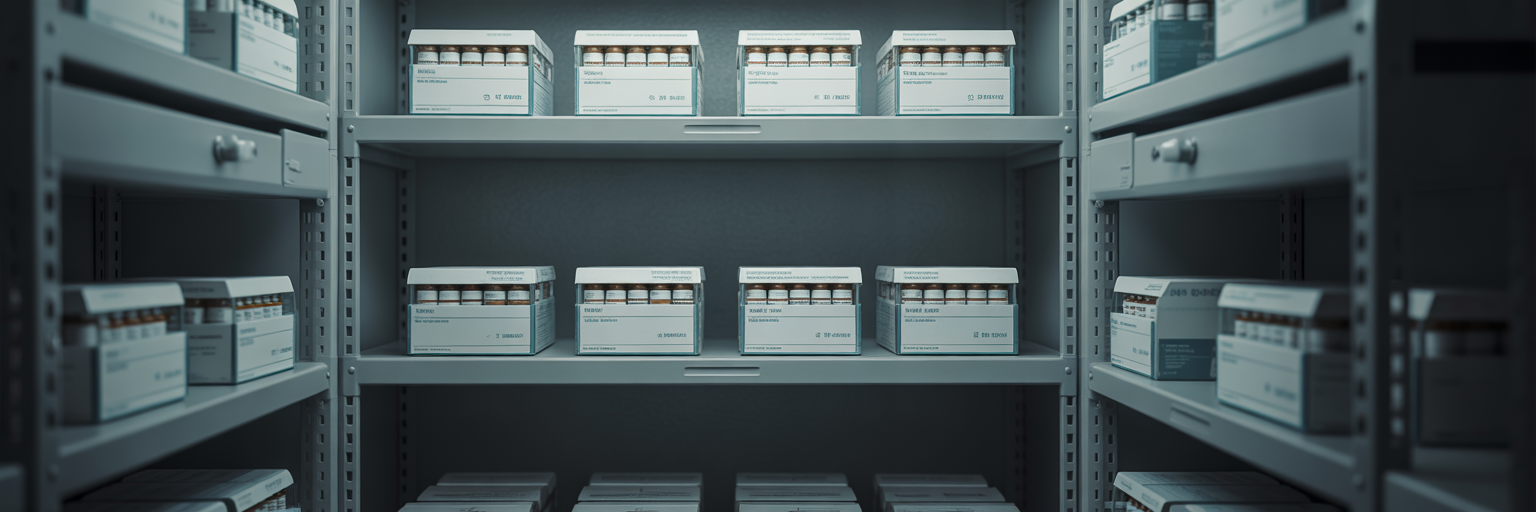
The integrity of bacteriostatic water depends just as much on how it is stored as how it is handled. Proper storage conditions are not suggestions but firm requirements for preserving the solution’s sterility and the preservative’s effectiveness. Following these rules ensures the vial remains safe and stable from the first day to the last.
- Maintain Controlled Room Temperature: The ideal bacteriostatic water storage temperature is between 20°C to 25°C (68°F to 77°F). Storing it in a refrigerator is unnecessary, and freezing must be avoided as it can cause microfractures in the vial, compromising the seal. Excessive heat, on the other hand, can accelerate the degradation of the benzyl alcohol preservative.
- Protect from Light: According to established storage guidelines, vials should be protected from light. UV exposure can cause photodegradation of chemical components, including the preservative. The simplest way to achieve this is to keep the vial in its original box or store it in a dark cabinet.
- Enforce the 28-Day Discard Protocol: This is one of the most critical rules. Once a vial has been punctured for the first time, it must be discarded after 28 days, regardless of how much solution remains. To ensure compliance, write the date of first use directly on the vial label with a permanent marker. This simple action removes any guesswork.
- Select a Secure and Clean Location: Store vials in a dedicated, clean, and dry area. Keep them away from sinks where they could be splashed, windows where they are exposed to temperature fluctuations and light, and high-traffic zones where they risk being knocked over or contaminated.
Consistently applying these storage principles is fundamental to responsible laboratory and clinical work. For those seeking more information, you can find further guidance on laboratory best practices to refine your safety protocols.
Critical Handling Errors and Their Consequences
Understanding the correct procedures is only half the battle. Knowing what not to do, and why, is equally important for preventing catastrophic mistakes. Certain handling errors may seem minor, but they can dismantle the entire chain of sterility and lead to severe health consequences. Recognizing these pitfalls is essential for anyone handling sterile solutions.
The Danger of Reusing Needles and Syringes
It can be tempting to reuse a needle when drawing from the same vial, but this is a grave error. The moment a needle is used, its sterility is gone. It becomes a microscopic vehicle for any bacteria it has come into contact with, whether from the air, a surface, or the first puncture site. Re-inserting that needle introduces a new microbial load into the vial, overwhelming the preservative and contaminating the entire contents.
Contraindications and High-Risk Applications
Bacteriostatic water is not universally safe for all applications or patients. Its most significant contraindication is for use in neonates. As confirmed by official medical documentation, benzyl alcohol can be toxic to newborns, leading to a condition known as “gasping syndrome.” Furthermore, it must never be used for epidural or intrathecal administration, as the preservative can cause severe neurotoxic effects.
Ignoring the 28-Day Discard Rule
The 28-day discard rule exists for a reason. After this period, the preservative efficacy of benzyl alcohol is no longer guaranteed. The repeated punctures may have introduced a small but cumulative amount of bacteria, and a weakened preservative may not be able to inhibit their growth. Continuing to use the vial past this date is a gamble that increases the risk of administering a contaminated solution.
The Risk of Pooling Remnants
Combining the leftover contents of multiple vials into one is an extremely dangerous practice. This action, known as pooling, breaks the sterile chain of every vial involved. It mixes solutions with different exposure histories and potentially different levels of low-grade contamination, creating a high-risk cocktail. Each vial is a closed, sterile system, and that system must be respected from first use to disposal.
End-of-Life Cycle and Disposal Protocols
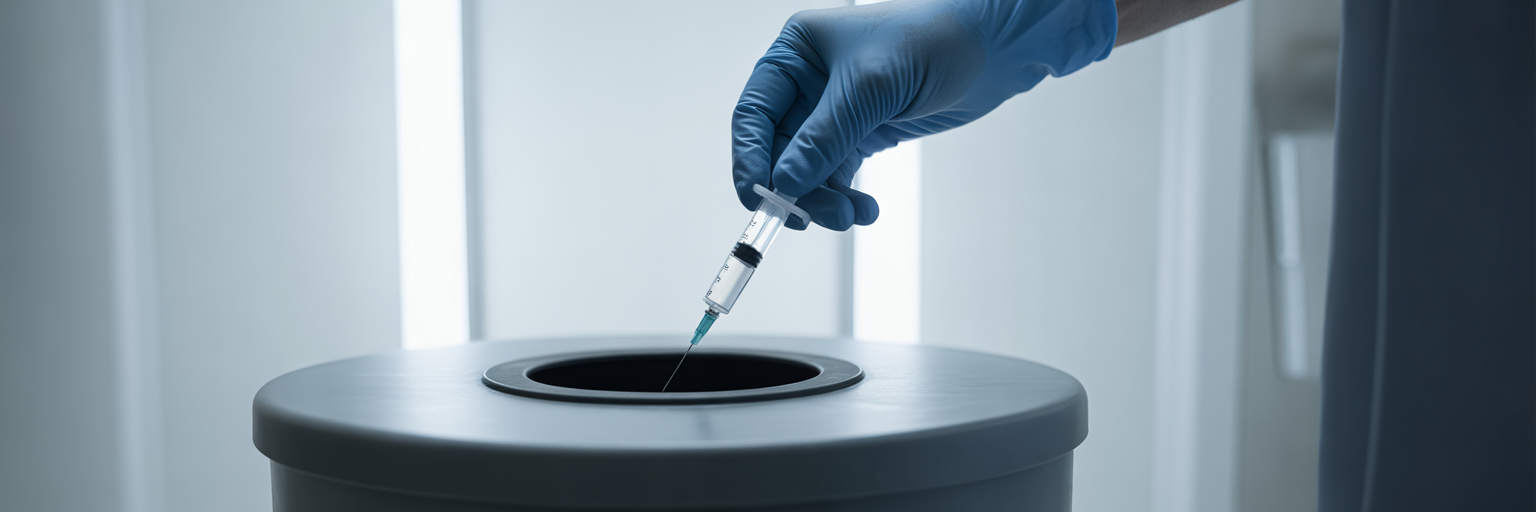
The lifecycle of a bacteriostatic water vial concludes with its proper disposal. This final step is as crucial as any of the preceding ones, ensuring that expired or contaminated materials do not pose a risk to others or the environment. A clear and consistent disposal protocol is the hallmark of a responsible and safe practice.
A vial of bacteriostatic water must be discarded immediately if it meets any of the following criteria:
- The printed expiration date has been reached.
- It is more than 28 days after the date of first puncture.
- The solution appears cloudy, discoloured, or contains visible particulates.
- The vial’s seal was compromised upon inspection or has been damaged.
When disposing of used vials and the associated syringes and needles, safety is paramount. All sharps must be placed immediately into a designated, puncture-proof sharps container. This prevents accidental needlestick injuries, which can transmit bloodborne pathogens. Never discard needles or vials in regular waste bins.
In professional settings, proper documentation of material use and disposal provides accountability and supports quality control measures. This creates a traceable record that is essential for maintaining high standards. Ultimately, the safe handling of bacteriostatic water is a discipline built on four key pillars: inspect thoroughly, use aseptic technique, store correctly, and discard appropriately. Adherence to these protocols is not just about following rules; it is a fundamental commitment to patient safety and scientific integrity.