Private Label, White Label, Wholesale partnerships available - EU, USA and UK - Free shipping from €75
Maintaining Experimental Integrity with Bacteriostatic Water
Understand how this preserved sterile solution is used to maintain the purity and stability of sensitive materials in laboratory settings.
A well-known challenge in the scientific community is the difficulty of reproducing experimental findings. This issue often stems from subtle, overlooked variables, with microbial contamination being a primary culprit. In this context, the purity of every reagent is not just a detail but the foundation of reliable research. Bacteriostatic water emerges as a cornerstone for maintaining this essential purity, especially in protocols requiring multiple uses of a single solution.
Defining Bacteriostatic Water for Laboratory Use
Understanding the precise nature of your reagents is the first step toward sound science. Many researchers, especially those early in their careers, can find the distinctions between various sterile diluents confusing. Clarifying these differences is essential for selecting the right tool for the job and ensuring the integrity of an experiment from the very beginning.
Composition and Mechanism
So, what is bacteriostatic water? It is a sterile, nonpyrogenic water solution intended for injection that contains a specific preservative. The formulation, as outlined in official resources like the U.S. National Library of Medicine’s DailyMed database, specifies a content of 0.9% benzyl alcohol. This agent is what makes it a bacteriostatic water for injection. The term “bacteriostatic” is key; the benzyl alcohol inhibits the replication of bacteria within the vial but does not actively kill them. This mechanism is sufficient to maintain the sterility of a multi-dose vial after it has been opened and punctured multiple times.
Furthermore, the solution is designated as “nonpyrogenic,” meaning it is free from endotoxins, which are substances produced by bacteria that can induce a fever if introduced into a biological system. This quality is an absolute requirement for any solution used in in-vivo studies involving cell cultures or animal models, where an immune response could confound the results.
Bacteriostatic Water vs. Sterile Water: A Critical Distinction
The comparison of bacteriostatic water vs sterile water is a frequent point of confusion in the lab. The difference is simple but critical. Sterile water for injection contains no antimicrobial preservatives. Once a vial of sterile water is opened, it offers no defence against any microorganisms that might be introduced. For this reason, it is strictly for single-use applications, and any remaining volume must be discarded immediately.
In contrast, bacteriostatic water is specifically designed for multi-dose vials. The presence of benzyl alcohol allows researchers to make multiple withdrawals from the same vial over a period of up to 28 days, provided that strict aseptic technique is followed. This distinction directly influences experimental design, cost, and waste management in the laboratory.
| Characteristic | Bacteriostatic Water | Sterile Water for Injection | Normal Saline (0.9% NaCl) |
|---|---|---|---|
| Preservative | Contains 0.9% Benzyl Alcohol | None | None |
| Primary Use Case | Multi-dose reconstitution | Single-dose reconstitution/dilution | Isotonic dilution, IV infusions |
| Vial Type | Multi-dose | Single-dose | Single or multi-dose (if preserved) |
| Shelf Life After Opening | Up to 28 days | Use immediately; discard remainder | Use immediately; discard remainder |
Note: This table compares the most common sterile solutions used in laboratory settings. The choice of diluent must always be guided by the specific experimental protocol and the chemical properties of the compound being reconstituted.
Core Applications in Scientific Protocols
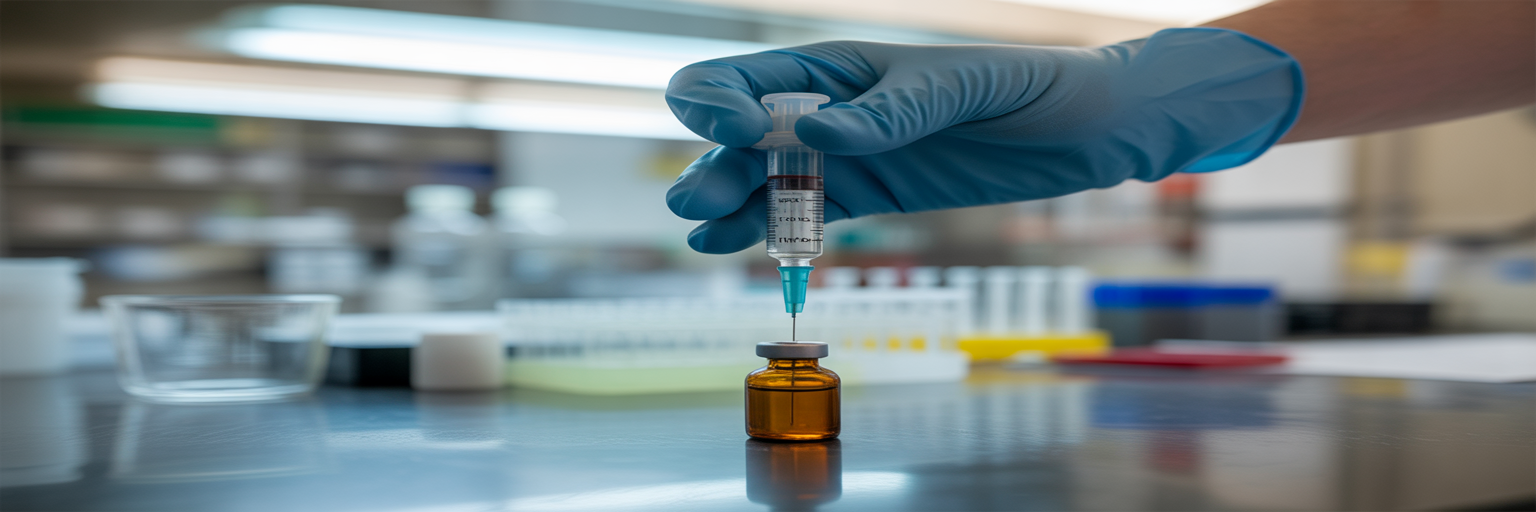
With a clear understanding of its composition, we can explore how bacteriostatic water functions in day-to-day laboratory work. Its properties make it uniquely suited for specific tasks that are fundamental to many research projects, particularly in biochemistry and molecular biology. The focus here shifts from its chemical makeup to its practical application at the lab bench.
Reconstituting Lyophilized Compounds
The primary and most common application is for reconstituting lyophilized peptides, proteins, and other sensitive biological compounds. Lyophilization, or freeze-drying, is a process that removes water from these molecules to render them stable for long-term storage. To be used in an experiment, they must be brought back into a liquid state, a process called reconstitution. Bacteriostatic water is often the ideal diluent for this purpose, especially when the reconstituted compound will be used over several days or weeks.
The reconstitution process itself requires careful technique to preserve the integrity of the compound:
- Prepare a sterile workspace. This minimizes the risk of introducing contaminants from the environment.
- Disinfect the vial septum. Use an alcohol swab to clean the rubber stopper of both the bacteriostatic water and the lyophilized powder vials.
- Calculate and draw the required volume of bacteriostatic water. Precision is key to achieving the correct final concentration.
- Slowly inject the water into the lyophilized powder vial. Aim the stream against the side of the vial to prevent foaming, which can denature sensitive proteins.
- Gently swirl or roll the vial to dissolve the compound. Vigorous shaking can damage the molecular structure, so patience is essential.
Supporting Multi-Dose Experimental Designs
The multi-use capability of bacteriostatic water is what makes it invaluable for certain experimental designs. Consider a long-term cell culture study where a specific growth factor must be added to the media every 24 hours. Using a new single-dose vial each day would be wasteful and costly. Instead, a researcher can reconstitute a larger amount of the growth factor in bacteriostatic water and draw small, precise amounts from the same vial daily.
Similarly, in animal studies that require the same drug to be administered over several weeks, a multi-dose vial provides consistency and efficiency. It is also useful for diluting other sterile concentrates, as long as the compounds are compatible with the benzyl alcohol in bacteriostatic water. For more insights into experimental best practices, you can explore the resources we have gathered on our blog.
The Advantages of Using a Preserved Solution
Choosing bacteriostatic water over other sterile diluents is not just a matter of preference; it is a strategic decision that offers distinct advantages in safety, cost, and data reliability. These benefits directly address some of the most common challenges faced in a laboratory environment, from budget constraints to the frustrating task of troubleshooting inconsistent results.
The most immediate benefit is the prevention of microbial contamination. Every time a needle punctures a vial’s septum, there is a small but real risk of introducing bacteria. In a single-use vial, this can ruin the entire experiment. The benzyl alcohol in bacteriostatic water acts as a safeguard, inhibiting the growth of any stray contaminants that might enter during repeated withdrawals. This protective action is fundamental to preserving the integrity of your work.
From a practical standpoint, the economic benefits are significant. For any lab manager or principal investigator, resource management is a constant concern. Using one multi-dose vial instead of up to 28 single-dose vials dramatically reduces waste and lowers overall costs. This includes savings on the solution itself, as well as on syringes and other consumables. Sourcing high-quality reagents, such as our 10ml reconstitution solution, is a key part of managing a laboratory budget effectively without compromising on quality.
Finally, the preservative helps maintain compound stability. Bacterial growth does more than just contaminate a sample; bacteria can release enzymes that actively degrade sensitive molecules like peptides and proteins. By preventing this growth, bacteriostatic water ensures that the reconstituted compound remains potent and structurally intact throughout its 28-day use period. The use of antimicrobial preservatives like benzyl alcohol is a well-established practice recognized by pharmacopoeias, as noted in resources like the USP, for ensuring the safety and stability of multi-dose products.
These advantages contribute directly to the ultimate goal of all scientific research: reproducibility.
- Enhanced Safety: Minimizes the risk of introducing contaminants that could harm cell cultures or animal subjects.
- Cost-Efficiency: Reduces the consumption of vials, syringes, and solution, lowering overall experimental costs.
- Data Reliability: Ensures the reconstituted compound remains stable and potent, leading to more consistent and trustworthy results.
Best Practices for Handling and Storage
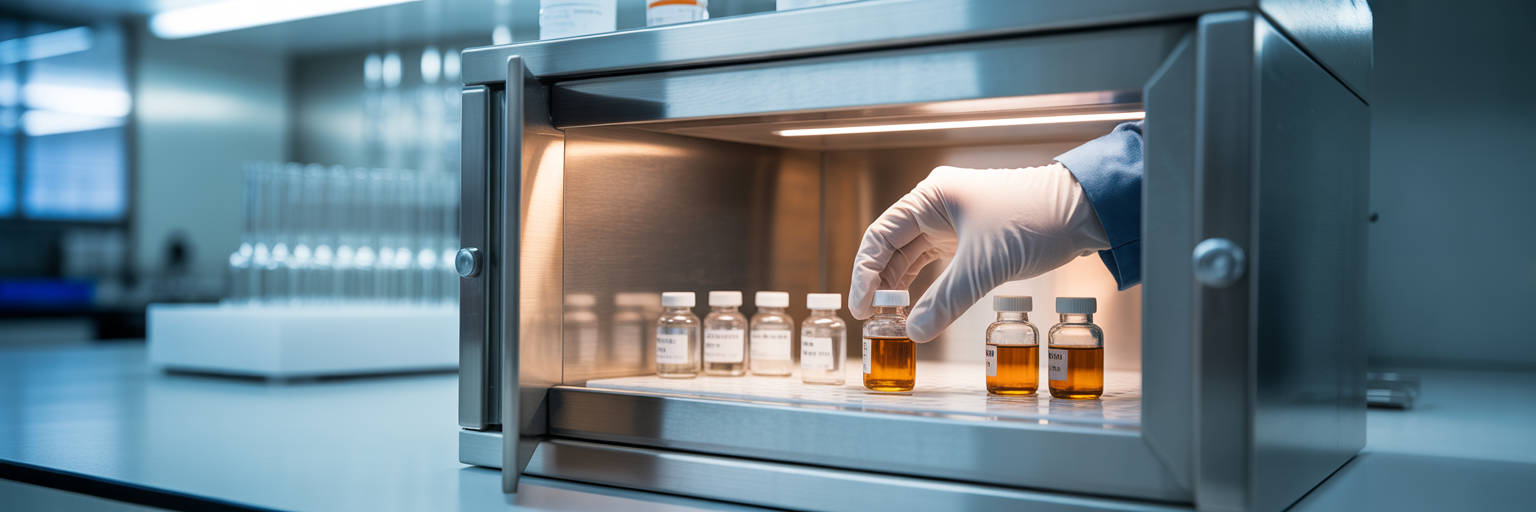
The benefits of bacteriostatic water are entirely dependent on its proper handling. A casual approach to storage or withdrawal can negate its protective properties and compromise your research. Following a strict protocol is not about being rigid; it is about ensuring that every variable is controlled, allowing you to trust your results. These guidelines provide a clear, actionable framework for safe and effective use.
Proper Storage Conditions
The question of how to store bacteriostatic water is straightforward but critical. Unopened vials should be stored at a controlled room temperature, typically between 20°C to 25°C (68°F to 77°F). It is equally important to store them away from direct light. Why? Because prolonged exposure to UV light can degrade the benzyl alcohol, slowly reducing its efficacy as a preservative. Once opened, the vial can be refrigerated, but you should always check the manufacturer’s instructions for the specific compound you have reconstituted, as some peptides are best stored at room temperature even after reconstitution.
Aseptic Withdrawal Technique
Aseptic technique is non-negotiable. The 28-day shelf life after opening is only valid if the vial is handled correctly every single time. A lapse in technique can introduce a high microbial load that overwhelms the preservative. These best practices apply to all formats, whether it is a standard vial or a larger volume like our 30ml reconstitution solution.
- Inspect the Vial: Before the first use, and before every subsequent use, visually inspect the solution. Check for any particulate matter, discoloration, or cloudiness. Ensure the seal is intact on a new vial.
- Disinfect the Septum: Vigorously wipe the rubber stopper with a 70% isopropyl alcohol swab. Crucially, you must allow it to air dry completely before puncturing. Wiping and immediately injecting can introduce wet alcohol into your solution.
- Use Sterile Equipment: Always use a new, sterile needle and syringe for every single withdrawal. Reusing a syringe, even for the same vial, is a primary cause of cross-contamination.
- Label the Vial: Immediately after the first puncture, write the date of first use directly on the vial’s label. This is the only way to accurately track the 28-day expiration period. Do not rely on memory.
Finally, adhere to the disposal criteria. The vial and its contents must be discarded 28 days after the date of first opening, or sooner if you ever suspect contamination. When in doubt, throw it out. The cost of a new vial is insignificant compared to the cost of invalid data.
Limitations and Important Considerations
While bacteriostatic water is an invaluable tool, it is not a universal solution. Acknowledging its limitations is a mark of a careful and knowledgeable researcher. Understanding when not to use it is just as important as knowing how to use it correctly. This balanced perspective is essential for ensuring both the safety and the validity of your experimental work.
First and foremost, there are critical contraindications. Bacteriostatic water must not be used in neonatal research or for administration to newborns. The benzyl alcohol preservative can be toxic to this population, leading to a condition known as “gasping syndrome,” which can be fatal. Additionally, some specific cell lines may exhibit sensitivity to alcohol-based preservatives. Always check the literature for your particular cells before introducing a new reagent into your culture.
Second, researchers must consider potential chemical incompatibilities. While benzyl alcohol is relatively inert, it is not guaranteed to be compatible with every compound. For novel or highly complex molecules, it is the researcher’s responsibility to verify that the preservative will not interact with or degrade their specific compound of interest. A small pilot study to test stability may be warranted in such cases.
Third, it is vital to understand that the 28-day rule is a guideline, not a guarantee. Its validity is entirely dependent on the consistent application of strict aseptic technique. A significant contamination event, caused by poor handling, can introduce a microbial load that the 0.9% benzyl alcohol concentration cannot control, rendering the solution unsafe long before the 28-day mark.
The golden rule is this: always defer to the specific experimental protocol or the manufacturer’s instructions for the compound being reconstituted. If a method explicitly calls for single-use sterile water, that directive must be followed to the letter. Deviating from an established protocol introduces an uncontrolled variable and undermines the integrity of your research. To ensure you are starting with the highest quality materials, we encourage you to review the range of high-purity laboratory solutions available in our shop.