Private Label, White Label, Wholesale partnerships available - EU, USA and UK - Free shipping from €75
Maintaining Bacteriostatic Water Integrity in the Laboratory
Follow these best practices to maintain the purity and stability of bacteriostatic water in your research environment.
Foundational Principles of Bacteriostatic Water
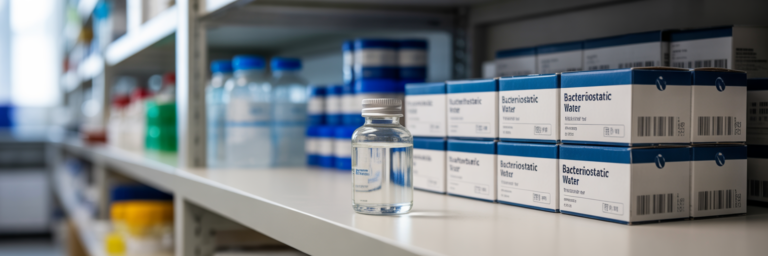
In any laboratory setting, the purity of reagents is not just a goal, it is the foundation of reliable work. Bacteriostatic water is a cornerstone of this principle, defined as sterile water combined with 0.9% benzyl alcohol. This small addition is what gives the water its name and its function. The benzyl alcohol acts as a bacteriostatic agent, meaning it inhibits the growth and reproduction of bacteria. It does not kill microorganisms already present, but it effectively presses the pause button on any potential contaminants introduced during use.
This specific property makes it indispensable for reconstituting multi-dose medications or reagents. Think of a vial that needs to be accessed multiple times over several days. Each puncture of the rubber stopper is a potential entry point for airborne microbes. The benzyl alcohol preservative ensures that these minor introductions do not proliferate, preventing bacteriostatic water contamination and preserving the solution’s integrity for its intended lifespan. Without it, every subsequent dose drawn from the vial would carry an unacceptable risk.
Understanding this function is critical because not all water in a lab is interchangeable. Using the wrong type can invalidate an entire experiment. To prevent such errors, it is helpful to see how these common water types compare.
| Water Type | Composition | Primary Use Case | Key Consideration |
|---|---|---|---|
| Bacteriostatic Water | Sterile water + 0.9% Benzyl Alcohol | Reconstituting multi-dose medications/reagents | Preservative inhibits growth; not for neonates. |
| Sterile Water for Injection | Sterile water, no additives | Single-dose dilutions and injections | No preservative; must be discarded after single use. |
| Distilled/Deionized Water | Purified water, non-sterile | Preparing buffers, cleaning glassware | Not sterile and may contain endotoxins; unsafe for injection. |
Ultimately, the integrity of your research data is directly tied to the purity of your reagents. Compromised water introduces variables that can skew results, leading to wasted resources, lost time, and unreliable scientific conclusions. Adhering to proper protocols is not just about following rules, it is about protecting the validity of your work.
Optimal Storage Conditions for Maximum Efficacy
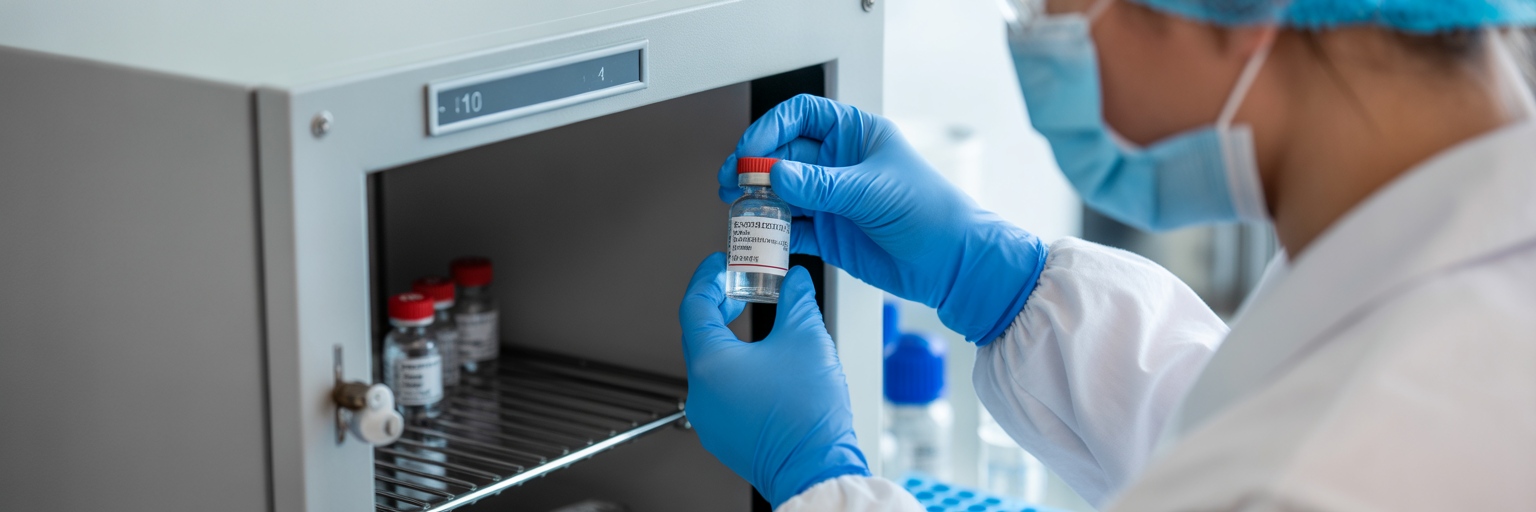
Once you have the correct type of water, its efficacy depends entirely on how it is stored before use. These passive measures are just as important as the active techniques used during reconstitution. Proper storage is a simple, non-negotiable step in maintaining the solution’s chemical stability.
The Ideal Temperature Range
The recommended storage temperature for bacteriostatic water is between 20°C and 25°C (68°F to 77°F). This is not an arbitrary range. Temperatures above this can accelerate the degradation of the benzyl alcohol preservative, weakening its bacteriostatic properties over time. Conversely, storing it in a refrigerator or other cold environment can cause the benzyl alcohol to fall out of solution, compromising its uniform distribution. A controlled room temperature environment is essential.
The Dangers of Freezing
One of the most common and irreversible mistakes is freezing bacteriostatic water. When frozen, the benzyl alcohol can separate from the water. Upon thawing, it may not fully reintegrate, creating a non-homogenous solution with pockets of high and low preservative concentration. A vial that has been frozen is no longer reliable and must be discarded immediately. There is no way to visually confirm if the solution has returned to its proper state, so the risk is not worth taking.
Protecting from Light Exposure
Temperature is not the only environmental factor to control. Benzyl alcohol is susceptible to photodegradation, a process where exposure to UV light can break down its chemical structure. According to research guidelines on best practices, exposure to light and improper temperatures are primary causes of preservative degradation. As noted in a guide from USC’s academic resources, preventing photodegradation is as critical as temperature control. The simplest way to achieve this is to keep vials in their original cartons or store them in dark, enclosed cabinets away from direct sunlight or fluorescent lighting.
Combining these practices leads to a clear conclusion: establishing a dedicated area for lab water storage conditions is a critical best practice. This controlled space minimizes the chance of human error and ensures every vial you use is as effective as the day it was manufactured. Ensuring you have the right supplies is the first step in proper laboratory protocol. A well-stocked lab should source its materials from reliable providers that offer a range of necessary solutions and equipment, which can be found in our dedicated shop.
Aseptic Techniques for Contamination Prevention
While proper storage protects the vial before it is opened, maintaining its integrity during use depends entirely on your technique. Every time you draw a dose, you are performing a procedure that requires precision and care. A robust aseptic technique for vials is the only way to prevent the introduction of contaminants and ensure the solution remains safe and effective for its entire 28-day in-use lifespan.
Think of the rubber septum not as a perfect seal, but as a gate that must be guarded. Following a strict, repeatable procedure is key. These steps should become second nature for anyone handling multi-dose vials.
- Inspect the Vial Before Use: Always begin by visually checking the vial. Look for cracks in the glass, damage to the cap, or any particulates or cloudiness in the solution. If you see anything unusual, do not use the vial. It is better to discard a questionable vial than to risk compromising an experiment.
- Sterilise the Septum: This is a critical step. Vigorously wipe the rubber septum with a sterile, 70% isopropyl alcohol pad. Then, and this is crucial, allow it to air-dry completely. Wiping introduces the alcohol, but the evaporation is what provides the sanitising action. Fanning it or blowing on it will only reintroduce contaminants.
- Use a Sterile Syringe and Needle: Always use a new, sterile syringe and needle for every entry into the vial. Reusing syringes is a primary vector for cross-contamination between vials and introduces a significant risk of infection.
- Prevent Coring: “Coring” is when the needle punches out a tiny piece of the rubber stopper, depositing it into the solution. To prevent this, insert the needle with the bevel facing up at a 45 to 60-degree angle. Apply gentle pressure, and as the tip penetrates the stopper, gradually straighten the needle to a 90-degree angle to pass through. This slicing motion minimises the risk of creating rubber particulates.
- Date and Monitor the Vial: For any multi-dose vial, write the date of the first puncture directly on the label. This starts the 28-day clock. Remember that this clock is only valid if you apply the same rigorous aseptic technique every single time you access the vial.
These aseptic techniques are fundamental when working with any multi-dose vial, such as one of our 30ml reconstitution solutions, to ensure its integrity throughout its use. Consistency is what transforms these steps from a checklist into a reliable protocol that protects your work.
The Consequences of Compromised Water Integrity
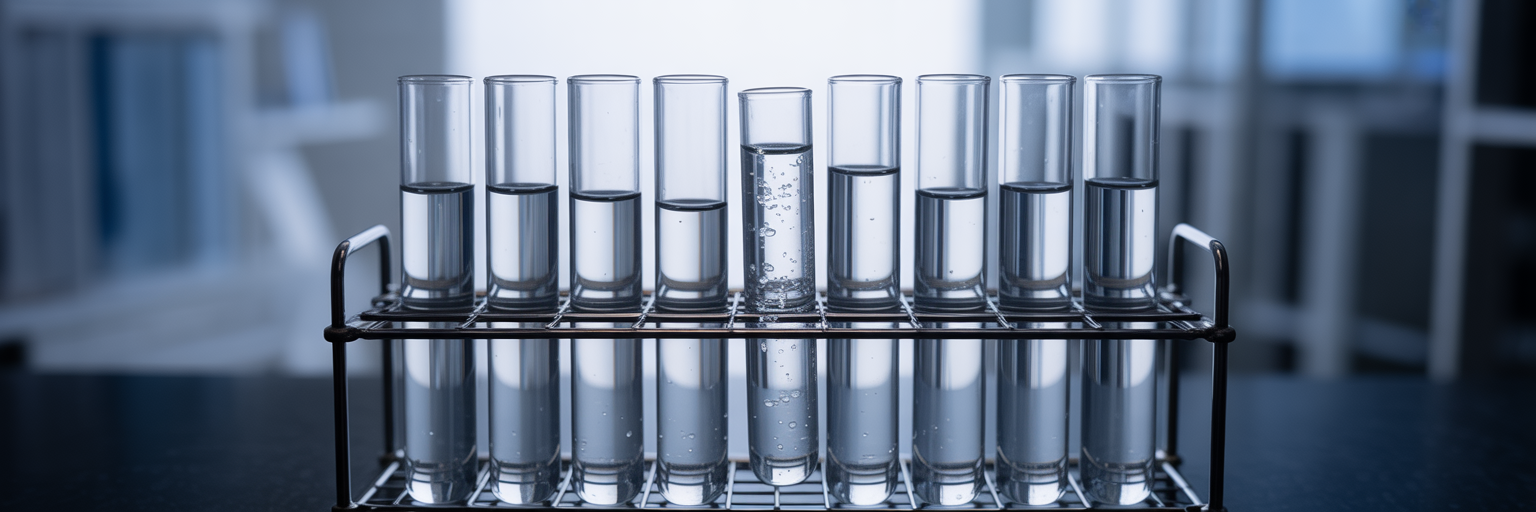
The protocols for handling and storing bacteriostatic water are not suggestions, they are safeguards. A failure at any point in the process does not just create a minor inconvenience, it can have severe and cascading consequences that affect the reliability of your research, the safety of your work, and the resources of your lab. Understanding these outcomes underscores why diligence is so important.
When integrity is compromised, the fallout can be categorised into several key areas:
- Impact on Experimental Reliability: This is the most immediate consequence for a researcher. Uncontrolled microbial growth or altered chemical composition due to degraded benzyl alcohol introduces a significant variable into your experiment. This bacteriostatic water contamination can lead to inconsistent, irreproducible data, rendering weeks or even months of work invalid.
- Direct Safety Hazards: In pre-clinical or other sensitive applications, using a compromised solution can pose a direct safety risk. The introduction of bacteria or endotoxins can cause inflammatory responses, infections, or other adverse reactions. The purpose of using sterile, bacteriostatic water is to prevent this very outcome.
- Visible Signs of Contamination: Sometimes, the failure is obvious. Cloudiness, discoloration, or visible floating particulates are all clear signs that a vial is contaminated and must be discarded immediately. These are not just aesthetic issues, they are definitive proof that the solution is no longer sterile or safe for use.
- The Hidden Costs of Mishandling: The financial impact extends far beyond the cost of a single vial of water. It includes the wasted value of expensive peptides or medications, the loss of valuable research hours spent on failed experiments, and the cost of repeating work. In both clinical and research environments, such failures can lead to unreliable results and significant safety hazards. As outlined in academic resources, improper handling not only compromises data but can also lead to regulatory non-compliance, compounding the consequences.
Ultimately, a lapse in protocol is never just a small mistake. It undermines the very foundation of scientific inquiry and introduces risks that are entirely preventable.
Advanced Strategies for Shelf-Life Management
Effective management of your bacteriostatic water supply goes beyond just storage and handling, it also involves a clear understanding of its timeline. A common point of confusion is the difference between the manufacturer’s expiration date and the in-use lifespan of the product. Clarifying this is key to maximising both safety and efficiency.
The printed expiration date on an unopened vial applies to a product stored under ideal conditions. However, the moment you puncture the septum for the first time, a new clock starts. The accepted standard for bacteriostatic water shelf life after first use is typically 28 days. After this period, the preservative’s efficacy can no longer be guaranteed, and the vial should be discarded regardless of how much solution remains.
To manage this effectively, implement a simple but non-negotiable logging system. When you first open a vial, use a permanent marker to write two dates on the label: “Date Opened” and “Discard By” (28 days later). This removes all guesswork and ensures every user knows the vial’s status at a glance. It is also important to remember that this 28-day rule is the maximum lifespan under perfect conditions. If you ever suspect contamination, or if the vial has been stored improperly (e.g., left out at room temperature for an extended period), you must discard it early. The date on the label does not override good judgment.
Finally, it is important to maintain a balanced perspective on benzyl alcohol. It is a bacteriostat, not a sterilising agent. It is excellent at preventing the growth of many common bacteria, but it is not a silver bullet against all microorganisms. This limitation is precisely why the aseptic techniques discussed earlier are not optional. The preservative provides a safety net, but your careful technique is the primary line of defence. For more in-depth protocols and advanced tips on laboratory best practices, staying updated through our dedicated research blog can provide ongoing value.