Private Label, White Label, Wholesale partnerships available - EU, USA and UK - Free shipping from €75
Correct Bacteriostatic Water Storage for Reliable Research
Follow precise guidelines for temperature, light, and handling to ensure your bacteriostatic solution remains sterile and effective for reliable experiments.
The Foundation of Sterility in Research Solutions
In scientific research, where reproducibility is the gold standard and a single experiment can represent a significant investment, the integrity of every component is absolute. We often focus on complex instruments and rare reagents, yet even the most fundamental element, the solvent, can become an uncontrolled variable if not handled with precision. This is especially true for bacteriostatic water.
Bacteriostatic water is sterile water containing 0.9% benzyl alcohol, a preservative that gives the solution its name. It is crucial to understand that benzyl alcohol is bacteriostatic, not bactericidal. This means it inhibits or prevents the reproduction of bacteria but does not actively kill microorganisms that may already be present. This distinction highlights why the initial sterility of the solution is non-negotiable and why preventing contamination is a continuous process.
Its primary role is in reconstituting sensitive and often expensive lyophilised powders. When reconstituting peptides with bac water, for example, even minor contamination can alter the compound’s structure, compromise its efficacy, and render an entire experiment invalid. The introduction of bacteria can lead to degradation of the peptide, producing misleading or entirely false results.
Therefore, storage protocols are not optional guidelines. They are fundamental scientific parameters that directly influence the chemical stability of the solution and the efficacy of the benzyl alcohol preservative. Proper storage is an active part of the experimental method itself, a step as critical as calibrating your equipment. For those looking to deepen their knowledge on lab materials, we have shared further insights on our blog about essential research supplies.
Ideal Environmental Conditions for Storage
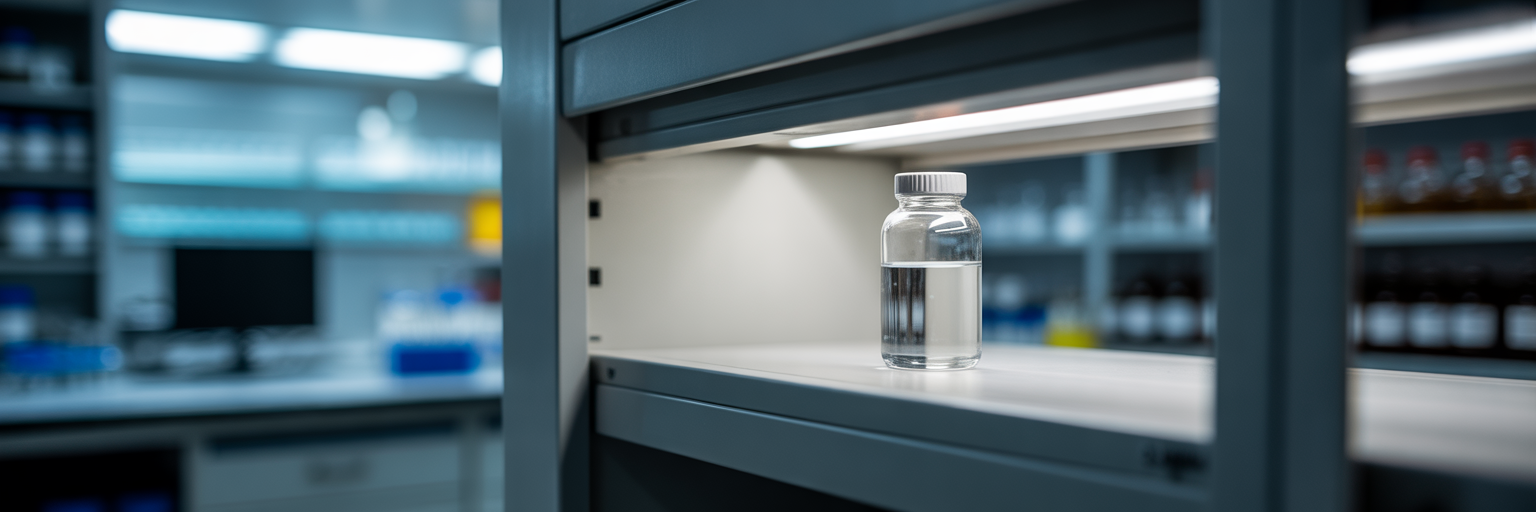
Moving beyond the ‘why’, let’s focus on the ‘where’. The environment in which you store bacteriostatic water has a direct and measurable impact on its integrity. This isn’t about general tidiness; it’s about controlling specific physical parameters to protect the solution’s chemical stability.
Optimal Temperature Range
The ideal bacteriostatic water temperature for storage is a controlled room temperature between 20°C to 25°C (68°F to 77°F). This range is not arbitrary. It is specifically chosen to maintain the chemical structure of benzyl alcohol, ensuring it remains effective as a preservative without degrading. Storing it within this window keeps all components stable and in solution, ready for reliable use.
The Dangers of Temperature Extremes
Deviating from this temperature range introduces significant risks. High heat acts as a catalyst for benzyl alcohol degradation, accelerating its chemical breakdown and weakening its preservative power. Conversely, freezing the solution can cause its own set of problems. While it may not damage the benzyl alcohol directly, the expansion of water as it turns to ice can cause microscopic fractures in the glass vial, compromising its seal. Upon thawing, the solution may also lose its homogeneity, meaning the preservative is no longer evenly distributed.
The Damaging Effect of Light
Light, particularly UV radiation from sunlight, is another environmental factor to control. As confirmed by research into the effects of UV radiation on benzyl alcohol, light exposure causes photodegradation. A study published on ResearchGate demonstrates how this process weakens its bacteriostatic properties over time. The most practical advice is to keep the vial in its original box or stored inside a dark, enclosed cabinet, shielded from direct light sources.
| Condition | Effect on Benzyl Alcohol | Effect on Vial/Solution | Recommended Action |
|---|---|---|---|
| High Heat (>25°C) | Accelerated chemical degradation | Reduced preservative efficacy | Store away from heat sources and direct sunlight |
| Freezing (<0°C) | No direct chemical damage | Risk of vial micro-fractures; potential for non-homogeneity upon thawing | Never freeze; store at controlled room temperature |
| UV Light Exposure | Photodegradation, weakening bacteriostatic properties | Gradual loss of sterility protection | Keep in original packaging or a dark, enclosed cabinet |
| Temperature Fluctuations | Cumulative stress on chemical bonds | Unpredictable reduction in shelf life | Use a temperature-controlled storage unit |
Preserving Vial Integrity from Receipt to Disposal
While the storage environment sets the stage, the physical handling of the vial is where sterility is either maintained or lost. Each interaction with the vial is an opportunity to introduce contaminants. Adhering to a strict protocol for maintaining vial sterility is therefore essential from the moment you receive the product until it is discarded.
Follow these steps as a clear, non-negotiable guide for every use:
- Inspect Upon Receipt: Your first action should always be a visual inspection. Check for an intact, secure tamper-evident seal. If the seal is broken, loose, or appears compromised in any way, the vial’s sterility is unconfirmed. Do not use it. The risk is simply too high. Discard it immediately and source a new, sealed vial.
- Employ Aseptic Technique for Every Use: This is the core of sterile handling. Before and after every puncture, meticulously swab the rubber stopper with a 70% isopropyl alcohol pad and allow it to air dry. Always use a new, sterile needle and syringe for each withdrawal. The needle must never touch any non-sterile surface before piercing the stopper. This practice, reinforced by public health bodies like the CDC for multi-dose vials, is your primary defence against introducing bacteria.
- Maintain Proper Storage Orientation: Always store the vial in an upright position. This simple step prevents prolonged contact between the solution and the rubber stopper. Over time, this contact can cause compounds from the stopper material to leach into the solution, subtly altering its purity and potentially interfering with sensitive experiments. For reliable results, you need a pure solvent, like our 30ml reconstitution solution, handled with care.
Common Storage Errors and Their Consequences
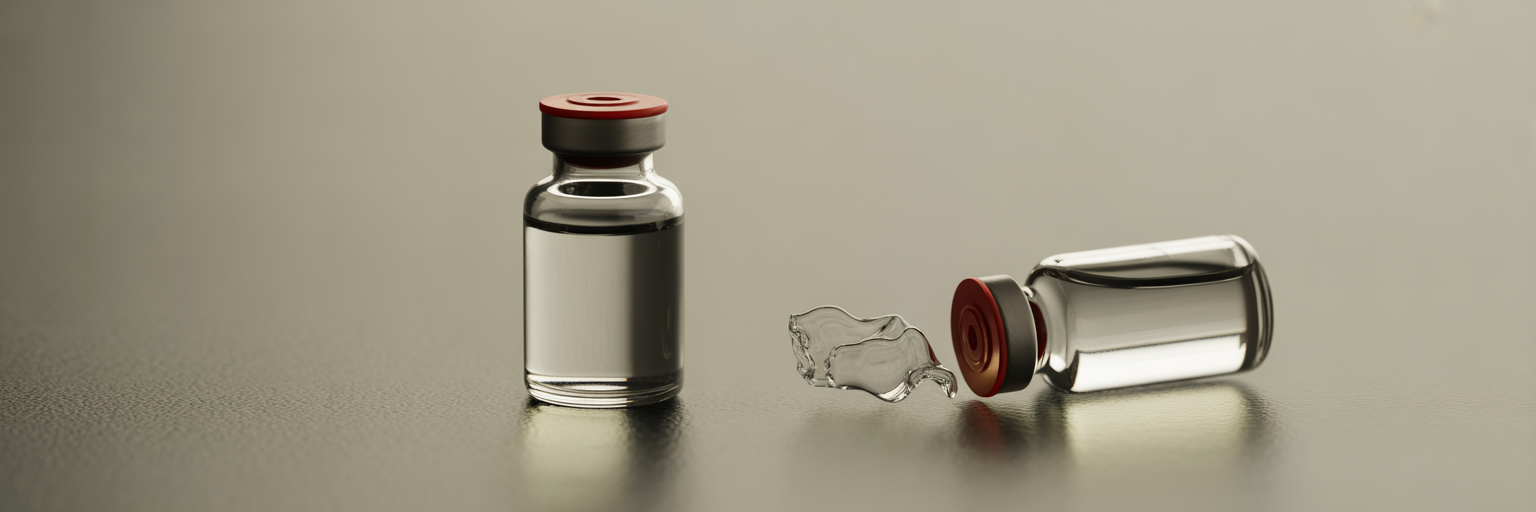
Knowing the correct protocols is one thing, but it is just as important to recognise common mistakes that can undermine your efforts. Many of these errors stem from simple misconceptions or a moment of carelessness, yet they can have serious consequences for your research. Let’s address some of the most frequent issues regarding how to store bacteriostatic water.
Perhaps the most common myth is that bacteriostatic water should be refrigerated. This is incorrect. While many reconstituted peptides require refrigeration, the bacteriostatic water itself must be stored at a controlled room temperature (20°C to 25°C) before it is mixed. Refrigerating the vial can stress the benzyl alcohol preservative and does not enhance its sterility or shelf life. Save the fridge space for your final, reconstituted compounds.
Other critical errors to avoid include:
- Storing in Unstable Environments: We have all seen vials left on a lab bench near a window or, even worse, in a car. These locations are subject to wild temperature swings and direct sunlight. This is not just untidy; it actively accelerates the chemical breakdown of benzyl alcohol, drastically shortening the solution’s effective lifespan and leaving your compounds vulnerable to bacterial growth.
- Improper Resealing and Handling: After drawing a dose, what happens to the vial? Leaving it on a bench with the stopper exposed to open air invites airborne contaminants to settle on its surface. The next time you puncture it, you push those contaminants directly into the sterile solution, completely negating the purpose of the preservative.
- Ignoring the Post-Puncture Expiration: Using a vial beyond its recommended 28-day limit is a gamble. It assumes the preservative is still fully effective and that no contamination has occurred over dozens of punctures. As we will discuss next, this is a risk not worth taking. When your research depends on quality, ensure you source from a reliable supplier, which you can find in our shop.
The Post-Puncture Lifespan and Expiry
Once a vial of bacteriostatic water is punctured for the first time, a clock starts ticking. The industry standard for the bacteriostatic water shelf life of a punctured multi-dose vial is 28 days. This is not a conservative estimate or a manufacturer’s suggestion; it is a guideline rooted in pharmaceutical science, referenced in standards like the United States Pharmacopeia (USP) Chapter <797> for sterile compounding.
The 28-day limit exists for two primary reasons. First, it accounts for the gradual, predictable decline in the efficacy of the benzyl alcohol preservative. While stable, it is not infinitely so, and its ability to inhibit bacterial growth diminishes over time. Second, and more critically, the timeframe accounts for the cumulative statistical risk of introducing contamination. Each time the rubber stopper is punctured, there is a small but real chance of introducing microorganisms. Over a month of use, that risk adds up.
To adhere to this protocol without ambiguity, adopt this simple practice: the moment you perform the first withdrawal, write the date directly on the vial’s label with a permanent marker. This creates an undeniable “use by” date and removes any guesswork. As research published in the Journal of Pharmaceutical Sciences confirms, the effectiveness of preservatives in multi-dose vials is a time-dependent factor that cannot be ignored.
Finally, remember this important caveat: the 28-day rule is only valid if proper aseptic technique has been maintained throughout. If you ever suspect contamination, regardless of whether it is day 5 or day 25, the vial must be discarded immediately. Your research integrity is worth more than the cost of a new vial.
Safeguarding Experimental Accuracy
We have covered the specific conditions, handling techniques, and timelines for storing bacteriostatic water. Now, let’s connect these practical steps back to the bigger picture: the integrity of your research. Using a compromised solution is not a minor shortcut; it is an act that directly threatens the validity of your work.
A contaminated or degraded solution introduces uncontrolled variables into your experiment. It can alter the chemical stability of the compound you are reconstituting, leading to inaccurate measurements, unexpected side reactions, or a complete loss of bioactivity. The result is data that is unreliable and, worse, not reproducible. Imagine spending weeks on a project only to discover the results are meaningless because the solvent was stored next to a sunny window.
The costs of such an oversight are both tangible and intangible. There is the financial loss from wasted reagents, peptides, and other expensive materials. There is the lost time and effort that must be spent repeating failed experiments. Beyond that, there is the potential for long-term reputational damage if results are published and later found to be invalid due to a fundamental flaw in methodology. For large-scale projects, securing a consistent supply of quality materials, such as our bulk reconstitution solution packs, is a key part of mitigating these risks.
Ultimately, the meticulous storage of a fundamental lab supply like bacteriostatic water is not a trivial administrative task. It is a foundational element of good laboratory practice that directly underpins the reliability, accuracy, and ultimate success of your research itself.