Private Label, White Label, Wholesale partnerships available - EU, USA and UK - Free shipping from €75

A Practical Guide to Reconstitution for Experimental Success
This guide details how to choose, prepare, and store reconstitution solutions to achieve accurate and reproducible scientific results.
The Foundation of Reliable Experimental Data
In a 2016 survey published in Nature, a striking reality of scientific research came to light: over 70% of researchers reported having tried and failed to reproduce another scientist’s experiments. This issue of irreproducibility often begins at the most fundamental step, the preparation of reagents. Reconstitution is far more than just adding liquid to a powder. It is the precise reactivation of a lyophilized compound, a process where the goal is to restore its original, functional three-dimensional structure.
Think of a complex protein as an intricate piece of origami. Lyophilization, or freeze-drying, carefully folds it for stable storage. Reconstitution is the act of unfolding it back to its active shape. If done incorrectly, you are left with a crumpled piece of paper instead of a functional tool. The solvent itself can introduce hidden variables that skew results. Contaminants like endotoxins, nucleases, or trace heavy metals can alter cellular responses or degrade your target molecule, rendering your data unreliable. Every variable matters, and an impure solvent is an uncontrolled one.
The consequences of improper technique are significant. When a compound fails to regain its bioactivity, the experiment is compromised from the start. This leads directly to wasted grant money, exhausted resources, and months of valuable research time lost. For anyone working with sensitive biologics, understanding how to reconstitute peptides and other complex molecules is not just a matter of procedure, it is a prerequisite for generating credible data. The integrity of your work depends on getting this first step right, ensuring that the compound you are studying is the compound you intended to study.
Selecting the Appropriate Solvent System

The process of choosing a reconstitution solvent is a critical decision point that directly influences the stability and activity of your compound. It requires a thoughtful analysis of the molecule’s properties before a single drop of liquid touches the vial. This initial assessment prevents common pitfalls like incomplete dissolution or unexpected degradation.
Analyzing Compound Properties Before Selection
Before selecting a solvent, you must review the compound’s certificate of analysis or product data sheet. Key details to look for include its solubility profile, which tells you whether it is hydrophilic (water-loving) or hydrophobic (water-fearing). You also need to understand its pH stability range. A protein that is stable at a neutral pH might denature or precipitate in an acidic or alkaline solution. Finally, consider its susceptibility to oxidation or hydrolysis, as this will guide both solvent choice and handling procedures.
Comparing High-Purity Solvents: WFI vs. Bacteriostatic Water
For many applications, the choice comes down to two common high-purity options. Sterile Water for Injection (WFI) is the gold standard for purity, free of any preservatives. This makes it ideal for sensitive cell culture work or analytical techniques like HPLC where additives could interfere. Its main drawback is that once opened, it offers no protection against microbial growth, making it suitable only for single-use applications. In contrast, bacteriostatic water for injection contains 0.9% benzyl alcohol, an antimicrobial preservative. This allows for multiple withdrawals from the same vial, which is convenient for multi-dose protocols. However, benzyl alcohol can be toxic to certain cell lines, so it is crucial to verify compatibility with your experimental system. For researchers needing a reliable multi-use option, a high-quality reconstitution solution is available for purchase that meets these standards.
The Role of Buffer Systems in Maintaining Stability
Sometimes, water alone is not enough. Buffer systems like Phosphate-Buffered Saline (PBS) or Tris-HCl are not merely solvents, they are active stabilizers. They maintain a constant physiological pH, which is essential for preserving the structural integrity and function of many biologics, including antibodies and enzymes. Using a buffer can prevent the pH shifts that might occur upon dissolution, protecting the compound from denaturation.
Strategies for Challenging Compounds
What do you do when a compound refuses to dissolve in aqueous solutions? For highly hydrophobic molecules, a co-solvent like Dimethyl Sulfoxide (DMSO) may be necessary. DMSO is a powerful organic solvent capable of dissolving a wide range of compounds. The standard practice is to create a concentrated stock solution in DMSO and then dilute it into your aqueous experimental medium. A word of caution is necessary here: DMSO can be toxic to cells, even at low concentrations. It is critical to ensure the final concentration in your experiment remains non-toxic, typically below 0.5%.
| Solvent Type | Key Characteristics | Primary Use Case | Limitations & Considerations |
|---|---|---|---|
| Sterile Water (WFI) | Ultra-pure, free of preservatives and contaminants. | Single-use applications; sensitive cell cultures, PCR, HPLC. | No antimicrobial agent; risk of contamination after opening. |
| Bacteriostatic Water | Sterile water containing 0.9% benzyl alcohol as a preservative. | Multi-dose vials for peptides and hormones; allows for repeated withdrawals. | Benzyl alcohol can be toxic to certain cell lines and is unsuitable for neonates. |
| Phosphate-Buffered Saline (PBS) | Isotonic buffer solution maintaining a physiological pH (~7.4). | Reconstituting proteins, antibodies, and cells that require a stable pH environment. | Phosphate can interfere with certain enzymatic reactions or precipitate with calcium. |
| Dimethyl Sulfoxide (DMSO) | Aprotic, highly polar organic co-solvent. | Dissolving highly hydrophobic or water-insoluble compounds for stock solutions. | Can be toxic to cells, even at low final concentrations (<0.5%); must be used with caution. |
Protocols for Solution Preparation and Handling
With the right solvent chosen, the focus shifts to the physical process of reconstitution. Meticulous technique is what separates a successful preparation from a contaminated or denatured one. An aseptic reconstitution technique is not just a recommendation, it is a requirement for producing reliable and reproducible results. It ensures that the only thing you introduce to your compound is the solvent itself.
Follow these steps for a clean and effective reconstitution:
- Prepare a sterile workspace. The ideal environment is a laminar flow hood or biological safety cabinet that has been thoroughly cleaned with 70% ethanol. This minimizes the risk of airborne contaminants.
- Disinfect the vial septum. Before piercing the vial, wipe the rubber septum with a sterile alcohol pad and allow it to air dry completely. This simple action prevents the introduction of microbes from the surface.
- Use a new sterile syringe for each compound. Never reuse syringes between different reagents. This is a fundamental rule to prevent cross-contamination that could invalidate entire experiments. When you need to restock, you can browse a comprehensive shop for all your experimental needs.
- Inject the solvent slowly. To avoid foaming or potential denaturation from mechanical stress, angle the needle so the solvent runs gently down the interior wall of the vial rather than spraying directly onto the lyophilized powder.
Once the solvent is added, gentle mixing is key, especially for fragile molecules like proteins and peptides. Avoid vortexing at all costs. The shear forces generated by a vortex mixer can easily denature proteins, destroying their biological activity. Instead, gently swirl the vial or invert it several times until the solid is fully dissolved. For compounds that are slow to dissolve, rolling the vial between your palms can also be effective.
For applications requiring the highest level of purity, sterile filtration provides a final safeguard. Passing the reconstituted solution through a 0.22 µm syringe filter removes any potential microbial contaminants or particulate matter that may have been introduced during handling. This step is particularly important for solutions intended for cell culture or in vivo administration.
Finally, proper documentation is a non-negotiable part of the process. Immediately after preparation, label every vial clearly with the compound name, final concentration, the solvent used, the date of reconstitution, and your initials. This meticulous labeling prevents costly mix-ups and ensures full traceability for every sample used in your research.
Long-Term Stability and Storage Strategies
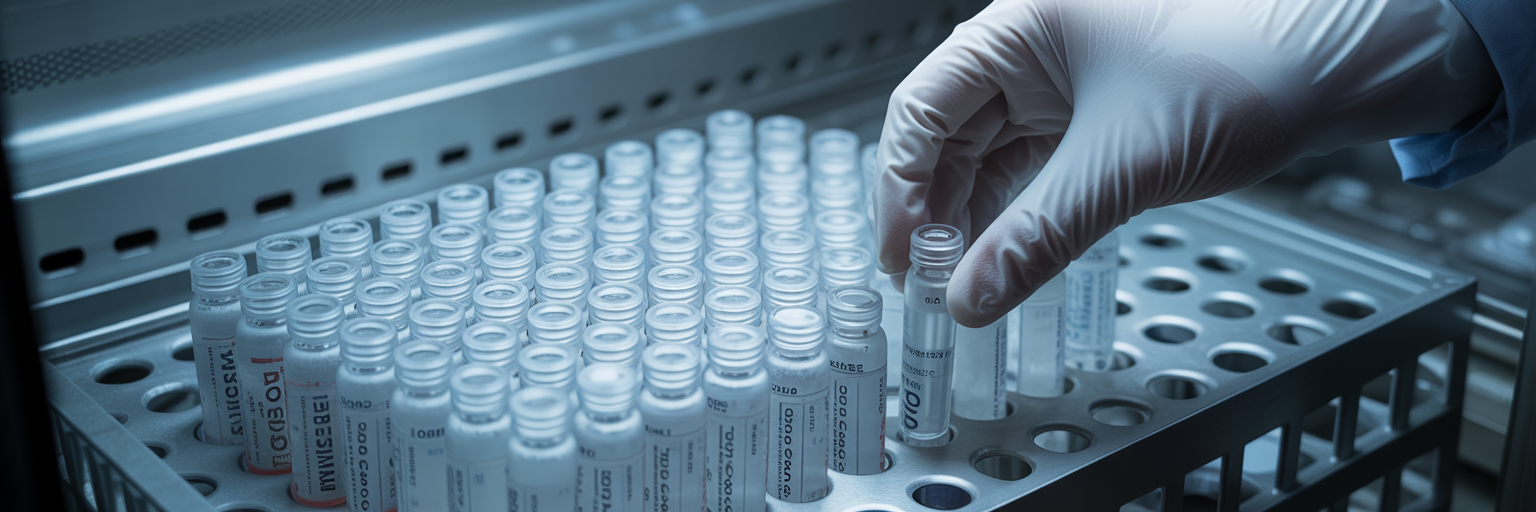
Proper reconstitution is only half the battle. Once your compound is in solution, you must protect it from degradation to ensure its efficacy over time. The strategies you use for storage are just as critical as the initial preparation, directly impacting the consistency of your results from one day to the next. The primary enemies of a reconstituted solution are improper temperature, repeated freeze-thaw cycles, and exposure to light.
The Critical Role of Temperature Control
The correct storage temperature is determined by the stability of the molecule. As a general rule, solutions can be stored at 2-8°C for short-term use, typically a few days to a week. For medium-term storage lasting several weeks or months, -20°C is the standard. For maximum preservation over many months or years, especially for sensitive biologics, -80°C is required. These temperatures slow down the chemical and enzymatic degradation processes that occur in a liquid state, preserving the compound’s integrity.
Aliquoting: The Key to Preventing Degradation
If there is one practice that is mandatory for long term peptide storage and other sensitive compounds, it is aliquoting. Each time a solution is frozen and thawed, the ice crystal formation and pH shifts can cause significant damage to the molecular structure, leading to a progressive loss of activity. Instead of storing your entire stock in one large vial, divide the freshly prepared solution into smaller, single-use volumes. This way, you only thaw what you need for a single experiment, leaving the rest of your stock untouched and stable in the freezer. To simplify this essential step, using convenient packs of reconstitution solution vials can facilitate preparing aliquots from the start.
Selecting Appropriate Storage Containers
The material of your storage tube also matters. Many proteins and peptides can adsorb to the surface of glass or standard plastics, leading to a significant loss of the active compound, especially at low concentrations. To prevent this, always use low-protein-binding polypropylene tubes. These containers have a modified surface that minimizes non-specific binding, ensuring that the concentration you prepared is the concentration you actually use in your experiment. For light-sensitive compounds, use amber-colored vials or wrap clear tubes in aluminum foil to protect them from photodegradation.
Troubleshooting Common Reconstitution Issues
Even with careful planning, you may occasionally encounter challenges during or after reconstitution. Knowing how to identify and address these common issues can save a valuable sample and prevent experimental delays. The key is to approach troubleshooting systematically, starting with the most likely cause.
Here are a few common problems and their potential solutions:
- Problem: Incomplete Dissolution. You have added the solvent and mixed gently, but solid particles remain. Before giving up, you can try gentle warming in a water bath. For some compounds, brief sonication can also help, but use this as a last resort, as it can degrade fragile molecules. Sometimes, a slight pH adjustment may be all that is needed to improve solubility.
- Problem: Precipitation After Storage. The solution was clear when you made it, but now it is cloudy or contains visible precipitate after being stored in the cold. This often happens with supersaturated solutions or those sensitive to temperature shifts. Try warming the vial to see if the compound redissolves. If it does, be sure to bring the aliquot to room temperature and mix it thoroughly before taking your sample. If precipitation is a recurring issue, you may need to reformulate with a different solvent or at a lower concentration.
- Problem: Inconsistent Experimental Results. Your assay works perfectly one day and fails the next, even when using the same stock solution. The most likely culprit is compound degradation. Are you using a fresh aliquot for each experiment to avoid freeze-thaw cycles? Did you ensure the thawed aliquot was fully mixed before pipetting? A solution that has been sitting on the bench for too long or has been improperly stored will not yield reliable data.
It is also important to accept that some compounds are inherently unstable in solution. For these highly labile molecules, the only way to ensure maximum efficacy and data reliability is to prepare them fresh immediately before each experiment. While it requires more effort, this practice eliminates any doubt about the integrity of your reagent. For more detailed guides on specific laboratory techniques, you can always visit our blog for further scientific resources.