Private Label, White Label, Wholesale partnerships available - EU, USA and UK - Free shipping from €75
A Researcher’s Guide to Bacteriostatic and Sterile Water
Learn when to use bacteriostatic versus sterile water to ensure the integrity and safety of your laboratory work.
In any laboratory setting, the choice of solvent is as critical as the solute itself. Selecting the wrong diluent can compromise an entire experiment, making the distinction between bacteriostatic and sterile water a fundamental piece of knowledge for any researcher.
Fundamental Composition and Properties
At first glance, these two liquids appear identical, but their compositions dictate entirely different uses and handling protocols. Understanding their core properties is the first step in ensuring the integrity of your research materials and the validity of your results. This section focuses purely on what sets them apart chemically, before we explore their specific applications.
Sterile Water for Injection (SWFI): The Pure Baseline
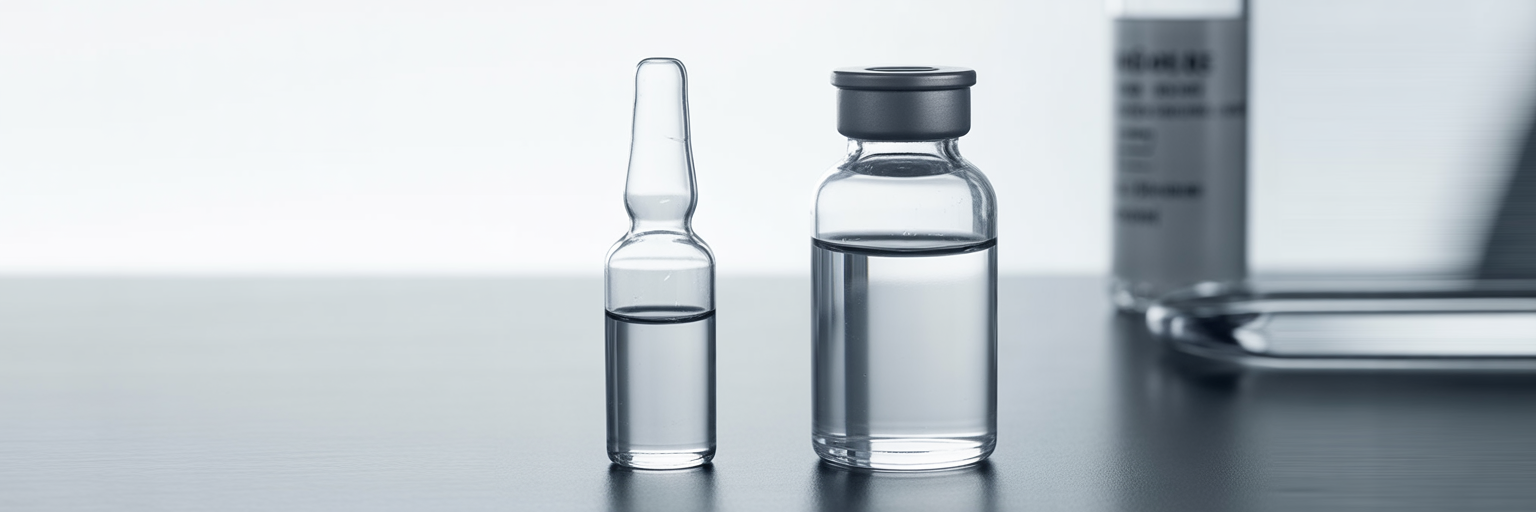
Sterile Water for Injection, or SWFI, represents the purest form of diluent used in research. It is simply H₂O that has been purified, sterilized, and packaged to be free of any microorganisms, pyrogens, or antimicrobial agents. Think of it as a completely blank slate. Because it contains no preservatives, SWFI is intended for single-use applications only. Once a vial is opened, any unused portion must be discarded to prevent potential contamination.
Bacteriostatic Water for Injection (BWFI): The Preserved Alternative
Bacteriostatic Water for Injection (BWFI) begins as SWFI but includes a crucial addition: 0.9% benzyl alcohol, which acts as a preservative. This is the central point of difference when comparing sterile water vs bacteriostatic water. The presence of this agent allows a vial of BWFI to be used multiple times over a period of up to 28 days, as the benzyl alcohol prevents any bacteria introduced during needle punctures from multiplying.
The Critical Distinction: Bacteriostatic vs. Bactericidal
It is vital to understand that the term ‘bacteriostatic’ means the agent inhibits bacterial growth, it does not kill bacteria on contact. A bactericidal agent, in contrast, actively destroys bacteria. The benzyl alcohol in BWFI maintains the sterility of an already sterile solution within a multi-dose vial. It cannot and should not be expected to re-sterilize a solution that has become contaminated.
| Attribute | Sterile Water for Injection (SWFI) | Bacteriostatic Water for Injection (BWFI) |
|---|---|---|
| Composition | Pure H₂O, free from all microorganisms and solutes | Sterile water with 0.9% benzyl alcohol added |
| Preservative | None | Benzyl Alcohol (bacteriostatic agent) |
| Primary Purpose | Single-use diluent or solvent where no preservative is desired | Multi-use diluent for substances administered in repeated doses |
| Vial Type | Typically single-dose ampoules or vials | Multi-dose vials with a self-sealing stopper |
| Use After Opening | Must be discarded immediately after a single use | Can be used for up to 28 days after first puncture |
Note: This table summarizes the fundamental differences based on United States Pharmacopeia (USP) standards. The primary distinction lies in the presence of a preservative, which dictates the intended use and handling protocols.
The Role and Impact of Benzyl Alcohol
The single ingredient that separates these two water types, benzyl alcohol, serves a specific and powerful purpose. Its inclusion is not arbitrary; it is a carefully calculated decision that directly enables certain research protocols while precluding others. Understanding its mechanism and limitations is key to using bacteriostatic water correctly.
Mechanism of Action as a Preservative
The function of benzyl alcohol in bacteriostatic water is to act as a bacteriostat. As a lesson from Study.com explains, bacteriostatic water is comprised of just sterile water and this preservative. It works by disrupting the integrity of the bacterial cell membrane. This disruption interferes with essential cellular processes, including protein synthesis and reproduction, effectively halting the proliferation of any incidental contaminants that might enter the vial. This action is what keeps the solution safe for repeated use.
Enabling Multi-Dose Protocols
The primary advantage conferred by this multi-dose vial preservative is efficiency. In many research settings, lyophilized powders like peptides or hormones are reconstituted and then administered in small, precise increments over several days or weeks. Using a new vial of sterile water for each dose would be wasteful and costly. Bacteriostatic water allows a researcher to prepare a stock solution in a single vial, confident that its sterility will be maintained for up to 28 days.
Limitations and Contraindications
However, benzyl alcohol is not without its drawbacks. Its most well-known contraindication is in neonatal applications. In infants, it can cause a fatal condition known as “Gasping Syndrome,” making it completely unsuitable for perinatal research. Furthermore, benzyl alcohol can interact with or degrade certain sensitive biological compounds, potentially compromising the integrity of the active substance. The standard 0.9% concentration represents a carefully determined balance, offering effective bacteriostatic properties with minimal toxicity for most adult applications.
Optimal Applications for Bacteriostatic Water
Building on its preservative properties, bacteriostatic water becomes the default choice in specific research scenarios where sterility must be maintained across multiple uses. It is particularly valuable when working with substances that are reconstituted and then drawn from the same vial over time. This is a common practice when reconstituting peptides with sterile water is not feasible due to the need for repeated dosing from a single container.
Bacteriostatic water is the superior choice in the following situations:
- Reconstitution of Lyophilized Powders: This is the most common use for bacteriostatic water for research. Peptides, hormones like HCG, and other biologics are often supplied as powders that require a diluent. As noted in guides like the GLP-1 Journal, its preservative is ideal for these compounds, which are typically administered in small doses, allowing the vial to be used for its full 28-day lifespan.
- Animal Studies: When a research protocol involves administering a substance to multiple animal subjects from one vial, or to the same subject over several days, bacteriostatic water ensures each dose is free from bacterial growth.
- Cost-Effectiveness and Waste Reduction: From a practical standpoint, using a single multi-dose vial is far more economical than opening a new single-use ampoule for every preparation. This approach significantly reduces both supply costs and the volume of medical waste generated by a lab.
The decision is straightforward: if your protocol requires entering a vial more than once and you have confirmed the active compound is stable with benzyl alcohol, bacteriostatic water is the correct choice. For researchers preparing for such a project, sourcing a quality diluent like our 10ml reconstitution solution is an essential first step.
Scenarios Requiring Sterile Water
Just as there are clear cases for using bacteriostatic water, there are equally critical scenarios where its preservative is not only unnecessary but strictly contraindicated. In these situations, the purity of Sterile Water for Injection (SWFI) is paramount, as any additive could invalidate the experiment or cause harm. As educational videos from resources like Study.com highlight, the presence of a chemical to prevent bacterial growth makes bacteriostatic water unsuitable for sensitive applications.
SWFI is the mandatory choice in these distinct applications:
- Cell Culture and In Vitro Assays: This is perhaps the most important distinction. The cell culture water requirements are extremely strict because benzyl alcohol is cytotoxic. It will kill or inhibit the growth of the very cells you are trying to study, rendering experimental data useless. Only ultrapure, preservative-free water should be used.
- Preservative-Sensitive Routes of Administration: In preclinical models, certain injection routes such as intrathecal (into the spinal canal) or epidural are highly sensitive to preservatives, which can be neurotoxic. SWFI is also required for preparing large-volume intravenous (IV) solutions, where the cumulative dose of benzyl alcohol from a preserved solution would quickly exceed safe limits.
- Single-Use Procedures: When an entire vial of a substance is reconstituted and administered immediately in a single dose, there is no need for a preservative. Using bacteriostatic water in this context offers no benefit and introduces an unnecessary chemical variable into the experiment.
- Chemical Incompatibility: Researchers must always verify that their compound is compatible with benzyl alcohol. Some drugs or sensitive biologics can degrade or precipitate when mixed with it. In these cases, pure SWFI is the only option to ensure the stability and efficacy of the reconstituted substance.
Careful selection of all reagents is fundamental to sound science. Researchers can find a wide array of necessary materials by browsing our dedicated laboratory supplies shop.
Regulatory Frameworks and Safety Protocols
The use of sterile and bacteriostatic water is not just a matter of scientific best practice; it is also governed by strict regulatory standards and professional responsibilities. Adhering to these frameworks ensures data integrity, reproducibility, and safety in any formal research environment. As Study.com outlines, while both are sterile, the presence of a bacteriostat introduces different handling rules that are critical for compliance.
Pharmacopeia Standards (USP)
The United States Pharmacopeia (USP) sets the official standards for these products. Both SWFI and BWFI must meet stringent criteria for sterility, purity, and low endotoxin levels. However, BWFI is subject to additional requirements to verify the identity and concentration of the benzyl alcohol preservative. These standards ensure that any product labeled as such is consistent and safe for its intended use.
Researcher’s Responsibility for Compatibility
The ultimate responsibility for ensuring compatibility lies with the researcher. Before reconstituting peptides with sterile water or, more accurately, with bacteriostatic water, one must consult manufacturer data sheets or peer-reviewed literature. This due diligence confirms that the active compound will not be degraded or altered by benzyl alcohol. Assuming compatibility without verification is a serious procedural error that can jeopardize research outcomes.
Documentation in Regulated Environments
In regulated settings, such as those following Good Laboratory Practice (GLP) or Good Manufacturing Practice (GMP), meticulous documentation is non-negotiable. For every vial used, researchers must record lot numbers and manufacturer expiration dates. For multi-dose vials of bacteriostatic water, it is also mandatory to document the date of first use. This practice ensures traceability and confirms that the vial is not used beyond its 28-day beyond-use date, safeguarding data integrity.
For more detailed discussions on laboratory best practices, exploring our dedicated blog can provide valuable ongoing insights.
Practical Guidance for Storage and Handling
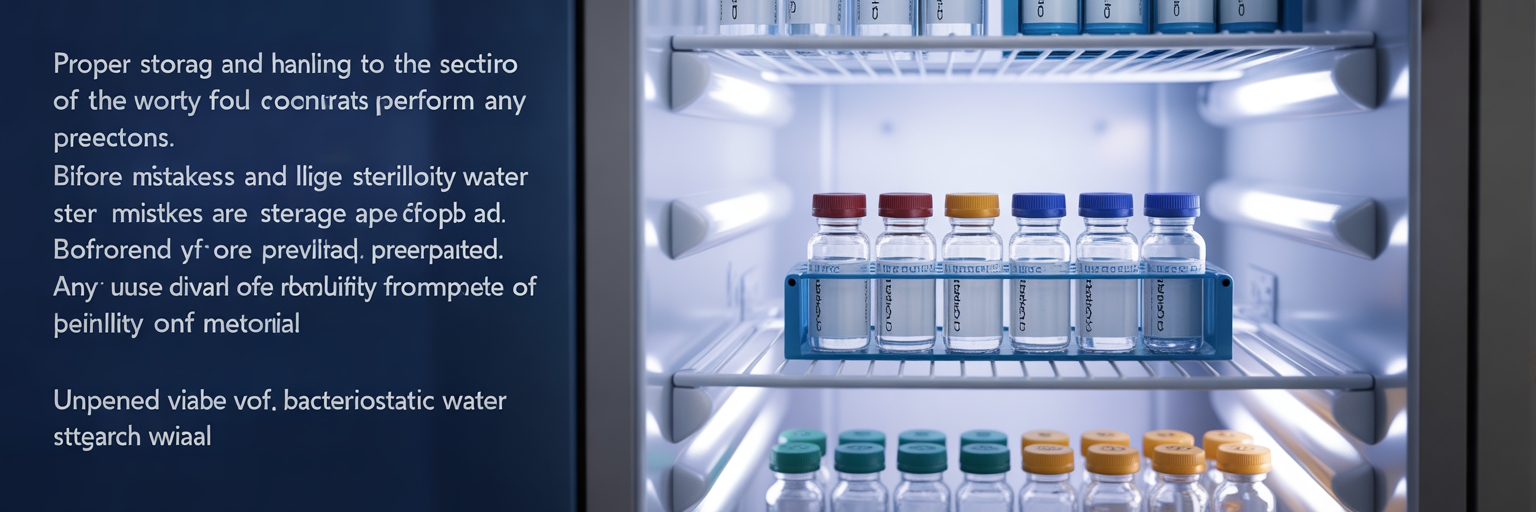
Proper storage and handling are the final, critical steps to ensure these diluents perform as expected. Simple mistakes at this stage can compromise sterility and negate all previous precautions. Following a clear protocol is essential for maintaining the quality of your research materials.
Before use, unopened vials of both sterile and bacteriostatic water should be stored at a controlled room temperature, away from direct sunlight. The differences emerge once the vial is opened. Any unused portion of a single-use sterile water vial must be discarded immediately. In contrast, an opened multi-dose vial of bacteriostatic water should be refrigerated to help maintain its integrity.
The beyond-use date (BUD) is a crucial concept. For bacteriostatic water for research, the established BUD is typically 28 days after the first puncture, unless specified otherwise by the manufacturer. After this period, the vial must be discarded, even if it still contains solution. For sterile water, the BUD is immediate; it is designed for one-time use only.
Finally, always practice proper aseptic technique. Even with a preservative, the rubber stopper of a bacteriostatic water vial is not self-sterilizing. It must be disinfected with a fresh alcohol swab before every puncture to prevent the introduction of contaminants. For labs with ongoing projects, sourcing a larger volume like our 30ml reconstitution solution can improve workflow efficiency while still requiring strict adherence to these handling protocols.
To make the right choice every time, ask yourself these three questions:
- Will the vial be punctured more than once for multiple doses?
- Is the application highly sensitive to preservatives (e.g., cell culture, neonatal models)?
- Is the active compound confirmed to be chemically compatible with benzyl alcohol?
Answering these questions will guide you to the correct diluent, ensuring the safety and integrity of your research.